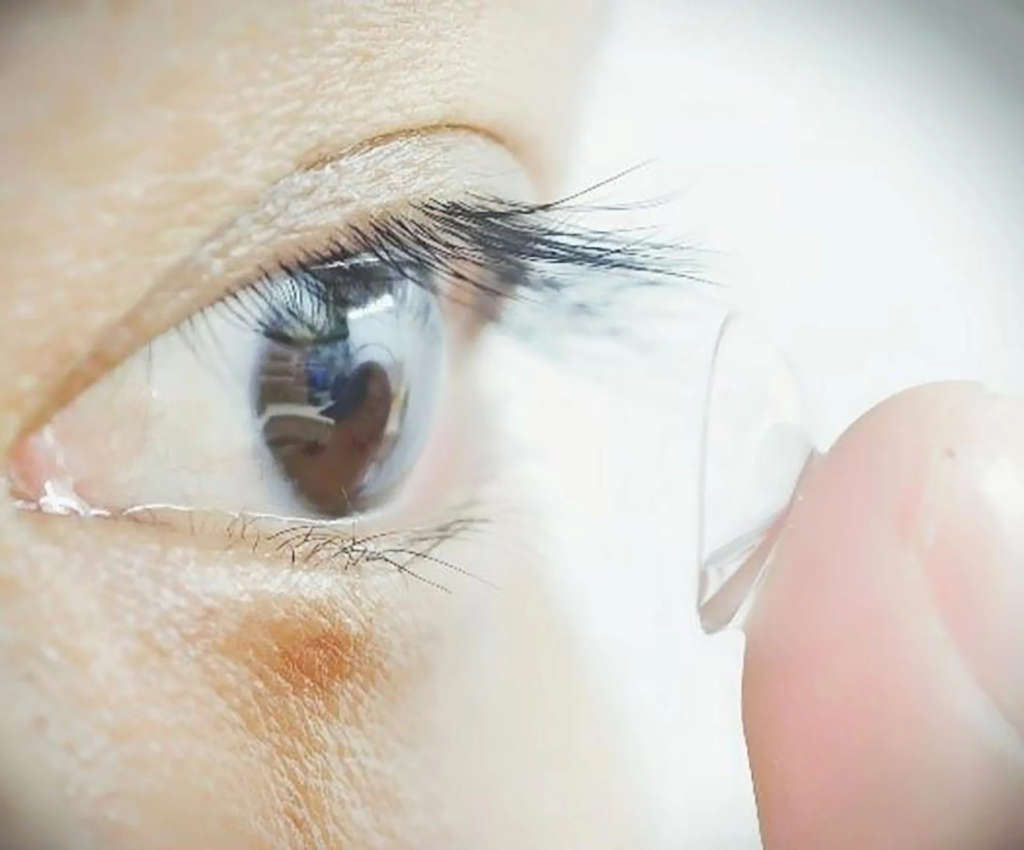
Imagine slipping on a pair of ultra-thin contact lenses and suddenly piercing through total darkness like a superhero. No clunky goggles, no batteries, and yes—even if your eyes are shut tight. Scientists have just unlocked this sci-fi dream with revolutionary night vision contact lenses that turn invisible infrared light into crystal-clear vision. These super-vision contact lenses are lightweight, passive, and ready to redefine how humans see the world after sunset.
This breakthrough comes from researchers at the University of Science and Technology of China, led by neuroscientist Tian Xu. Their nanoparticle-powered lenses absorb infrared wavelengths that our eyes normally can’t detect and convert them into visible light—giving wearers true night vision contact lenses that work in ways traditional gear never could.
How These Infrared Contact Lenses Work: A Passive Powerhouse
Forget everything you know about bulky night-vision goggles that amplify faint light or rely on power-hungry electronics. These see-in-the-dark contact lenses take a smarter, simpler route.
The secret lies in tiny, biocompatible nanoparticles made from sodium gadolinium fluoride blended with rare-earth metals. Embedded right into the soft lens material, these particles act like tiny light converters:
- They soak up invisible infrared light (800–1,600 nanometers).
- Then they re-emit it as visible wavelengths (380–750 nanometers) that your brain instantly recognizes as light.
No electricity. No heat. Just pure, passive magic happening right on your eyeball.
Futuristic infrared contact lenses give wearers night vision superpowers—The Brighter Side of News
Traditional goggles often deliver that eerie green glow and can feel heavy after minutes of use. These infrared contact lenses, by contrast, feel like regular contacts but grant superhuman perception—turning pitch-black nights into something you can actually navigate.
Game-Changing Tests: From Lab Mice to Real Human Eyes
Before reaching humans, the team ran rigorous tests on mice—perfect subjects since they’re nocturnal and naturally dodge bright areas to stay hidden.
Mice fitted with the night vision contact lenses actively avoided zones lit only by infrared light. Without the lenses? They wandered straight in, completely unaware. Brain scans proved their visual cortex was lighting up, processing the infrared signals exactly like normal sight.
The human trials were even more mind-blowing. Volunteers wearing the lenses could spot flickering infrared signals and even pinpoint their direction. And here’s the wild part: detection got better with eyes closed.
“It’s quite clear: without the lens, individuals can’t see anything. With it, they can clearly perceive infrared flicker,” explained lead researcher Tian Xu. “Closing the eyes improves detection because infrared penetrates the eyelids better than visible light, reducing interference.”
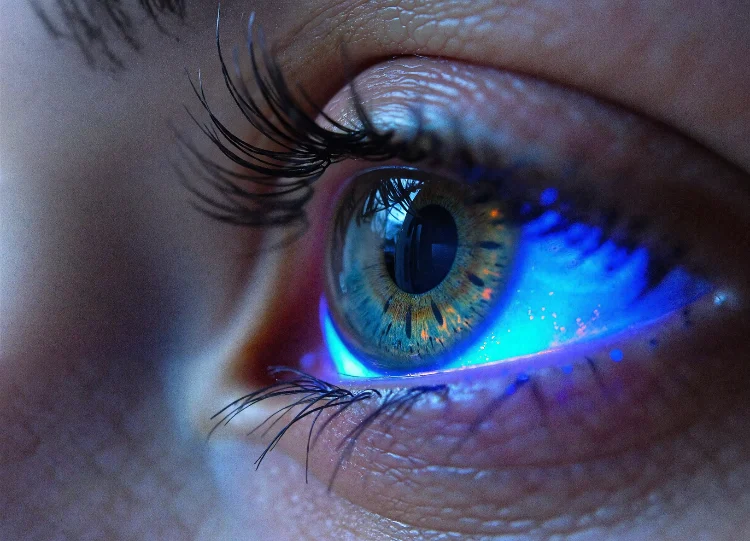
Beyond Night Vision: Color Blindness Help and Secret Signals
These super-vision contact lenses do more than conquer darkness. The same nanoparticle tech can be tuned to shift specific infrared wavelengths into blue, green, or red—opening up a vibrant new world for people with color vision deficiencies.
“By making red light appear green, we can make the ‘invisible’ visible to people with color vision deficiency,” Xu noted.

Security and rescue teams could also use the lenses for covert communications. Infrared signals could carry encrypted messages invisible to the naked eye—perfect for military ops, emergency responses, or even anti-counterfeiting measures.
Real-World Hurdles Before These Lenses Hit the Market
Exciting as they are, these night vision contact lenses still face a few growing pains:
- Current versions shine brightest with strong LED infrared sources; dim real-world conditions need sensitivity upgrades.
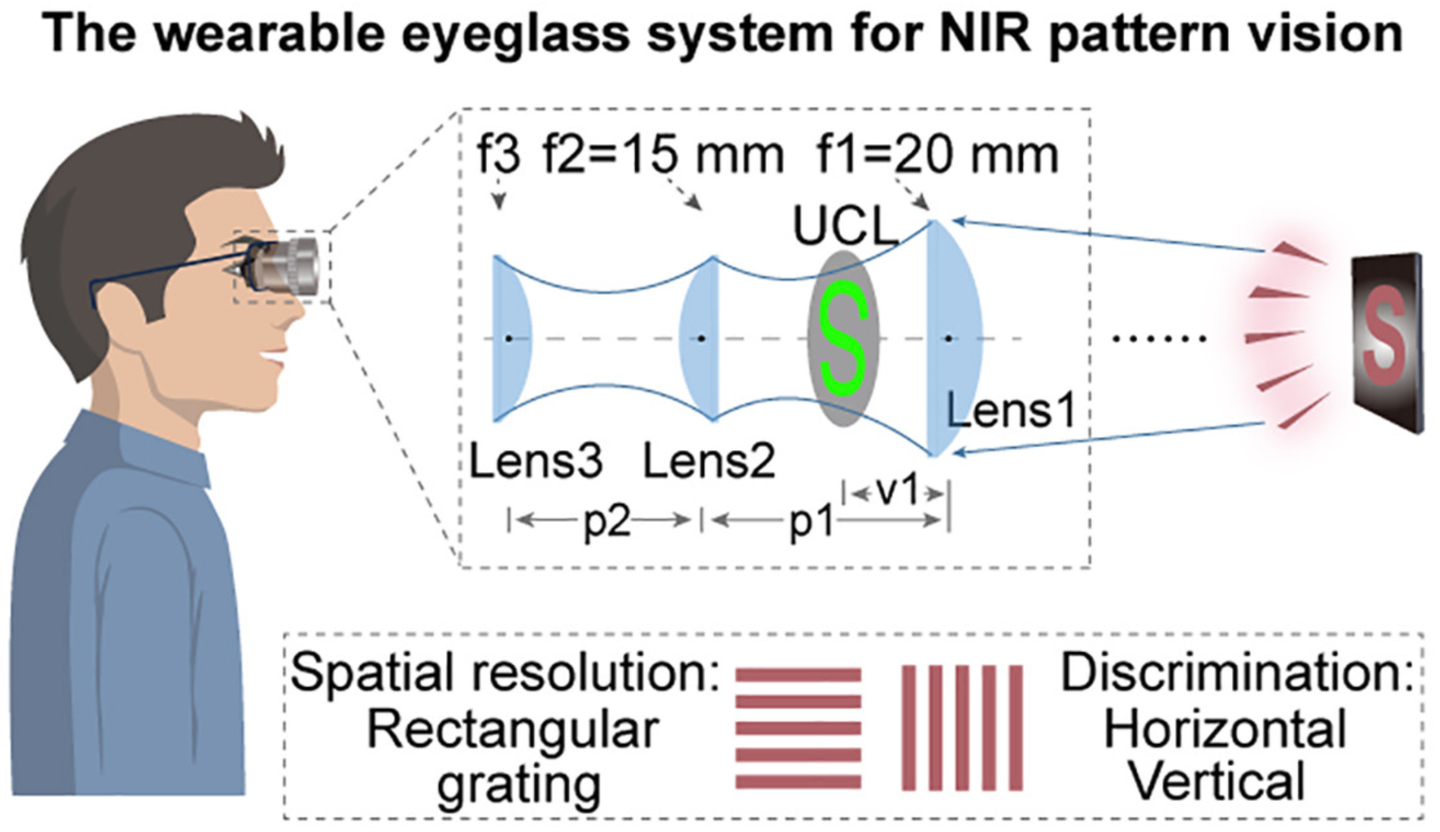
- Proximity to the retina limits super-sharp detail, so the team is developing a companion high-resolution glasses overlay.
- Long-term safety, comfort, and mass production tweaks are still in progress.
Even with these challenges, the foundation is rock-solid. This isn’t some far-off prototype—it’s wearable tech that’s already proving itself in the lab.
The Hard Truth: This Changes Everything
Super-vision contact lenses aren’t just a cool gadget. They shatter the limits of human eyesight, making darkness transparent and eyelids irrelevant. In a world where we already augment our lives with smartwatches and AR glasses, this technology pushes us into true augmented vision. Night shifts, wilderness adventures, security work, and everyday life after sunset will never be the same.
Science fiction just became your next pair of contacts. The future of seeing in the dark isn’t coming—it’s already here, sitting on a researcher’s fingertip and ready to slip into your eyes.
FAQ: Everything You Want to Know About Night Vision Contact Lenses
Q: Do these supervision contact lenses need batteries or power? A: Nope! They work completely passively using nanoparticle technology—no electronics, no charging, nothing.
Q: Can I really see with my eyes closed using these infrared contact lenses? A: Yes. Infrared light passes through eyelids more easily than visible light, so many testers actually performed better with eyes shut.
Q: Will these help people with color blindness? A: Absolutely. Tuned nanoparticles can shift colors to make distinctions that were previously impossible, effectively correcting certain types of color vision deficiency.
Q: How do they compare to traditional night vision goggles? A: Lighter, more comfortable, no green tint, no power source, and they work even with eyes closed—plus they look like regular contacts.
Q: Are they safe for everyday human use? A: Early tests on humans and mice show they’re biocompatible, but full FDA-style approval and long-term studies are still underway before they reach store shelves.
Q: When will night vision contact lenses be available to buy? A: The tech is still in the advanced research stage. Sensitivity and resolution improvements are next, but experts say consumer versions could arrive within the next 5–10 years.
Q: Can these lenses be used for secret communications? A: Yes—one of the coolest side applications! Infrared patterns could transmit hidden messages for military, rescue, or anti-fraud purposes.
Ready to see the dark in a whole new light? The era of super-vision contact lenses has officially begun.