In a jaw-dropping discovery that reads like something from a sci-fi epic, astronomers have spotted two galaxies locked in a brutal cosmic duel. For the very first time, scientists have direct evidence of one galaxy using a powerful quasar—like a cosmic flamethrower—to hammer its neighbor with intense radiation, shredding its star-forming gas and effectively “sterilizing” its ability to birth new stars.

The quasar aggressor made a neighboring galaxy infertile
This isn’t just another pretty space picture. It’s a window into the violent drama unfolding across the early universe, captured in stunning detail by some of the world’s most advanced telescopes.
A Glimpse into an 11-Billion-Year-Old Cosmic Showdown
The light we’re seeing today left these galaxies when the universe was just a teenager—only about 18% of its current age. Traveling for over 11 billion years, it reveals two massive galaxies hurtling toward each other at speeds exceeding 500 km/s (more than 310 miles per second). What looks like a peaceful blob in the sky is actually a high-speed interstellar clash.
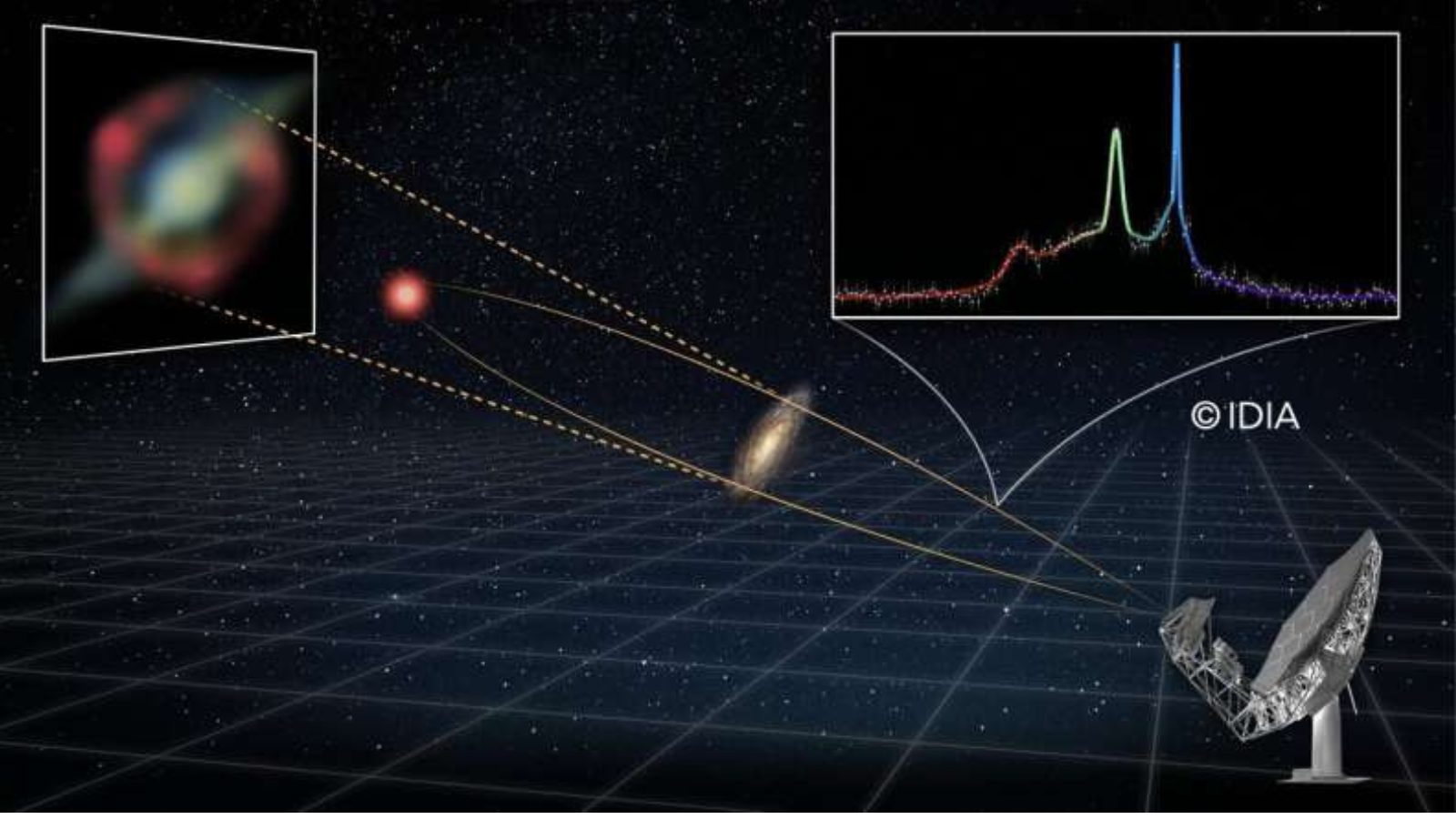
Scientists spot high-speed galaxy collision 11 billion light-years away: ‘We hence call this system the cosmic joust’ | Space
At the heart of one galaxy sits a supermassive black hole, gorging on surrounding material and powering a brilliant quasar. This quasar doesn’t play fair. Instead of a gentle merger, it’s firing concentrated beams of energy straight into its companion, tearing apart vast molecular clouds—the very nurseries where stars are born.
How a Quasar Turns into a Cosmic Weapon
Using the Atacama Large Millimeter/submillimeter Array (ALMA) in Chile and the European Southern Observatory’s Very Large Telescope (VLT), researchers finally resolved what earlier telescopes saw as a single fuzzy object. ALMA’s sharp eyes revealed two distinct galaxies in a deadly embrace, while the VLT’s X-Shooter instrument dissected the quasar’s light passing through the victim galaxy.
The results, published in the journal Nature, are crystal clear: the quasar’s radiation is reshaping the companion’s gas structure on the spot. Dense clouds are being broken down into tiny fragments too small and too hot to collapse into stars. As co-lead author Sergei Balashev from Russia’s Ioffe Institute put it, the quasar is essentially sterilizing its rival.
His colleague, Pasquier Noterdaeme from the Paris Institute of Astrophysics, adds that while galaxy mergers were long suspected of feeding quasars, “this is the first time we’ve seen one galaxy actively damaging another in real time.”
It’s not entirely one-sided, though. Gravity is pulling gas from the victim straight into the black hole, fueling even more powerful outbursts. The closer they get, the fiercer the battle becomes.
Why This Discovery Changes Everything
Until now, quasars were mostly studied in isolation or as bright beacons. This observation flips the script, showing how they can act as ruthless disruptors in the galactic neighborhood. It gives astronomers a front-row seat to the messy, chaotic processes that shaped galaxies in the young universe.
With next-generation instruments like the Extremely Large Telescope (ELT) coming online soon, scientists expect to uncover even more of these intergalactic brawls. The era of watching galaxies evolve in real time is just beginning.
Conclusion: A New View of the Violent Universe
This “cosmic joust” reminds us that the universe isn’t always a serene place of gentle starbirth. Sometimes it’s raw, aggressive, and unforgiving. By witnessing a quasar-powered galaxy attack up close, we’re gaining fresh insights into how black holes and radiation shape the cosmos. What was once hidden in the distant past is now lighting up our understanding of how galaxies grow—or get destroyed—across billions of years.
The universe keeps surprising us, and this is just the beginning of many more revelations to come.
FAQ: Your Questions About This Galactic Battle Answered
Q: What exactly is a quasar? A quasar is the ultra-bright core of a galaxy powered by a supermassive black hole that’s actively swallowing gas, dust, and stars. It blasts out enormous amounts of energy across the electromagnetic spectrum, sometimes outshining entire galaxies.
Q: How far away is this cosmic fight? The event happened about 11 billion light-years away. We’re seeing it as it was when the universe was roughly 2.5 billion years old—long before our own Milky Way had fully formed.
Q: Will something like this happen to the Milky Way? Our galaxy is on a collision course with Andromeda in about 4.5 billion years, but neither currently hosts an active quasar. Future mergers could spark similar activity, though it’s nothing we’ll witness in our lifetimes.
Q: Why is this discovery such a big deal? It’s the first direct proof that a quasar’s radiation can physically alter the gas inside a neighboring galaxy and shut down star formation. Previous theories existed, but now we have the smoking gun.
Q: Where can I read the original research? The full study, titled “Quasar radiation transforms the gas in a merging companion galaxy,” was published in Nature on May 21, 2025. You can also check the official press releases from ESO and the ALMA Observatory.
References & Further Reading
- ESO Official Release: Astronomers Observe Pair of Galaxies in Deep-Space Battle
- ALMA Press Release (May 2025)
- Nature Journal Article (DOI: 10.1038/s41586-025-08966-4)
- Related coverage from Sci.News and Space.com
Keep looking up—the cosmos is full of even wilder stories waiting to be told!