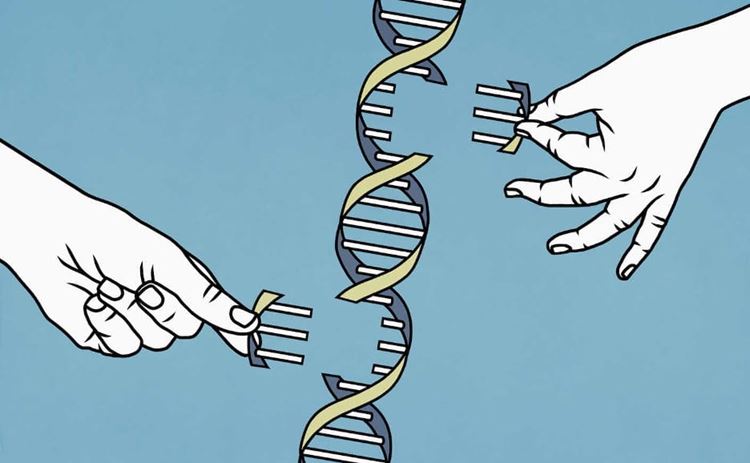
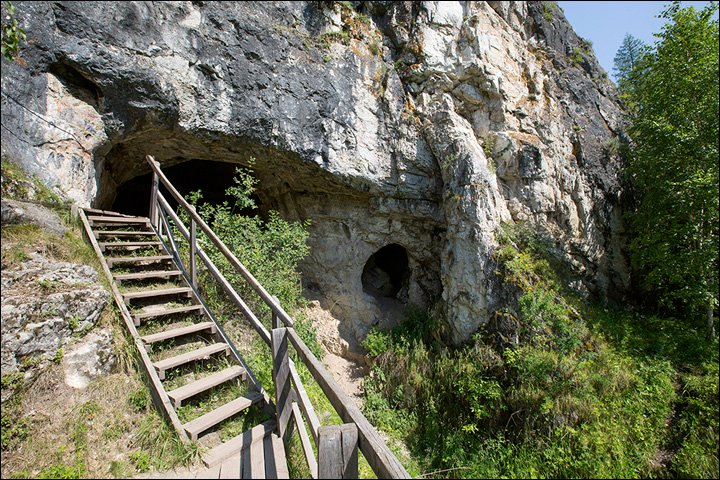
Imagine a chilly cave in Siberia’s Altai Mountains. A small fragment of bone (about the size of a finger nail) was retrieved from its sediment layers in 2008. No one would have thought that this piece would completely change the narrative of human evolution. A couple of years later, DNA samples taken from the bone pointed to something no one had ever witnessed: a whole new branch of the human family tree. We refer to them as the Denisovans, and they could be the most influential human relatives you’ve never heard of.
While the Neanderthals have been around for 100 years, and have been the subject of fossils, documentaries and museum dioramas, the Denisovans have been around for more than a decade as a species defined almost purely by genetic code. That has all changed in the past year, however, with breakthroughs finally adding a face to the name. This article details their identity, the recent findings of their DNA and why the work still has relevance to millions of people today.
Who were the Denisovans?
The Denisovans were a population of archaic humans that inhabited Asia around 200,000 to 320,000 years ago, in the time period shared by Neanderthals and early H. sapiens humans. They are genetically a sister lineage to the Neanderthals: they probably shared a common ancestor before they evolved into two separate populations — the Denisovans moved east into Asia, the Neanderthals into Europe and western Asia.
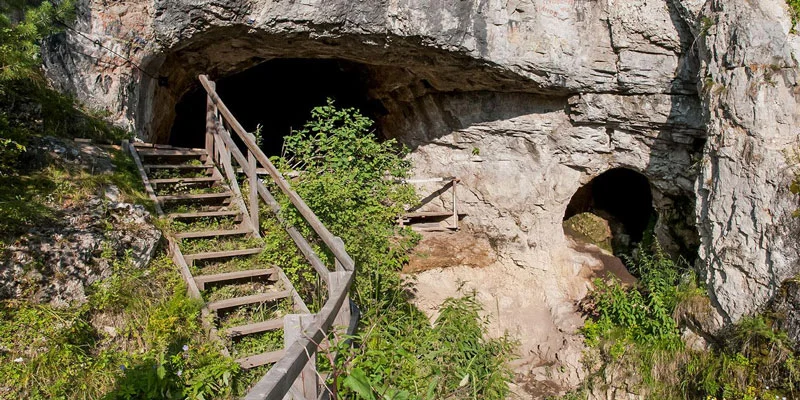
Our knowledge of these people was shockingly limited, consisting of a few teeth, a fragment of skull and a finger bone all unearthed in Denisova Cave. They are not formally known as a separate species, and cannot be given a Latin binomial name, simply because there was not enough physical material to do so, in the traditional manner of naming.
An epiphany moment of discovery
It began with an odd twist of the genes.DNA sequenced from that 2008 finger bone was supposed to be either of a modern person or a Neanderthal. Rather, they discovered a population that had never been documented in the fossil record: evidence for a “third human. Other studies led to the discovery and 2010 publication, which is often called one of the greatest surprises in modern paleoanthropology.
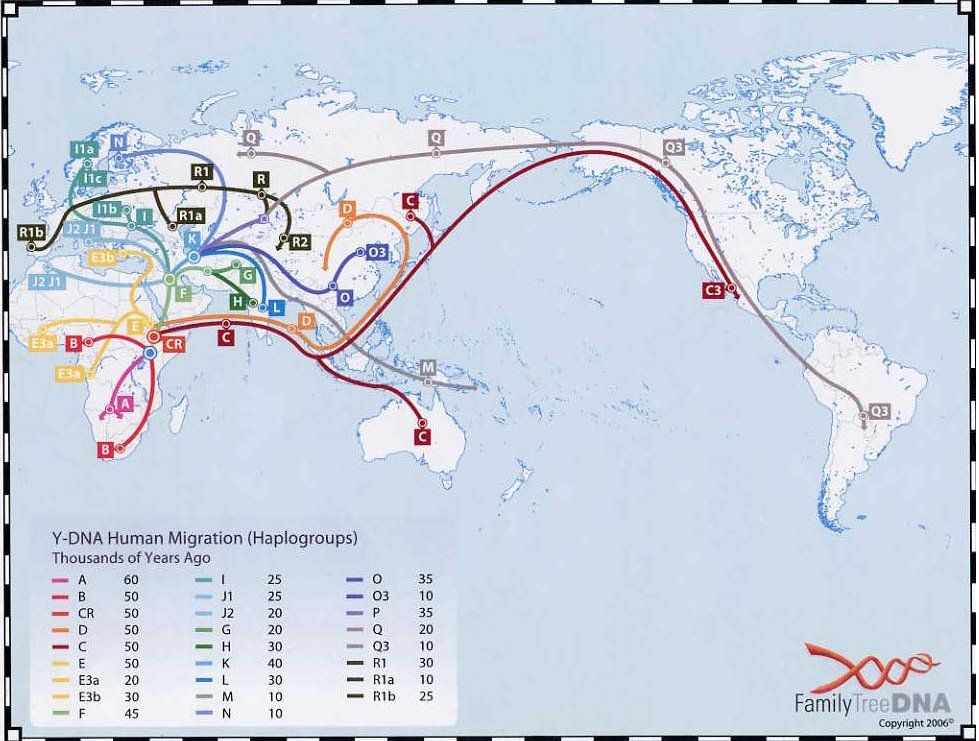
Over the next 15 years, Denisovans were effectively a ghost species: scientists knew that they existed, because they could detect their genetic signature in living people all the way to Asia and Oceania, but there was little to be seen. But it started changing with a number of key advances.
The Breakthrough of “Dragon Man”
Among the most dramatic advances is a skull dubbed “Dragon Man” from decades ago in northeastern China that was first thought to be a new human species, Homo longi. In 2025, scientists took samples of ancient proteins and mitochondrial DNA from the dental calculus of the skull, and verified what many suspected: this skull, dated approximately 146,000 years old, was in fact a Denisovan. This is the first time that scientists were able to link a well-preserved skull to the genetic signature that had been used to define the group for more than 10 years.
A 200,000-Year-Old Genome
“A team from the Max Planck Institute for Evolutionary Anthropology sequenced a high-coverage genome from a Denisovan molar from Denisova Cave, dating to a man who lived at least 200,000 years ago — more than twice as old as the first Denisovan genome ever sequenced,” the team writes in the paper. The analysis indicated that this individual’s ancestors had not only interbred with early Neanderthals, but with an unknown, “super-archaic” group of people that do not fit any known hominin in the fossil record, sometimes called a “ghost lineage.
Evidence From Taiwan and Tibet
Other discoveries have pushed the Denisovans’ range far from icy Siberia. Proteins recovered from a jawbone found on the bottom of Taiwan’s Penghu Channel confirmed it was a male Denisovan, demonstrating that the group was also able to adapt to more humid and warmer environments. In another study, the Xiahe mandible discovered in a cave in Tibet, indicated that Denisovans had pre-developed genetic traits that would allow them to survive at high altitudes — traits that Tibetan populations still possess today.
So what did Denisovans look like?
Although fossil evidence is still scarce, scientists have developed a clever alternative: hypothesising likely anatomy from the ancient DNA methylation patterns, which give clues about the activation of genes. By comparing these patterns in Denisovans, Neanderthals, modern humans and chimps, scientists suggest the Denisovans likely had a robust jaw, an elongated face, a low and sloping forehead, a wide pelvis and a longer dental arch than Neanderthals. The conclusion is: very close to Neanderthals in structure, but with their own distinct features – the image that matches well with what the Dragon Man skull and Xiahe mandible have since revealed.
They Left Behind – DNA
The part that directly concerns you, whether or not you’re inbred with Denisovans: Denisovans did not just cohabit with our species—they bred with us. The Denisovans have interbred with early modern humans at multiple times, with genetic traces visible today, particularly in populations throughout East Asia, Southeast Asia and Oceania. The Philippine Ayta and the populations of PNG have some of the highest known percentage of Denisovan admixture among humans in the world.
Not all of this genetic baggage was “leftover” but many of them proved useful:
- A Denisovan variant of the EPAS1 gene is known to enable Tibetans to efficiently utilise oxygen at high altitudes.
- Cold-climate adaptation: Denisovan variants seem to have aided in the adaptation of cold-climate populations, for example the Inuit.
- Immune resilience: Denisovans, Neanderthals and humans have interbred numerous times over the years, resulting in a gene known as MUC19 that is found at a significantly high frequency among Native Americans and which may have helped those early settlers deal with new pathogens.
The Denisovans seem not to have been an evolutionary dead-end, but rather to have silently influenced the survival and flourishing of part of humanity in some of the harshest environments on earth.
The Denisovan Story is not Over
The Denisovan saga is a good reminder that human evolution wasn’t a line from ape to modern human, but a complex net of populations that intersected, encountered and in some cases merged. Knowing about these ancient relatives can help scientists understand the origins of the people of the world, but also the genetic strengths and weaknesses different human populations have today, including immunity to and susceptibility to disease, which scientists are still trying to understand.
The mystery has not been completely resolved. The researchers still do not know what species the “ghost lineage” that gave rise to Denisovan ancestry was, and whether or not formal species classification is an open scientific debate. After 15 years of working almost entirely from behind the scenes, however, the Denisovans are finally getting a face in 2025 and 2026, and there is every reason to believe that even more fossils remain to be found in museum drawers or still buried in caves across Asia that will complete the picture.
For more information about other non-surviving relatives read our related article about Neanderthal life and culture and for a wider perspective of the human family tree read our article on the Out-of-Africa migration.
Internal Links
External Links
Conclusion
The Denisovans moved from one finger bone to become one of the hottest discoveries in the study of human evolution in only 15 years. Recent discoveries—including the skull of the Dragon Man, and a newly sequenced 200,000-year-old genome—are finally filling in the flesh on the bones of this once-obscure population. Their legacy continues to live on literally in the genes of millions of people today, including Tibetan mountaineers and native peoples throughout the Americas. In the years ahead, with ever more advanced paleogenetic methods, it is probable that even more discoveries will be made regarding these ancient cousins, and how much more they are intertwined in our own stories.