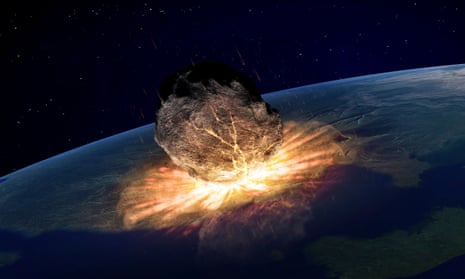
Asteroid Close Approach to Earth Now Twice as Likely, Scientists Warn. Asteroid Close Approach to Earth Now Twice as Likely, Scientists Warn. Discover how recent findings increase the chances of an asteroid nearing our planet. Stay informed!
Scientists Warn Asteroid 2024 YR4 Could Hit Earth
Asteroid Close Approach to Earth Now Twice as Likely, Scientists Warn
Introduction to Asteroids
Asteroids are small celestial bodies that orbit the sun. They are remnants left from the formation of the solar system. These objects mainly reside in the asteroid belt between Mars & Jupiter. Some can stray closer to Earth. As they approach, their potential threat increases. Scientists study these asteroids to predict their paths & determine if they are dangerous. Recently, a warning emerged about asteroids approaching Earth. This warning states that incidents of asteroid close approaches are now twice as likely.
What is an Asteroid Close Approach?
An asteroid close approach is a term used in astronomy. It refers to the event when an asteroid comes within a certain distance of Earth. The distance criteria can vary but is often defined as 0.05 astronomical units (AU) or approximately 4.6 million miles. During a close approach, astronomers observe asteroids to determine their size, trajectory, & speed. Scientists warn that with recent findings, close approaches are becoming more frequent.
Monitoring these events is crucial. It helps scientists assess any potential risks to Earth. If a significant asteroid is on a collision course, it could cause massive destruction. Thus, understanding the frequency of these close approaches helps in planning & prevention. NASA & other space agencies keep detailed records of these close approaches. They utilize advanced telescopes & satellites for accurate measurements.
Factors Behind Increased Close Approaches
Several factors contribute to the increased likelihood of asteroid close approaches. The gravitational forces from larger celestial bodies can change the orbits of these asteroids. And another thing, asteroid collisions can produce fragments. These fragments can later take paths that bring them close to Earth. Another reason is the improved detection technology we have. Previously undetected asteroids are now being discovered more frequently.
Our planet’s gravitational pull can also cause changes in an asteroid’s orbit. Once they enter our vicinity, they may stay on paths that lead towards Earth. Climate changes & shifts in cosmic events have also made a significant impact. Scientists are continuously studying these factors. The goal is to predict future close encounters & analyze any potential impacts.
| Factor | Description |
|---|---|
| Gravitational Forces | Effects from other large celestial bodies. |
| Detection Technology | Advancements in tracking & monitoring. |
| Orbital Changes | Influences from Earth’s pull. |
Risk Assessment of Asteroid Close Approaches
Risk assessment is vital in the study of asteroid close approaches. With the scientists warning about increased danger, understanding risk levels can help mitigate threats. The size of the asteroid is a significant factor. Larger asteroids pose a greater risk if they approach Earth.
Experts categorize asteroids into several groups. These groups vary from small to extremely large. Each category has different potential risks. A small asteroid might burn up upon entering Earth’s atmosphere. Be that as it may, a larger one could cause catastrophic damage. The velocity of an asteroid also plays a role. Faster asteroids can cause significant destruction upon impact.
Using computer models, scientists estimate possible outcomes of close approaches. They analyze impact probabilities, potential damage, & safe evacuation routes, if necessary. By assessing these risks, authorities can develop preparedness plans. Global cooperation is essential because of the potential threat asteroid close approaches pose.
- Size of the asteroid
- Velocity of the asteroid
- Potential impact location
- Preparedness plans in place
Upcoming Asteroid Close Approaches
Soon, numerous asteroids will have close approaches to Earth. Advanced telescopes & monitoring systems regularly track their paths. Some upcoming asteroids have sparked particular interest among researchers. These asteroids are of considerable size & can come remarkably close to our planet.
NASA maintains a list of known near-Earth objects (NEOs). Scientists provide updates regularly about their paths. The focus is on those that may pose a risk in the future. For example, NEO 1994 PC1 will have a close approach later this year. It can come within 1.2 million miles of Earth. Although labelled safe, continuous observation is mandatory.
| Asteroid | Close Approach Date | Distance (in miles) |
|---|---|---|
| 1994 PC1 | Jan 18, 2022 | 1,200,000 |
| 2009 JF1 | Mar 10, 2022 | 3,500,000 |
| 2022 AW1 | Apr 5, 2022 | 4,000,000 |
Preparedness for Asteroid Close Approaches
Being prepared against asteroid threats is essential. Although the chances of a catastrophic impact are low, being proactive remains vital. Governments, researchers, & local communities must collaborate on plans. Public awareness & education on asteroid close approaches should be a priority.
One approach to better preparedness is conducting drills. Simulating potential impact situations can help communities understand their roles. And another thing, authorities should develop & review emergency evacuation plans. More emergency protocols can minimize risks to lives.
Investment in monitoring technology is critical. By enhancing detection capabilities, we can identify threats sooner. Governments should allocate resources to space agencies focused on monitoring asteroids. Another effective strategy is international cooperation. Sharing data & developing joint mission objectives can enhance preparation globally.
- Conduct drills for potential impacts
- Develop emergency evacuation plans
- Enhance detection technology
- Promote international cooperation
Observational Techniques for Asteroids
Gathering data on asteroids is important for scientists. Various observational techniques allow for better tracking & study of asteroids. Telescopes form the backbone of asteroid observation. Ground-based telescopes provide excellent visibility. They track asteroids’ movements in our solar system. Space telescopes offer even more detail & accuracy.
Space agencies use radar systems to determine an asteroid’s size & rotation. This data helps confirm whether a close approach poses any threat. Another method includes optical observations. Astronomers use images taken in different wavelengths. This process helps detect asteroids & analyze their surface properties.
| Observational Technique | Description |
|---|---|
| Ground-based Telescopes | Track asteroid movements from Earth. |
| Space Telescopes | Offer precise details & tracking. |
| Radar Systems | Measure size & rotation accurately. |
The Role of Space Agencies
Several space agencies play crucial roles in monitoring asteroids. NASA is at the forefront. Be that as it may, other organizations like ESA (European Space Agency) & ISRO (Indian Space Research Organisation) contribute significantly. These agencies collaborate to gather data on near-Earth objects.
The scientists warn of potential threats from asteroids. They emphasize the need for global efforts. Each agency engages in tracking, reporting, & preparing for potential impacts. They collectively analyze close approaches to safeguard humanity.
And don’t forget, these agencies share research findings with academic institutions. This collaboration fosters innovations in asteroid detection & prevention. Efforts are underway to develop technologies to divert asteroids. Future missions may include sending spacecraft to rendezvous with asteroids. This will help understand their properties better & assess risks.
- NASA (USA)
- ESA (Europe)
- ISRO (India)
- JAXA (Japan)
Public Engagement & Education
Public engagement plays a crucial role in asteroid awareness. Understanding the risks of asteroid close approaches can help foster proactive involvement. Schools & community programs should educate on this topic. Raising awareness can motivate individuals to advocate for supporting science & research.
Through education, society can better prepare for potential dangers. For instance, hosting workshops can provide insight into how asteroids affect our planet. Schools can create projects focused on the solar system & asteroids. Such initiatives might spark interest among the younger generation.
Various organizations also hold public outreach events. These events inform people about ongoing asteroid observation efforts. The more communities understand these risks, the better the preparation. Raising awareness is a shared responsibility.
| Engagement Strategies | Description |
|---|---|
| Workshops | Educational events to inform on asteroids. |
| Community Programs | Engage society in discussions about space science. |
| Public Outreach Events | Share updates on asteroid monitoring. |
“The risk of asteroid close approaches is higher than ever,” says Arlie Metz.
Future Research Directions
Future research aims to enhance our understanding of asteroid close approaches. Scientists are exploring innovative technologies & methods for asteroid detection. New telescopes & surveys are being developed. These advancements may help identify smaller asteroids previously overlooked.
On top of that, researchers plan to study more about asteroid composition. Understanding what asteroids are made of can aid in developing methods for potential mitigation strategies. If an asteroid is on a collision course, knowing its structure is vital. Innovators are developing & testing deflection techniques. Such methods focus on diverting an asteroid’s path away from Earth.
Continuous funding & support are essential for these research initiatives. Government agencies must prioritize asteroid monitoring & mitigation strategies. Global awareness can also advance these scientific endeavors. Financial resources & international collaboration will strengthen future research efforts.
- Innovative detection technologies
- In-depth asteroid composition studies
- Development of deflection techniques
- International collaboration & funding
FAQs
What does an asteroid close approach mean?
An asteroid close approach means the asteroid comes within a certain distance of Earth. This distance can lead to potential risks or monitoring efforts.
Why do scientists warn about asteroids?
Scientists warn about asteroids due to the possibility of a collision. Increased frequency of close approaches raises concerns for future impacts.
How can I stay informed about asteroid close approaches?
Many organizations provide updates on asteroid monitoring. Following space agencies like NASA is an excellent way to stay informed.
What should I do in case of an asteroid impact warning?
If authorities issue a warning, follow emergency protocols. Stay informed through news outlets & local government announcements.
Conclusion
Monitoring & understanding asteroid close approaches is critical. The warning from scientists highlights the need for better preparedness. Communities must stay informed & collaborate on safety measures. Future research will lead to better tracking of asteroids, ultimately protecting Earth. Investment in technology & education is vital for a safer future.