





Golden Glow Guide How to Use Olive Oil on Your Skin Safely and Effectively

Meta description: Learn how to use extra‑virgin olive oil as a natural moisturizer, get step‑by‑step application tips, understand safety precautions for acne‑prone skin, and discover dermatologist‑backed alternatives. 100% original, SEO‑optimized, and practical.
https://copilot.microsoft.com/th/id/BCO.d5af4655-ab79-4d64-aee0-71bf7eb30b32.png
Why Olive Oil Works for Skin
Olive oil is a lipid‑rich emollient that helps seal moisture into the skin and delivers antioxidants and fat‑soluble vitamins that support barrier health. Studies and clinical reviews show it can improve hydration, reduce flakiness, and supply polyphenols that protect against oxidative stress.
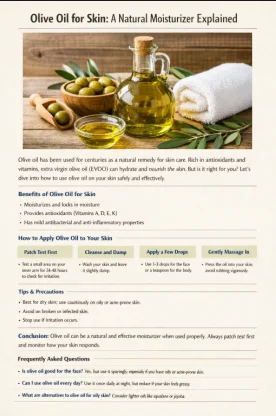
Key benefits at a glance
- Moisturizes and locks in water when applied to damp skin.
- Provides antioxidants and vitamins A, D, E, and K that may support skin repair and reduce inflammation.
- Mild antimicrobial and wound‑healing support have been observed in some studies, making it useful for dry, cracked skin.
Which Olive Oil to Choose
- Choose extra‑virgin olive oil (EVOO) for topical use because it contains the highest levels of polyphenols and antioxidants.
- Use food‑grade EVOO if you don’t have a cosmetic formulation; avoid scented or adulterated oils if you have sensitive skin.
How to Apply Olive Oil Step by Step
Follow this routine to get the benefits without overdoing it.
- Patch test first. Apply one drop to the inner forearm and wait 24–48 hours for any reaction.
- Cleanse gently. Wash the area with a mild cleanser and pat the skin damp—olive oil works best on slightly wet skin to trap moisture.
- Use small amounts. For the face, start with 1–3 drops; for the body, a teaspoon is usually enough. Warm the oil between your palms.
- Press, don’t rub. Gently press and smooth the oil into skin to avoid overstimulation.
- Frequency. Start with once nightly for dry skin; reduce frequency if skin becomes greasy or congested.
Precautions and Who Should Avoid It
- Acne‑prone or oily skin: Olive oil is relatively heavy and can clog pores for some people; dermatologists advise caution and recommend lighter oils for acne‑prone skin.
- Broken or infected skin: Avoid applying to open, infected wounds without medical advice; consult a healthcare provider for diabetic or complicated wounds.
- Allergic or irritant reactions: Stop immediately if you notice redness, itching, burning, or swelling.
Practical Uses and Alternatives
- Body moisturizer and massage oil: Best suited for dry elbows, knees, hands, and feet.
- Makeup remover: A small amount can dissolve waterproof makeup; follow with a gentle cleanser.
- Mix into creams: Add a drop to your regular moisturizer to boost hydration without replacing it entirely.
- Lighter alternatives for oily skin: Squalane, jojoba, or rosehip oil are less likely to clog pores and are good substitutes.
SEO Tips for Sharing This Content Online
- Primary keywords: olive oil for skin, extra virgin olive oil skin benefits, how to use olive oil on the face.
- Secondary keywords: natural moisturizer, olive oil skincare tips, olive oil for dry skin.
- Suggested meta title: How to Use Olive Oil on Your Skin: Benefits, Steps, and Safety Tips.
- Suggested meta description: Discover dermatologist‑backed tips for using extra‑virgin olive oil as a natural moisturizer, plus precautions for acne‑prone skin and lighter oil alternatives.
Conclusion
Olive oil can be an effective, natural moisturizer when used correctly. Choose extra‑virgin olive oil, always patch test, apply it to damp skin in small amounts, and avoid routine use on acne‑prone or oily complexions. When used thoughtfully, EVOO offers hydration, antioxidants, and gentle wound‑healing support—making it a valuable addition to a minimalist skincare routine.
Frequently Asked Questions
Is olive oil good for the face? Yes, for dry or sensitive skin when used sparingly and applied to damp skin; avoid if you are prone to breakouts.
Can I use olive oil every day? You can try nightly use, but monitor your skin. Reduce frequency if skin becomes oily or congested.
Will olive oil clog my pores? It can for some people—especially those with oily or acne-prone skin. Consider lighter oils like squalane or jojoba if you notice breakouts.
Can olive oil help heal wounds? Some evidence suggests olive oil’s antioxidants and triterpenes support wound healing, but seek medical advice for infected or diabetic wounds.
What’s the best way to remove olive oil from skin? Double‑cleanse: use an oil‑dissolving wipe or gentle cleanser followed by a water‑based cleanser to remove residue.

Health & Wellness Writer | Research-Informed Health Content Creator
A.K.M. Monjurul Hoque is a health and wellness writer specializing in health, beauty, fitness, nutrition and healthy living. His content is informed by health journals, books, seminars, training programs, and discussions with experienced healthcare professionals. He writes clear, practical and research-informed articles for general education and encourages readers to seek personalized advice from qualified medical professionals.