SpaceX is changing space exploration. Its achievements inspire the world.
Founded by Elon Musk in 2002, SpaceX aims to reduce space travel costs and enable colonization of Mars. The company has achieved remarkable milestones, like the first privately-funded spacecraft to reach orbit and the first reusable rocket. SpaceX’s innovative approach reshapes our future in space.
With successful missions to the International Space Station and plans for Mars, SpaceX pushes boundaries. This blog explores SpaceX’s journey, its groundbreaking technology, and what lies ahead. Prepare to be amazed by the company making space travel more accessible and exciting for everyone.
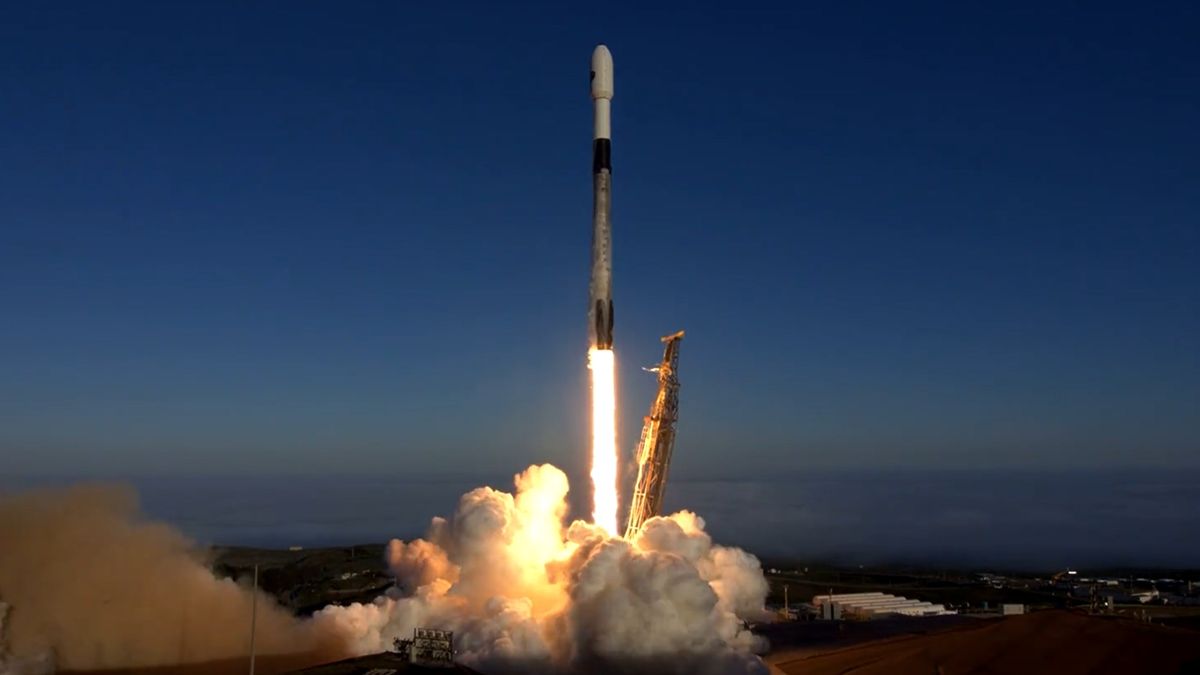
Credit: www.space.com
Introduction To Spacex
SpaceX is a private aerospace company founded by Elon Musk. It aims to reduce space transportation costs and enable the colonization of Mars. Over the years, it has made significant strides in space technology, launching numerous rockets and spacecraft. This blog post provides an overview of SpaceX’s founding story and its mission and vision.
Founding Story
SpaceX was founded in 2002 by Elon Musk. He wanted to make space travel affordable. The early years were challenging. They faced many obstacles.
Elon Musk invested $100 million of his own money. He believed in the dream. The first rocket, Falcon 1, had many setbacks. It failed three times before succeeding.
Here are some key events:
- 2002: SpaceX was founded.
- 2006: First launch of Falcon 1.
- 2008: Successful launch of Falcon 1.
The success of Falcon 1 was a turning point. It proved that private companies could reach space. This success led to more investments and contracts.
Today, SpaceX is a leader in space technology. It continues to innovate and push boundaries.
Mission And Vision
SpaceX’s mission is to reduce space transportation costs. They aim to make space travel accessible to everyone. This includes the dream of colonizing Mars.
Their vision is to create a multi-planetary society. Elon Musk believes humans need to become a spacefaring species. This will ensure our survival.
Here are some goals:
- Develop reusable rockets.
- Enable human spaceflight.
- Establish a colony on Mars.
SpaceX has already achieved many milestones. They have launched the Falcon Heavy, the most powerful operational rocket. They have also developed the Dragon spacecraft, which can carry humans to space.
In the future, SpaceX plans to send humans to Mars. They are developing the Starship rocket for this purpose. The goal is to make space travel as common as air travel.
SpaceX’s mission and vision inspire many. They show what is possible with determination and innovation.
Key Achievements
SpaceX has made significant strides in space exploration. This private company, founded by Elon Musk, has achieved many remarkable feats. Their key achievements have paved the way for new advancements in technology and space travel.
Falcon 1 Launch
The Falcon 1 was SpaceX’s first rocket. Its journey began with several challenges. The first three launches failed. Each failure provided valuable lessons. Finally, on September 28, 2008, the fourth launch succeeded.
This success was historic. It marked the first privately developed liquid-fueled rocket to reach orbit. This achievement opened doors for future missions. It also proved that a private company could compete in the space industry.
- First launch: March 24, 2006
- Second launch: March 21, 2007
- Third launch: August 3, 2008
- Successful launch: September 28, 2008
Falcon 1’s success was a crucial milestone. It laid the foundation for SpaceX’s future rockets. The lessons learned were invaluable. It demonstrated perseverance and innovation.
Crew Dragon Success
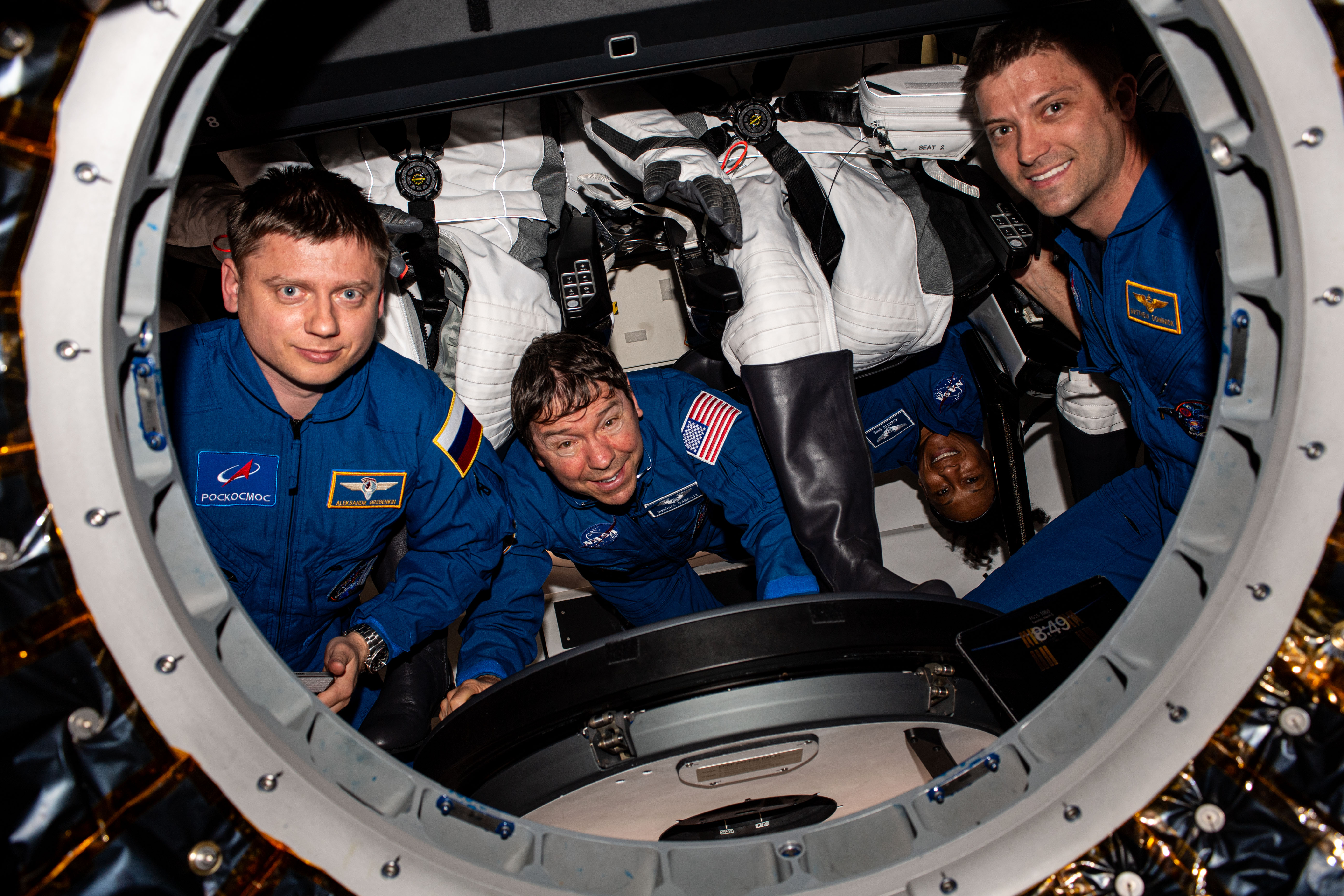
The Crew Dragon has been another major achievement for SpaceX. It is designed to carry astronauts to the International Space Station (ISS). Its first crewed mission was launched on May 30, 2020.
This mission was significant for several reasons. It was the first time a private company sent humans to the ISS. It also marked the return of human spaceflight from U.S. soil since 2011. The mission, known as Demo-2, was a major step forward.
- First crewed mission: May 30, 2020
- Arrival at ISS: May 31, 2020
- Return to Earth: August 2, 2020
The success of Crew Dragon has had a lasting impact. It proved the capability of private companies in human spaceflight. It also opened up possibilities for future missions. SpaceX continues to innovate and push boundaries in space travel.
Innovative Technologies
SpaceX is at the forefront of space exploration and technology. Their innovative technologies are transforming the aerospace industry. From reusable rockets to the development of the Starship, SpaceX is pushing the boundaries of what is possible. This blog post delves into the key technologies behind SpaceX’s success.
Reusable Rockets
Reusable rockets are one of SpaceX’s most significant achievements. Traditional rockets are used once and discarded. SpaceX’s rockets, however, can be reused multiple times. This reduces the cost of space travel significantly. It also makes space missions more sustainable.
The Falcon 9 rocket is a prime example. It can land back on Earth after delivering its payload to space. This is made possible through several key technologies:
- Grid fins: These help guide the rocket back to its landing pad.
- Landing legs: These deploy to help the rocket land safely.
- Autonomous drone ships: These are used for ocean landings.
Reusable rockets have several benefits:
- Cost savings: Each launch is cheaper.
- Faster turnaround: Rockets can be quickly refurbished and relaunched.
- Environmental impact: Less waste is produced.
Starship Development
Starship is SpaceX’s next big project. It aims to make interplanetary travel possible. Starship will be fully reusable. It is designed for missions to Mars and beyond. The development of Starship involves several phases:
- Prototypes: Early versions are built and tested.
- High-altitude flights: These test the vehicle’s performance in different conditions.
- Orbital launches: Final testing before operational missions.
Starship has several key features:
- Stainless steel construction: Durable and heat-resistant.
- Raptor engines: Powerful engines that use methane and oxygen.
- Large payload capacity: Can carry up to 100 tons to space.
The goal of Starship is ambitious. It aims to enable human settlement on Mars. This would mark a new era in space exploration. SpaceX is committed to making this vision a reality.
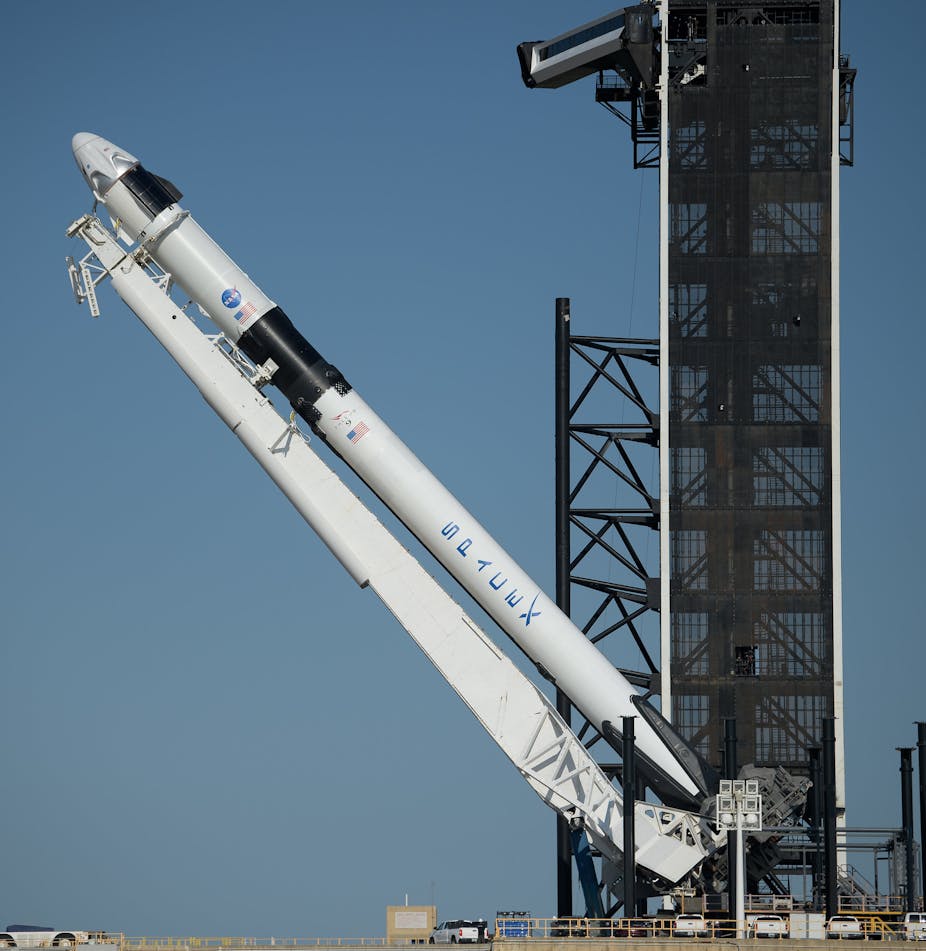
Credit: theconversation.com
Commercial Launch Services
SpaceX is a private company that provides commercial launch services. They are known for their advanced technology and reusable rockets. SpaceX has made space travel more affordable. Their services help various industries by launching satellites and other payloads into space.
Satellite Deployments
SpaceX is a leader in satellite deployments. They offer reliable and cost-effective services. Many companies use SpaceX to launch their satellites.
Here are some key points about their satellite deployment services:
- Cost-effective: SpaceX offers affordable launch options.
- Reliable: Their track record shows successful launches.
- Reusable rockets: This reduces the cost and environmental impact.
SpaceX uses the Falcon 9 rocket for most satellite launches. This rocket can carry large payloads. It is also reusable, which saves money. They also have the Falcon Heavy, which can carry even larger payloads.
| Rocket | Payload Capacity | Reusability |
|---|---|---|
| Falcon 9 | 22,800 kg to LEO | Yes |
| Falcon Heavy | 63,800 kg to LEO | Yes |
Many satellites have been deployed by SpaceX. These satellites provide various services. They include communication, weather monitoring, and earth observation.
Global Partnerships
SpaceX has formed many global partnerships. These partnerships help them reach new markets. They also improve their technology and services.
Some of their key partners include:
- NASA: They work together on various space missions.
- European Space Agency: They collaborate on satellite launches.
- Commercial companies: Many businesses use SpaceX for their satellite needs.
These partnerships bring many benefits. They help SpaceX with funding and technology. They also open up new opportunities for collaboration.
SpaceX also partners with international space agencies. This helps them expand their reach. It allows them to offer services worldwide.
These global partnerships are crucial for SpaceX. They enable them to continue innovating. They also help them maintain their position as a leader in the space industry.
Mars Colonization Plans
SpaceX, founded by Elon Musk, aims to make humans a multi-planetary species. The main focus is Mars. SpaceX has ambitious plans for Mars colonization. The goal is to establish a self-sustaining city on Mars. This could be a big leap for humanity.
Long-term Goals
SpaceX has many long-term goals for Mars. These goals aim to make Mars a new home for humans. Here are some of the main goals:
- Establish a self-sustaining city: The city should support itself without help from Earth.
- Build a reliable transportation system: SpaceX plans to use the Starship rocket for this.
- Create a breathable atmosphere: This will involve creating oxygen on Mars.
- Develop agriculture: Growing food on Mars is essential for survival.
- Set up research facilities: These will help study Mars and improve living conditions.
These goals are challenging but achievable. With careful planning, SpaceX aims to make Mars a second home for humans. This will involve many steps. Each step will bring us closer to living on Mars.
Challenges Ahead
There are many challenges to colonizing Mars. Some of the main challenges include:
- Harsh environment: Mars has extreme cold and low air pressure.
- Radiation: High levels of radiation can harm humans.
- Long travel time: It takes several months to reach Mars.
- Cost: The mission will need a lot of money.
- Technical issues: Developing reliable technology is crucial.
Each challenge needs a solution. SpaceX is working on these solutions. For example, they are developing better spacesuits. These suits can protect against radiation. They are also working on growing food on Mars. This will help with the food supply. The goal is to overcome these challenges step by step.
SpaceX knows the journey will be hard. But they are committed to making it happen. Each challenge is a step towards a new future. A future where humans live on Mars.
Credit: blogs.nasa.gov
Starlink Project
SpaceX, a company founded by Elon Musk, has made significant strides in space technology. One of its ambitious projects is the Starlink Project. This project aims to provide global high-speed internet using satellites. By launching thousands of small satellites, SpaceX plans to create a network that can deliver internet to remote areas. This could change how people access the internet, especially in places with poor connectivity.
Internet From Space
The Starlink Project is about providing internet from space. SpaceX uses a network of small satellites called Starlink satellites. These satellites orbit the Earth at a low altitude. They send internet signals to ground stations and user terminals. This method can bring internet to places that have no access. It can also improve internet speed and reliability.
Here are some key points about the Starlink internet:
- Global Coverage: Starlink aims to cover the entire globe, even remote areas.
- High Speed: Users can expect speeds comparable to or faster than traditional broadband.
- Low Latency: Low Earth orbit satellites reduce the time it takes for data to travel, resulting in faster response times.
- Easy Installation: User terminals are easy to set up and use.
Currently, Starlink is in its beta testing phase. Many users report good experiences with the service. SpaceX continues to launch more satellites to improve coverage and performance. The goal is to have thousands of satellites in orbit, creating a robust network.
Impact On Connectivity
The impact of the Starlink Project on connectivity is significant. It can bring internet to underserved and rural areas. These areas often lack reliable internet options. With Starlink, people in these regions can access high-speed internet. This can help with education, healthcare, and business.
Here are some potential benefits:
- Education: Students in remote areas can participate in online classes and access educational resources.
- Healthcare: Telemedicine services can reach more people, improving healthcare access.
- Business: Businesses can operate more efficiently with reliable internet, leading to economic growth.
Besides improving access, Starlink can also enhance existing internet services. For instance, it can provide backup internet for areas with frequent outages. It can also offer internet services during natural disasters when traditional infrastructure fails.
Overall, the Starlink Project has the potential to change how people connect to the internet. By providing high-speed, reliable internet from space, it can bridge the digital divide and bring more opportunities to people around the world.
Competition And Collaborations
SpaceX is a leading company in the space industry. Founded by Elon Musk, it has changed how we look at space travel. Their work affects both competition and collaborations in this field. SpaceX has partnerships with NASA and faces competition from other companies.
Nasa Partnerships
SpaceX and NASA have a strong working relationship. These partnerships are crucial for both. They focus on innovation and exploration. Here are some key points:
- SpaceX works on NASA’s Commercial Crew Program.
- They help transport astronauts to the International Space Station (ISS).
- NASA uses SpaceX’s Dragon capsule for cargo missions.
This partnership offers many benefits. It allows cost-effective space travel. NASA saves money while still reaching its goals. SpaceX gains valuable experience and funding.
They also work together on the Artemis program. This program aims to return humans to the Moon. SpaceX is developing the Starship spacecraft for this mission. Their collaboration enhances technology and expands human reach in space.
Rival Companies
SpaceX faces competition from several companies. These rivals push the space industry forward. Here are some major competitors:
| Company | Key Projects |
|---|---|
| Blue Origin | New Shepard, New Glenn |
| Boeing | Starliner, Space Launch System |
| Northrop Grumman | Antares, Cygnus |
Blue Origin, founded by Jeff Bezos, focuses on reusable rockets. Their New Shepard rocket aims for suborbital tourism. New Glenn targets orbital missions.
Boeing is another strong competitor. Their Starliner capsule competes with SpaceX’s Dragon. They also work on the Space Launch System (SLS) for NASA’s Artemis program.
Northrop Grumman is known for the Antares rocket. They use it to launch the Cygnus spacecraft. This spacecraft delivers supplies to the ISS.
These companies challenge SpaceX in various ways. Competition leads to better technology and more options. The space industry grows, benefiting everyone involved.
Future Prospects
SpaceX is a company focused on space travel and exploration. Founded by Elon Musk, it aims to make space accessible to everyone. The company has achieved significant milestones and continues to push boundaries. The future prospects of SpaceX look promising with several exciting plans.
Upcoming Missions
SpaceX has several upcoming missions lined up. These missions range from launching satellites to sending humans to space. Here are some key missions to look out for:
- Starship Test Flights: SpaceX is testing its Starship spacecraft. This vehicle aims to transport humans and cargo to the Moon and Mars.
- Moon Missions: SpaceX plans to send astronauts to the Moon. They have contracts with NASA for the Artemis program.
- Mars Missions: The ultimate goal is to send humans to Mars. SpaceX is working on the technology to make this possible.
- Satellite Launches: SpaceX continues to launch satellites for various clients. These include communication and observation satellites.
The company also focuses on reusable rockets. This technology reduces the cost of space travel. By reusing rockets, SpaceX can conduct more missions at a lower cost.
Vision For Space Travel
SpaceX has a clear vision for the future of space travel. The company wants to make space travel more accessible and affordable. Here are some key aspects of their vision:
- Interplanetary Travel: SpaceX aims to enable travel between planets. The goal is to make life multiplanetary.
- Reusable Rockets: Reusability is a core part of their strategy. It makes space travel cheaper and more sustainable.
- Colonizing Mars: The company plans to build a human settlement on Mars. This will ensure the survival of humanity in case of disasters on Earth.
- Space Tourism: SpaceX wants to offer space travel to tourists. This will allow more people to experience space.
By focusing on these goals, SpaceX hopes to pave the way for a new era of space exploration. The company believes that space travel should not be limited to a few. It should be something that everyone can experience.
Frequently Asked Questions
What Is Spacex Known For?
SpaceX is famous for developing rockets and spacecraft. They aim to make space travel affordable.
Who Founded Spacex And When?
Elon Musk founded SpaceX in 2002. He wanted to reduce space transportation costs.
What Are Spacex’s Major Achievements?
SpaceX launched the first privately funded spacecraft to orbit, the Dragon, and developed reusable rockets.
Conclusion
SpaceX has made significant strides in space exploration. Their innovations have inspired many. With each mission, they push boundaries further. The future of space travel looks bright. SpaceX continues to lead with groundbreaking technology. Exciting possibilities lie ahead. This is just the beginning.
Stay tuned for more space adventures.