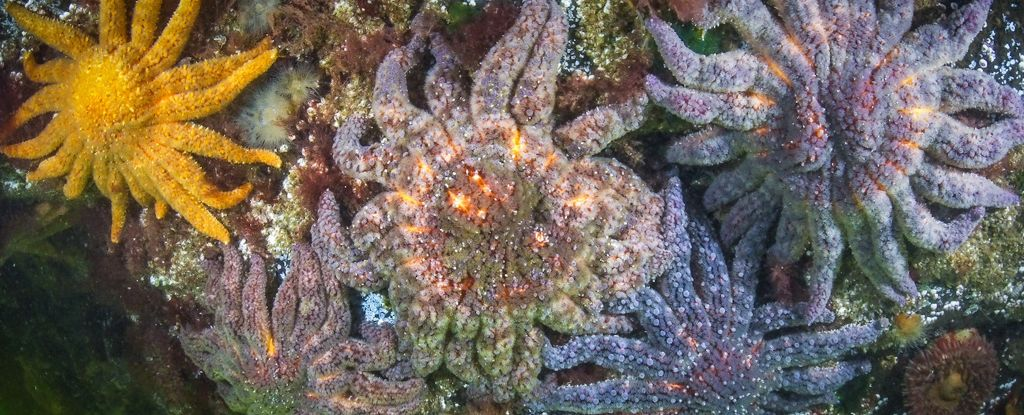
Picture a starfish, not just any starfish, but a magnificent sunflower star – a marine marvel stretching wide as a dinner plate, adorned with up to 24 arms in brilliant sunset hues. Now, imagine that beauty dissolving before your eyes, its vibrant colors fading as its limbs twist and literally melt away, leaving behind a horrifying puddle. This nightmare is reality for countless starfish around the globe, victims of a baffling and brutal epidemic: sea star wasting disease.
For years, this marine plague has felt like a cruel, unsolvable mystery. But after an intense, four-year scientific manhunt, fueled by cutting-edge gene sequencing and painstaking lab work, researchers believe they’ve finally unmasked the culprit: a bacterium named Vibrio pectenicida.
This wasn’t just about solving a scientific puzzle; it was a desperate plea from an ecosystem teetering on collapse. The first alarms sounded in 2013, as the disease decimated starfish populations along the North American west coast, a chilling preview of what was to come. Soon, similar reports flooded in from across the planet, painting a grim picture of widespread devastation impacting over 40 different species.
The fate of the sunflower star has been particularly heartbreaking. These majestic creatures have all but vanished from Alaska to California, a staggering 90% decline. They’re caught in a terrifying pincer movement: ravaged by disease and suffocated by deadly marine heatwaves, a direct consequence of our changing climate. Officially listed as critically endangered in 2020, their survival hangs precariously in the balance.
But why should we mourn the loss of a starfish? Because the ocean is a tapestry woven with delicate threads, and the disappearance of these stars is ripping holes in the fabric. They are crucial keystone predators, keeping sea urchin populations under control. Without them, urchins are on a feeding frenzy, devouring vital kelp forests, turning vibrant underwater gardens into barren deserts. These kelp forests are much more than scenic backdrops; they’re vital nurseries for countless species, from playful otters and sleek seals to the fish and shellfish we depend on. They even act as natural sponges, soaking up carbon dioxide and shielding our coastlines from the fury of storms.
The quest to identify Vibrio pectenicida was a relentless battle. “This Vibrio is a sneaky critter,” explains University of Washington marine ecologist Drew Harvell. It was so adept at hiding its presence, it evaded detection by traditional methods. Imagine searching for a ghost in a haunted house – that’s how elusive this pathogen proved to be. Adding to the challenge was the scarcity of healthy starfish for comparison and a general lack of knowledge about infectious diseases in marine life.
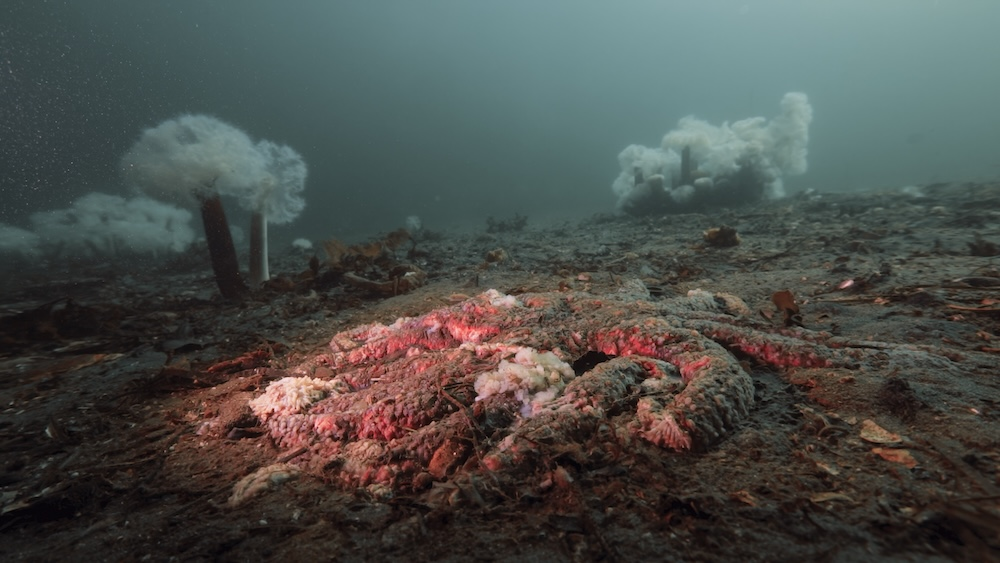
A pivotal breakthrough came from evolutionary ecologist Melanie Prentice, who led a series of meticulously controlled experiments. Using sunflower stars raised in quarantine, they witnessed the horrifying progression of the disease firsthand after exposing them to infected tissues and fluids. Through careful observation and elimination, they confirmed that the root cause was bacterial, not viral.
Finally, by sequencing the RNA of infected starfish, they zeroed in on V. pectenicida, a bacterium known to attack shellfish. When they isolated a specific strain, FHCF-3, and introduced it to healthy starfish, the nightmare played out again. Their limbs twisted, dissolved, and the mystery was finally solved.
“We all had chills. We thought, That’s it. We have it. That’s what causes wasting,” recalls marine disease ecologist Alyssa Gehman, capturing the electrifying moment of discovery.
Now armed with this crucial knowledge, scientists can begin the fight to save these keystone species. As Jono Wilson from The Nature Conservancy points out, “Understanding what led to the loss of the sunflower sea star is a key step in recovering this species and all the benefits that kelp forest ecosystems provide.”
While this discovery is a significant victory, the war is far from won. Scientists suspect that climate change plays a significant role, with warmer waters potentially creating the perfect breeding ground for Vibrio. The fact that some sunflower star populations are clinging to life in the icy waters of British Columbia lends credence to this theory.
This breakthrough offers a beacon of hope, a chance to reverse the devastating course of this ecological crisis. With a clearer understanding of the enemy, we have a renewed sense of purpose and a better shot at protecting these magnificent creatures and the vibrant ecosystems they help sustain. The sea simply wouldn’t be the same without its stars, and thanks to this discovery, we have a renewed chance to keep them shining.