In today’s competitive digital landscape, staying ahead of the SEO game requires more than just basic optimization techniques. Artificial intelligence has revolutionized how we approach search engine optimization, making it faster, smarter, and more effective than ever before. Whether you’re a seasoned marketer, a small business owner, or a content creator, AI-powered SEO tools can dramatically improve your search rankings and drive meaningful traffic to your website.
This comprehensive guide explores the most powerful AI SEO tools available today, helping you make informed decisions about which platforms deserve a place in your digital marketing arsenal.
Why AI SEO Tools Matter in Modern Marketing
The SEO landscape has transformed dramatically over the past few years. Google’s algorithms have become increasingly sophisticated, with AI-powered updates like RankBrain, BERT, and the recent helpful content system changing how search engines interpret and rank content.
Traditional SEO approaches—while still valuable—often fall short when competing against businesses leveraging AI technology. Here’s what makes AI SEO tools indispensable:
- Data Analysis at Scale: AI can process millions of data points in seconds, identifying patterns and opportunities that would take humans weeks to discover
- Predictive Insights: Machine learning algorithms can forecast search trends and user behavior, helping you stay ahead of the curve
- Content Optimization: AI analyzes top-ranking content to provide specific recommendations for improving your own pages
- Automation: Repetitive tasks like keyword research, technical audits, and competitor analysis become automated, freeing up your time for strategy
- Personalization: AI tools adapt to your specific niche, learning from your data to provide increasingly relevant suggestions
Top AI SEO Tools for Keyword Research
1. Semrush with AI Writing Assistant
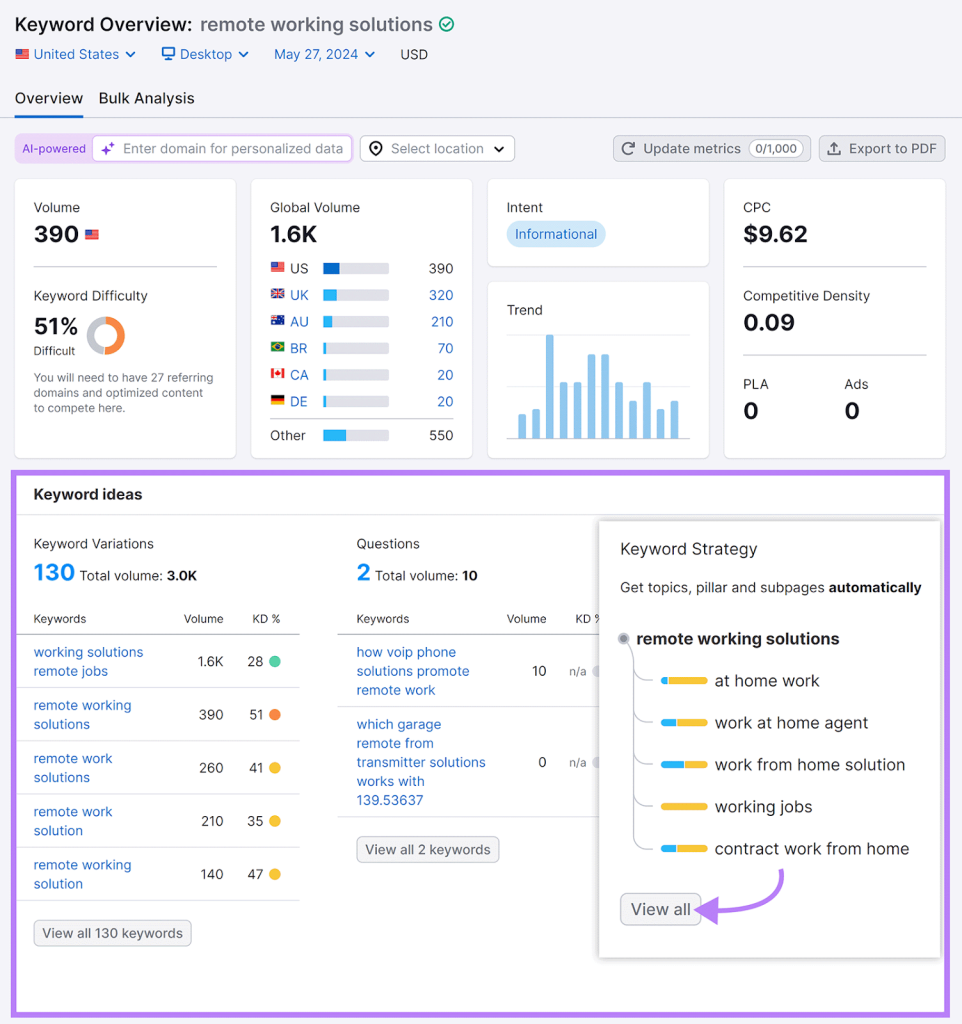
Semrush has integrated artificial intelligence throughout its platform, but its AI Writing Assistant stands out as a game-changer for content creators. This tool analyzes your content in real-time, comparing it against the top 10 Google results for your target keyword.
Key Features:
- Real-time SEO recommendations as you write
- Readability scoring and tone analysis
- Originality checks to avoid duplicate content
- Smart keyword suggestions based on semantic search
Best For: Content marketers and bloggers who want to optimize while they create
Pricing: Starting at $129.95/month
The platform’s Keyword Magic Tool uses AI to generate thousands of keyword variations, grouping them by intent and providing accurate search volume data. What sets Semrush apart is its ability to identify question-based keywords—perfect for capturing voice search traffic and featured snippets.
2. Surfer SEO
Surfer SEO has become a favorite among content creators for good reason. Its AI-driven content editor provides a detailed roadmap for creating search-optimized articles that rank.
What Makes It Special:
- Content Score metric that predicts ranking potential
- SERP Analyzer that reverse-engineers top-ranking pages
- AI Outline Generator that structures your content automatically
- Natural Language Processing for semantic keyword integration
Best For: Writers and agencies producing high-volume content
Pricing: Plans start at $69/month
Surfer’s AI Outline feature is particularly impressive. Instead of starting from a blank page, you input your target keyword, and the AI generates a comprehensive article structure based on what’s currently ranking. It suggests headings, questions to answer, and even the ideal word count for each section.
3. Clearscope
Clearscope uses natural language processing to help you create content that comprehensively covers a topic. Unlike tools that focus solely on keyword density, Clearscope ensures your content demonstrates true topical authority.
Standout Features:
- Content grading from A+ to F based on relevance
- Related terms and concepts to include naturally
- Competitive content analysis
- Google Docs and WordPress integrations
Best For: Enterprise content teams focused on quality over quantity
Pricing: Custom pricing (typically starts around $170/month)
AI Tools for Technical SEO and Site Audits
4. Screaming Frog SEO Spider (AI-Enhanced)
While Screaming Frog has been a staple for technical SEO audits, recent updates have incorporated AI-powered analysis features that identify critical issues faster than manual reviews.
Technical Capabilities:
- Automated detection of duplicate content
- Broken link identification and prioritization
- Crawl analysis with AI-driven recommendations
- XML sitemap generation and validation
Best For: Technical SEO specialists and web developers
Pricing: Free for up to 500 URLs; paid license at £149/year
5. MarketMuse
MarketMuse employs artificial intelligence to conduct comprehensive content inventories and identify gaps in your content strategy. Its AI analyzes your entire website against competitors to reveal opportunities.
Unique Strengths:
- Content decay detection (identifies aging content that needs updates)
- Topic cluster recommendations
- Competitive content gap analysis
- Personalized difficulty scores for ranking opportunities
Best For: Content strategists and enterprise SEO teams
Pricing: Starts at $149/month for Standard plan
MarketMuse’s AI doesn’t just tell you what keywords to target—it reveals entire topics you should cover to establish topical authority in your niche. This strategic approach aligns perfectly with Google’s emphasis on expertise and comprehensive content.
AI-Powered Content Generation Tools
6. Jasper AI (formerly Jarvis)
Jasper has evolved into one of the most sophisticated AI writing tools specifically designed with SEO in mind. It generates human-quality content while incorporating SEO best practices.
Key Capabilities:
- SEO mode with automatic keyword integration
- Multiple content templates (blog posts, product descriptions, ads)
- Tone and style customization
- 29+ language support
Best For: Marketing teams scaling content production
Pricing: Starting at $49/month for Creator plan
While AI-generated content requires human oversight and editing, Jasper significantly accelerates the content creation process. Its SEO mode ensures that keywords appear naturally throughout the text while maintaining readability.
7. Frase
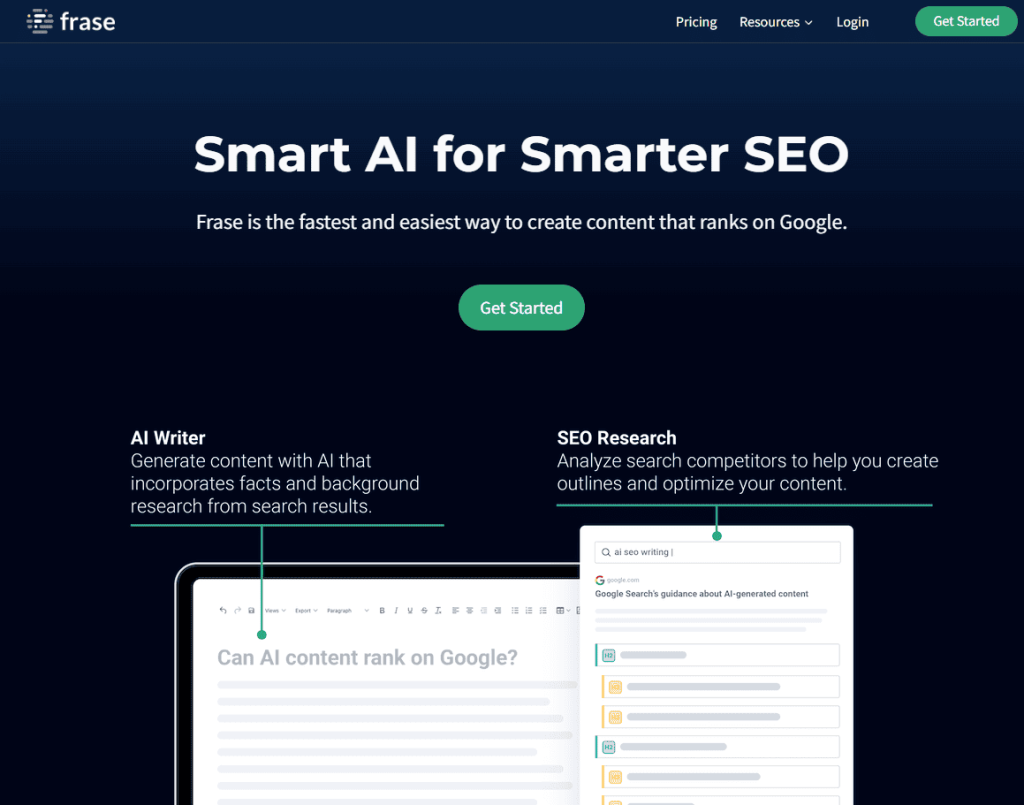
Frase combines AI-powered content creation with SEO research in a single platform. It’s designed to help you write content that answers user queries comprehensively.
Notable Features:
- AI content brief generation
- Question research from “People Also Ask”
- Automated content optimization scoring
- Answer Engine for creating FAQ sections
Best For: Content creators focused on user intent
Pricing: Starts at $15/month
Frase excels at understanding search intent. By analyzing the top-ranking pages for any query, it identifies the questions users want answered and helps you structure content accordingly.
AI Tools for Link Building and Outreach
8. Pitchbox
Pitchbox leverages AI to streamline the entire link-building process, from prospecting to follow-up emails.
Automation Features:
- AI-powered prospect discovery
- Personalized outreach email templates
- Automated follow-up sequences
- Campaign performance tracking
Best For: SEO agencies and businesses focused on authority building
Pricing: Custom pricing based on team size
9. BuzzStream
BuzzStream’s AI capabilities help identify link opportunities and manage relationships with influencers and webmasters at scale.
Core Functions:
- Contact discovery and verification
- Relationship management CRM
- Email template personalization
- Link tracking and reporting
Best For: PR teams and link builders
Pricing: Starts at $24/month
All-in-One AI SEO Platforms
10. Alli AI
Alli AI stands out as a comprehensive SEO optimization platform that automates technical improvements across your entire website.
Comprehensive Features:
- Bulk SEO optimization across pages
- A/B testing for SEO changes
- Automated schema markup
- Real-time SEO recommendations
Best For: E-commerce sites and large websites
Pricing: Custom pricing
Alli AI’s unique value proposition is its ability to deploy SEO changes at scale without requiring constant manual updates. It’s particularly valuable for sites with hundreds or thousands of pages.
11. Diib
Diib offers AI-driven website analytics and SEO recommendations tailored specifically for small businesses and startups.
User-Friendly Features:
- Automated daily health checks
- Plain-English recommendations
- Social media integration
- Competitor benchmarking
Best For: Small businesses and non-technical users
Pricing: Free basic plan; Pro starts at $7.99/month
AI Tools for Local SEO
12. BrightLocal with AI Insights
BrightLocal has integrated AI to help local businesses improve their visibility in location-based searches.
Local SEO Capabilities:
- Automated citation building
- Review monitoring and response suggestions
- Local rank tracking
- Reputation management AI
Best For: Local businesses and multi-location enterprises
Pricing: Starts at $35/month
How to Choose the Right AI SEO Tool
With so many options available, selecting the right AI SEO tool depends on several factors:
1. Your Specific Needs
- Content creation? Look at Jasper, Frase, or SurferSEO.
- Technical audits? Choose Screaming Frog or MarketMuse
- Comprehensive platform? Consider Semrush or Ahrefs
2. Budget Constraints
- Starting out? Try free tools like Diib’s basic plan or Ubersuggest
- Mid-range budget? Surfer SEO and Frase offer excellent value
- Enterprise needs? Invest in Semrush, MarketMuse, or Clearscope
3. Team Size and Expertise
- Solo creators: User-friendly options like Surfer SEO or Frase
- Agencies: Scalable platforms like Semrush or BuzzStream
- Technical teams: Advanced tools like Screaming Frog
4. Integration Requirements Consider whether the tool integrates with your existing stack (WordPress, Google Analytics, CRM systems, etc.)
Best Practices for Using AI SEO Tools
While AI tools are powerful, they work best when combined with human expertise and strategic thinking:
1. Don’t Rely Solely on AI-Generated Content
Use AI as a starting point, but always add your unique insights, expertise, and brand voice. Google’s algorithms can detect purely AI-generated content that lacks genuine value.
2. Verify AI Recommendations
AI tools make suggestions based on data, but they don’t understand your specific business context. Always evaluate recommendations through the lens of your brand and audience.
3. Focus on User Experience First
SEO is ultimately about serving users, not algorithms. Ensure that AI optimizations improve the actual user experience rather than just checking boxes.
4. Combine Multiple Tools
No single AI SEO tool does everything perfectly. Most successful SEO professionals use a combination of 3-5 tools that complement each other’s strengths.
5. Stay Updated
AI SEO tools evolve rapidly. Regularly explore new features and updates to maximize your investment.
The Future of AI in SEO
The integration of AI in SEO is still in its early stages. Here’s what we can expect:
- Predictive SEO: AI will increasingly predict algorithm changes and proactively recommend adjustments
- Voice Search Optimization: Advanced natural language processing will better optimize for conversational queries
- Visual Search: AI tools will help optimize images and videos for visual search engines
- Automated Technical SEO: More comprehensive automation of technical optimizations, from site speed to Core Web Vitals
- Intent-Based Optimization: Better understanding of user intent beyond keywords
Conclusion
AI SEO tools have transformed from experimental technology to essential business tools in just a few years. Whether you’re optimizing content, conducting technical audits, building links, or analyzing competitors, there’s an AI-powered solution that can make your work faster, smarter, and more effective.
The key to success isn’t just choosing the right tools—it’s understanding how to use them strategically. Start with one or two tools that address your most pressing needs, master them thoroughly, and then expand your toolkit as your SEO strategy matures.
Remember that AI is a powerful assistant, not a replacement for human creativity and strategic thinking. The most successful SEO professionals use AI to handle the heavy lifting of data analysis and routine tasks, freeing them to focus on what machines can’t do: creative problem-solving, relationship building, and crafting authentic, engaging content.
The SEO landscape will continue evolving, but one thing is certain: those who embrace AI-powered tools while maintaining focus on delivering genuine value to users will thrive in this new era of search optimization.
Frequently Asked Questions (FAQ)
What are AI SEO tools?
AI SEO tools are software applications that use artificial intelligence, machine learning, and natural language processing to automate and enhance various aspects of search engine optimization. They analyze data, identify patterns, generate content recommendations, and provide insights that would be difficult or time-consuming to uncover manually.
Are AI SEO tools worth the investment?
Absolutely. AI SEO tools can save hours of manual work, provide data-driven insights, and help you compete more effectively in search results. For most businesses, the time saved and ranking improvements achieved quickly justify the cost. Even small businesses can benefit from affordable options like Frase or Surfer SEO starting under $100/month.
Can AI SEO tools guarantee first-page rankings?
No tool can guarantee specific rankings, as Google’s algorithms consider hundreds of factors and are constantly evolving. However, AI SEO tools significantly improve your chances by helping you create better-optimized content, fix technical issues, and identify opportunities your competitors might miss.
Do I need technical skills to use AI SEO tools?
Most modern AI SEO tools are designed to be user-friendly, with intuitive interfaces and plain-language recommendations. Tools like Diib and Surfer SEO are particularly beginner-friendly. However, some advanced features (particularly in technical SEO tools) benefit from having a basic understanding of web development concepts.
Will Google penalize AI-generated content?
Google doesn’t penalize AI-generated content specifically. What Google penalizes is low-quality content that doesn’t provide value to users, regardless of how it’s created. If you use AI tools to create helpful, accurate, original content that serves user needs, you won’t face penalties. Always review and enhance AI-generated content with human expertise.
Which AI SEO tool is best for beginners?
For beginners, Surfer SEO and Frase offer the best combination of user-friendliness, comprehensive features, and reasonable pricing. Both provide clear, actionable recommendations without requiring deep technical knowledge. Diib is another excellent option for those wanting simple, automated suggestions.
Can AI tools help with local SEO?
Yes, several AI tools specialize in local SEO. BrightLocal uses AI for citation building and reputation management, while platforms like Semrush and Moz include local SEO features. These tools help optimize Google Business Profiles, manage reviews, and track local rankings.
How often should I use AI SEO tools?
This depends on your content production schedule and website size. For active blogs, daily or weekly use of content optimization tools makes sense. Technical audits can be monthly or quarterly. Keyword research and competitor analysis should happen regularly as you plan new content. Most professionals check their tools at least weekly.
Are free AI SEO tools effective?
Free AI SEO tools can be useful for basic needs, especially when starting out. Tools like Ubersuggest (limited free plan) and Google’s own tools provide valuable data. However, paid tools offer more comprehensive features, accurate data, and better support. Consider starting with free versions to test, then upgrading as your needs grow.
What’s the difference between AI SEO tools and traditional SEO tools?
Traditional SEO tools primarily report data and metrics, leaving analysis and decision-making to users. AI SEO tools go further by analyzing patterns, providing specific recommendations, predicting outcomes, and in some cases, automatically implementing optimizations. AI tools learn from data to provide increasingly personalized suggestions over time.
Can small businesses compete using AI SEO tools?
Absolutely! AI SEO tools actually level the playing field by giving small businesses access to enterprise-level insights and automation. Tools like Frase, Surfer SEO, and Diib are specifically designed to be affordable for small businesses while providing powerful features that help compete with larger competitors.
How do I measure ROI from AI SEO tools?
Track these metrics before and after implementing AI SEO tools:
- Organic traffic growth
- Keyword ranking improvements
- Conversion rates from organic traffic
- Time saved on SEO tasks
- Content production efficiency
- Technical issues identified and resolved
Compare the value gained against the tool’s cost. Most businesses see positive ROI within 3-6 months when tools are used consistently and strategically.
This article was last updated in 2026 to reflect the latest AI SEO tools and best practices.