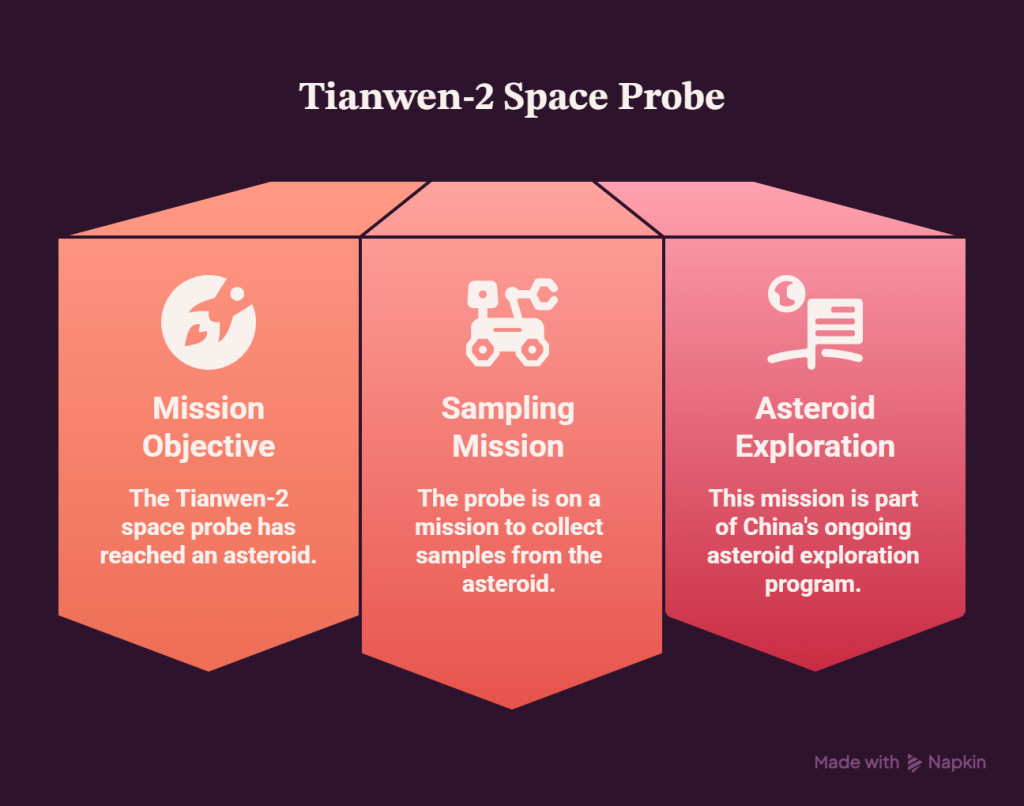
The Tianwen-2 mission is an important step in China’s space exploration journey, as the probe has successfully traveled a billion kilometers and arrived at its target asteroid, 2016 HO3, after one year. This mission falls in line with President Xi Jinping’s aim of achieving China’s “space dream.” The probe will now be able to carry out scientific investigations and sample collection from the asteroid, which acts as a quasi-satellite of the earth. This document delves into the details of the Tianwen-2 mission and the characteristics of the asteroid it aims to study.
The mission of Tianwen-2 is an overview
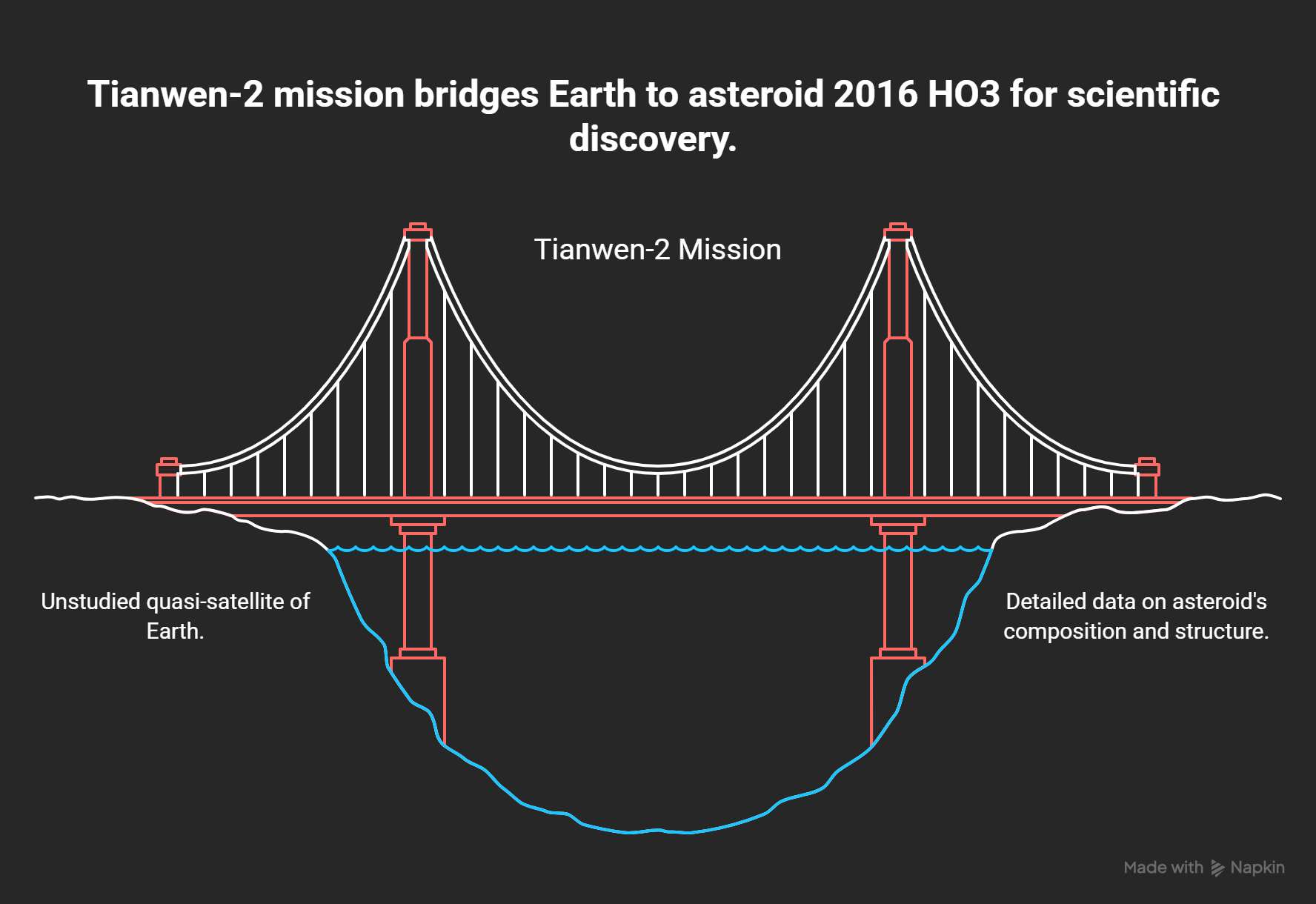
The China National Space Administration (CNSA) mission Tianwen-2 has successfully reached a distance of 20 km (12 miles) from the asteroid 2016 HO3. A few dozen meters in diameter, this asteroid was discovered in 2016 from Hawaii. Because of its unusual orbit, it orbits the sun at about the same distance as the earth, and is thus a quasi-satellite of the earth.
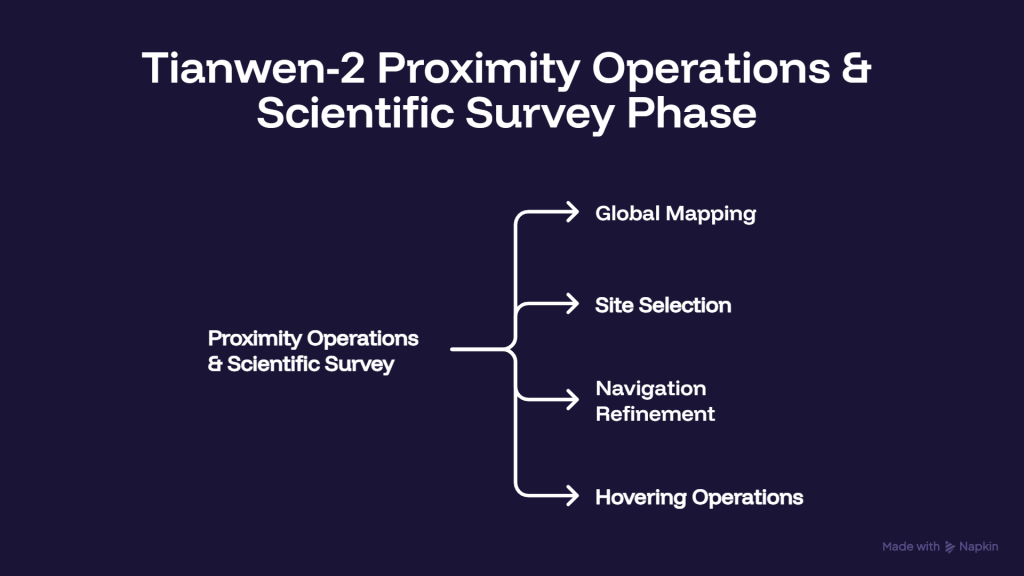
The CNSA has detailed the probe’s various scientific explorations, which will provide valuable insights into the asteroid’s morphology, material composition, and internal structure. This basic study is necessary for the future sample collection activity to be conducted.
Characteristics of Asteroid 2016 HO3
The orbit of 2016 HO3 makes it a quasi-satellite of Earth. It has a stable solar orbit, which closely resembles the terrestrial orbit around the sun, and is hence a subject of interest. The asteroid’s small size and particular orbit poses difficulties and opportunities for scientific exploration.
Discovery and Orbit
Astronomers and space agencies have been interested in 2016 HO3 since its discovery in 2016. It is in near synchronism with the Earth’s orbit so it can stay close to the Earth. This is a property that makes it a good choice for a mission to understand the composition and behavior of NEOs.
Science Goals of the Mission
The main purpose of the Tianwen-2 mission is to collect data to improve the knowledge of asteroid 2016 HO3. The CNSA has identified several priorities for science:
Morphological Analysis: The probe will examine the surface features of the asteroid, to better understand the asteroid’s geological history and how it formed.
Material Composition: Analyzing the asteroid’s composition can provide insights into the composition of the solar system and the formation of planets.
Internal Structure: To understand the internal structure of the asteroid, which will give information about the density and composition of the asteroid, which can be useful in future exploration missions.
Sample Collection: After the initial exploration phase, the probe will be able to take samples from the asteroid’s surface, which will then be brought back to Earth for further analysis.
Consequences for future space exploration
The successful arrival of Tianwen-2 at asteroid 2016 HO3 is a testament to China’s growing capabilities in space exploration. This mission will not only help in the knowledge of asteroids but will also set the base for future missions for resource utilization and planetary defense.
This indicator shows the potential for making use of the various resources that exist.
Asteroids are thought to be a source of valuable materials such as metals and water. Data from Tianwen-2 could help guide future missions to extraction resources from asteroids that would be essential for long-duration human missions to space.
Knowing what NEAs are made of and how they behave is important for planetary defence. The study of these asteroids can help scientists improve their models of their orbit and estimate their potential impact on Earth.
Conclusion
Tianwen-2, China’s mission, is a major stride in the country’s space exploration endeavors. This probe is not only expected to provide valuable scientific data but also to further our understanding of the solar system as it explores asteroid 2016 HO3. The insights gained from this mission could have far-reaching implications for future space exploration, resource utilization, and planetary defense strategies. As China keeps breaking new ground, it is increasingly establishing itself as a major space power, furthering its ‘space dream’ agenda with every success.
Presentation