





How to Improve Gut Health Naturally: 9 Simple & Effective Tips

Learn how to improve gut health naturally with easy daily habits, the best gut-friendly foods, and lifestyle changes. Boost digestion, energy, and immunity without supplements.
How to Improve Gut Health Naturally: 9 Simple & Effective Tips
Your gut is more than just a digestive organ—it’s often called your “second brain.” A healthy gut microbiome (the trillions of beneficial bacteria living inside you) affects digestion, immunity, mood, energy levels, and even mental clarity.
Modern lifestyles with processed foods, chronic stress, and poor sleep can throw your gut out of balance. The good news is you can improve gut health naturally through simple, sustainable changes in your daily routine.
Why Improving Gut Health Matters

When your gut microbiome is balanced, it helps break down food, absorb nutrients, fight harmful bacteria, and produce important compounds that support your overall health. Common signs of an imbalanced gut include bloating, irregular bowel movements, fatigue, and frequent illnesses.
Fortunately, you can restore balance with natural methods that focus on food, movement, and lifestyle habits.
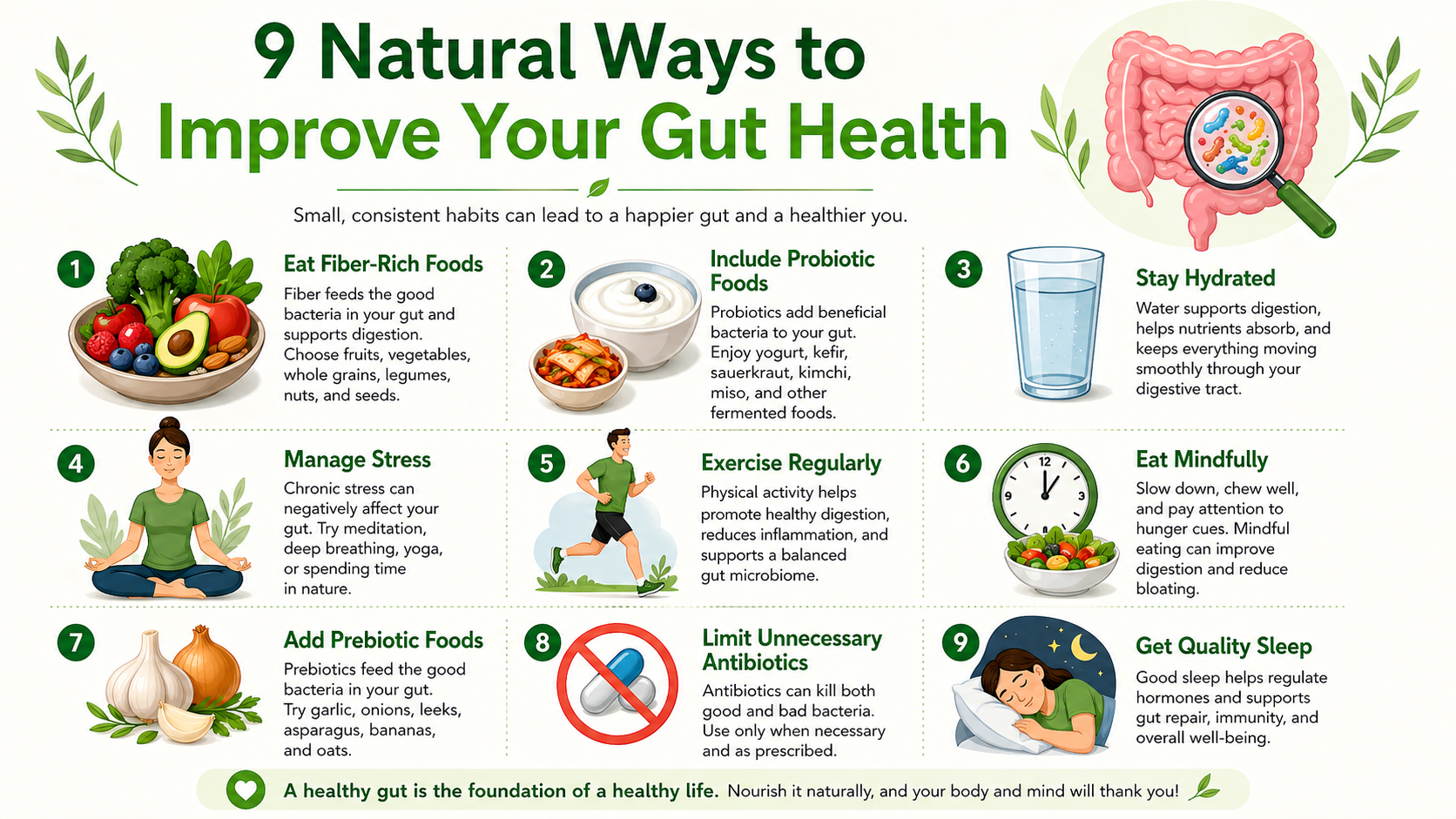
9 Natural Ways to Improve Your Gut Health

1. Eat Plenty of Fiber-Rich Foods Fiber feeds the good bacteria in your gut (prebiotics). Include a variety of vegetables, fruits, whole grains, legumes, nuts, and seeds daily.
2. Add Fermented Foods Regularly These foods introduce live beneficial bacteria (probiotics). Try plain yogurt, kefir, sauerkraut, kimchi, miso, or kombucha.
3. Stay Well Hydrated: Water supports smooth digestion and helps maintain the gut’s protective lining. Drink plain water throughout the day.
4. Manage Stress Chronic stress harms the gut-brain connection. Practice daily walks, deep breathing, yoga, or meditation.
5. Prioritize Quality Sleep Good sleep allows your gut to repair and rebalance. Maintain a consistent bedtime routine and limit screen time at night.
6. Move Your Body Regularly Moderate exercise like walking, swimming, or yoga promotes healthy digestion and microbial diversity.
7. Reduce Ultra-Processed Foods and Added Sugars Cut back on packaged snacks, sugary drinks, and fast food to prevent feeding harmful bacteria.
8. Be Careful with Antibiotics When needed, follow them with gut-supporting foods like fiber and fermented items to help recovery.
9. Increase Plant Diversity Aim to eat 30+ different plant foods per week and spend time outdoors for added microbial exposure.
Best Foods for Gut Health – Quick Reference Table
Here’s a simple table of gut-friendly foods you can easily include in your meals:
| Category | Best Foods for Gut Health | Why They Help |
|---|---|---|
| High-Fiber Foods | Oats, beans, lentils, chickpeas, apples, berries, carrots, broccoli | Feed good bacteria (prebiotics) |
| Fermented Foods | Plain yogurt, kefir, sauerkraut, kimchi, miso, kombucha | Provide live beneficial bacteria (probiotics) |
| Fruits | Bananas, apples, blueberries, strawberries, kiwi | Rich in fiber and natural prebiotics |
| Vegetables | Leafy greens, garlic, onions, leeks, asparagus | Support microbial diversity |
| Whole Grains | Oats, barley, brown rice, quinoa | Long-lasting fiber for gut bacteria |
| Nuts & Seeds | Almonds, walnuts, chia seeds, flaxseeds | Provide fiber and healthy fats |
| Other Helpful Foods | Ginger, turmeric, bone broth (optional) | Soothe digestion and reduce inflammation |
Tip: Try adding at least one food from each category every day for the best results.
Small Changes Create Big Improvements
Start with just 1 or 2 changes—such as eating more vegetables and adding a serving of plain yogurt. Many people notice better digestion, steadier energy, and improved mood within 2–4 weeks.
Always listen to your body. If digestive issues continue, consult a healthcare professional.
Conclusion
Improving gut health naturally is simple when you focus on whole foods, regular movement, stress management, and quality sleep. These habits not only support better digestion but also enhance your immunity, energy, and overall well-being. Start today with small, consistent steps and enjoy the long-term benefits of a happier, healthier gut.
FAQ – Frequently Asked Questions
How long does it take to improve gut health naturally? Many notice improvements in digestion and energy within 2–4 weeks. Deeper microbiome changes usually appear after 2–3 months of consistent habits.
Do I need probiotic supplements? Not always. A diet rich in fermented foods and fiber often provides enough natural support. Supplements may help in certain situations.
What foods should I avoid for better gut health? Limit ultra-processed foods, added sugars, artificial sweeteners, and excessive fast food.
Is eating yogurt daily enough? Plain yogurt helps, but combining it with a wide variety of fiber-rich fruits, vegetables, and whole grains gives much better results.
Can stress really affect my gut? Yes. Ongoing stress can disrupt digestion, increase bloating, and change the balance of your gut bacteria.
What are the main signs of poor gut health? Common signs include frequent bloating, gas, constipation or diarrhea, low energy, skin problems, and getting sick often.

Health & Wellness Writer | Research-Informed Health Content Creator
A.K.M. Monjurul Hoque is a health and wellness writer specializing in health, beauty, fitness, nutrition and healthy living. His content is informed by health journals, books, seminars, training programs, and discussions with experienced healthcare professionals. He writes clear, practical and research-informed articles for general education and encourages readers to seek personalized advice from qualified medical professionals.