



What is Prebiotic Fiber? Benefits, Foods, and How to Boost Gut Health

In today’s fast-paced world, keeping your gut happy is key to feeling great. Ever heard of prebiotic fiber? It’s like food for the good bacteria in your belly, helping you digest better and stay healthy. This guide breaks it down in simple terms, with tips on foods rich in prebiotic fiber, top benefits, and easy ways to add it to your meals. Let’s dive in!
What Exactly Is Prebiotic Fiber?
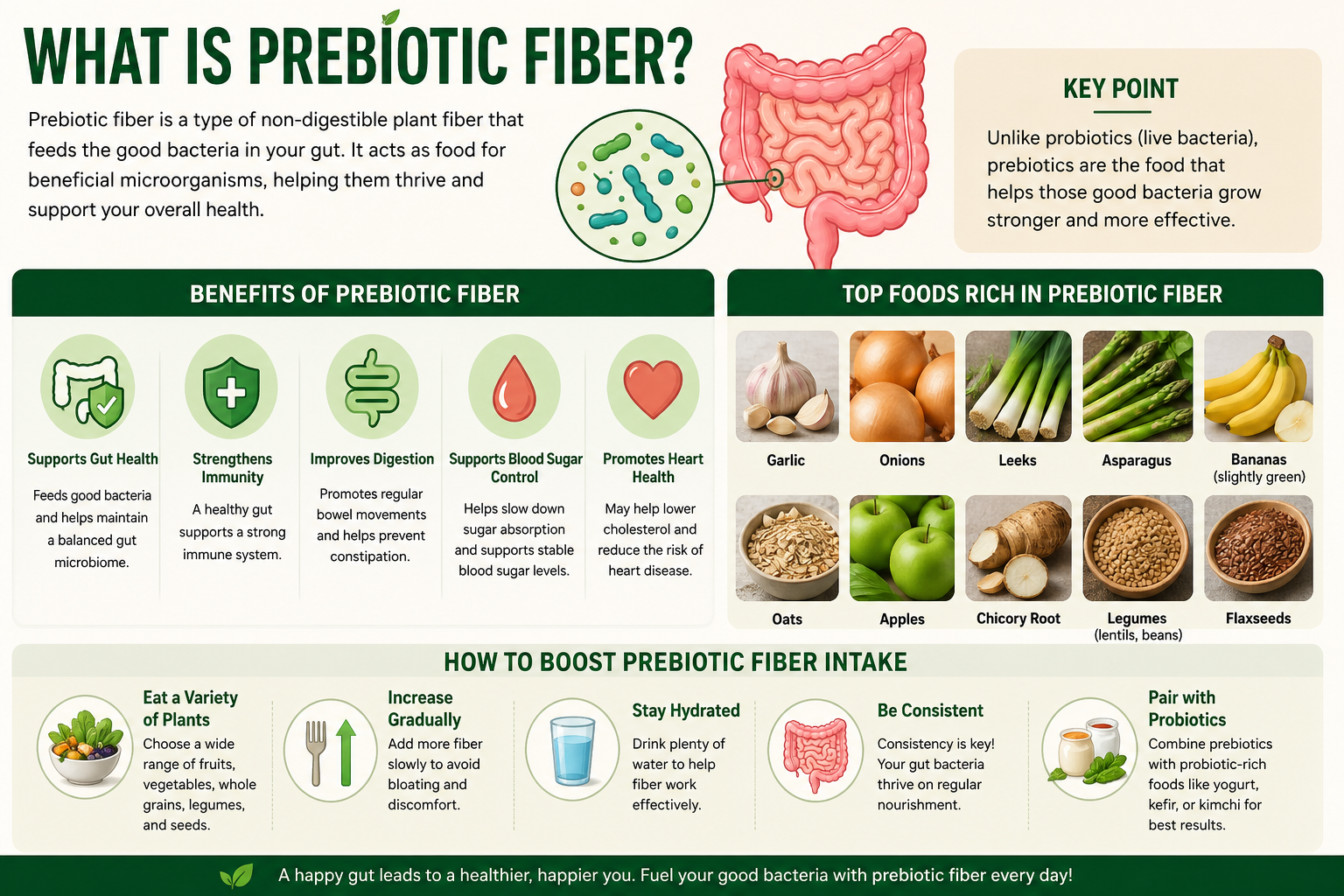
Prebiotic fiber is a special type of plant fiber that your body can’t digest. Instead of breaking down in your stomach, it travels to your large intestine. There, it acts as fertilizer for beneficial gut bacteria, like bifidobacteria and lactobacilli. These “good guys” multiply and create short-chain fatty acids that support your health.
Unlike probiotics (live bacteria in yogurt), prebiotics are the fuel they need to thrive. Common types include inulin, fructo-oligosaccharides (FOS), and galacto-oligosaccharides (GOS). They’re found naturally in many everyday foods.

Top 7 Benefits of Prebiotic Fiber for Your Health
Adding prebiotic fiber to your diet isn’t just trendy—it’s backed by science. Here are the biggest perks:
- Improves Digestion: Feeds good bacteria to reduce bloating, constipation, and IBS symptoms.
- Boosts Immunity: Up to 70% of your immune system lives in your gut. Prebiotics strengthen it!
- Supports Weight Management: Helps control hunger hormones and may lower calorie absorption.
- Enhances Mood: Gut-brain connection means happier bacteria = better mental health.
- Strengthens Bones: Produces butyrate, which aids calcium absorption.
- Lowers Inflammation: Fights chronic issues linked to heart disease and diabetes.
- Better Blood Sugar Control: Slows carb absorption for steady energy.
Studies show eating 5-10 grams daily can transform your gut in weeks.
Best Foods High in Prebiotic Fiber
No need for fancy supplements—get it from real food! Aim for 25-30 grams of fiber daily, with plenty from prebiotic sources.
| Food | Prebiotic Fiber per Serving | Easy Tip |
|---|---|---|
| Garlic (1 clove) | 1-2g | Add to soups or stir-fries |
| Onions (1 medium) | 2-6g | Raw in salads or cooked |
| Bananas (1 medium) | 1-3g | Green ones have more! |
| Oats (½ cup) | 4g | Breakfast porridge |
| Apples (1 medium) | 2-4g | With skin for max fiber |
| Chicory Root | 15g+ (per tbsp) | In coffee alternatives |
| Leeks (½ cup) | 3g | Sauté as a side |
Start slow to avoid gas—your gut needs time to adjust.

Image: Fresh garlic, onions, and bananas—simple prebiotic powerhouses.
How to Add More Prebiotic Fiber to Your Diet
- Breakfast: Oats with banana slices.
- Lunch: Salad with onions, garlic dressing, and chickpeas.
- Snacks: Apple with almond butter.
- Dinner: Roasted leeks or garlic-roasted veggies.
Drink plenty of water and pair with probiotics (like kefir) for a “synbiotic” boost. Supplements like inulin powder work too, but food is best.
Conclusion: Make Prebiotic Fiber Your Gut’s Best Friend
Prebiotic fiber is a simple, natural way to supercharge your health—from smoother digestion to stronger immunity. By eating more onions, garlic, bananas, and oats, you’ll feed your gut bacteria and feel the difference. Start small, stay consistent, and watch your wellness soar. Your body will thank you!
FAQ: Prebiotic Fiber Questions Answered
Q: What’s the difference between prebiotic fiber and regular fiber?
A: All prebiotics are fiber, but not all fiber is prebiotic. Prebiotics specifically feed good gut bacteria.
Q: Can prebiotic fiber cause side effects?
A: Yes, like bloating at first. Ramp up slowly and drink water.
Q: How much prebiotic fiber do I need daily?
A: 5-10 grams for starters, up to 20 g as tolerated.
Q: Are there vegan sources of prebiotic fiber?
A: Absolutely—all plant-based foods like those listed!
Q: Can kids eat prebiotic fiber-rich foods?
A: Yes, in age-appropriate amounts. Bananas and oats are kid-friendly.
Ready to gut-check your diet? Share your favorite prebiotic foods in the comments!

Health & Wellness Writer | Research-Informed Health Content Creator
A.K.M. Monjurul Hoque is a health and wellness writer specializing in health, beauty, fitness, nutrition and healthy living. His content is informed by health journals, books, seminars, training programs, and discussions with experienced healthcare professionals. He writes clear, practical and research-informed articles for general education and encourages readers to seek personalized advice from qualified medical professionals.