



Millions of Children at Risk: Why Global Childhood Vaccination Rates Are Stalling in 2025 (WHO & UNICEF Data)
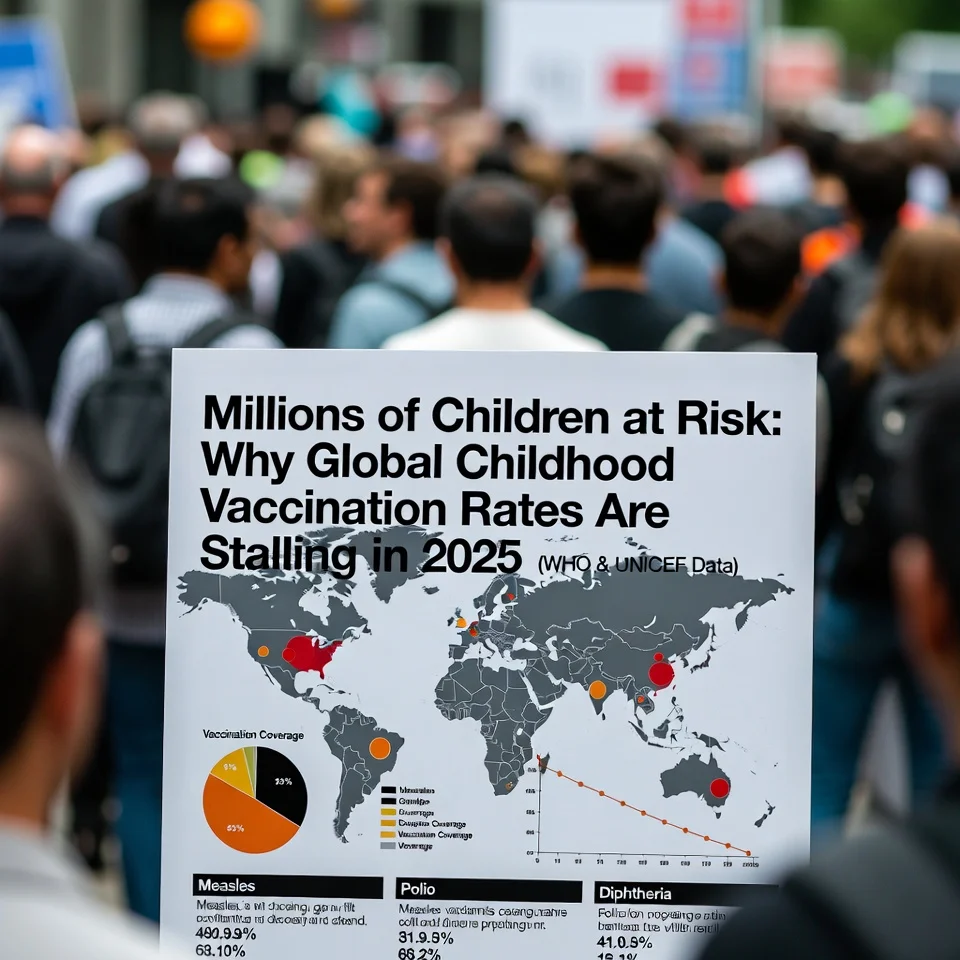
Global childhood vaccination rates have stalled or declined in recent years, putting millions of children at serious risk from preventable diseases such as measles, polio, diphtheria, and tuberculosis. Recent data from the World Health Organization (WHO) and UNICEF show that immunization coverage has not fully recovered from COVID-19 disruptions, leaving many kids vulnerable worldwide.
This alarming trend reverses decades of progress in one of public health’s biggest success stories. Urgent action is needed to rebuild trust, boost funding, and strengthen health systems before outbreaks become more widespread.
The Remarkable History of Childhood Immunization—and Why It’s Now at Risk

Vaccines rank among the most effective tools in modern medicine. Since the WHO launched the Expanded Programme on Immunization (EPI) in 1974, routine vaccinations have saved an estimated 150 million lives and protected billions of children from deadly illnesses.
By the early 2020s, global coverage for key vaccines had roughly doubled compared to earlier decades. However, progress slowed after 2010, with plateaus and declines in many areas. The COVID-19 pandemic created major setbacks through lockdowns, overwhelmed health services, and widespread misinformation.
According to the latest WHO/UNICEF estimates (covering up to 2024), global coverage for the third dose of diphtheria-tetanus-pertussis (DTP3) vaccine—a key indicator of routine immunization—stood at around 85%, protecting about 109 million infants. Yet, this remains below pre-pandemic (2019) levels in many places, with 14.3 million zero-dose children (those receiving no vaccines at all) and millions more under-vaccinated.
A major systematic analysis in The Lancet highlighted that measles vaccine coverage (first dose) declined in numerous countries since 2010, with ongoing challenges post-pandemic.
(Image: A world map highlighting regions with low childhood vaccination coverage, showing concentrations in sub-Saharan Africa and parts of South Asia.)
Key Reasons Behind the Drop in Vaccination Rates

Multiple interconnected factors are driving this concerning reversal:
- COVID-19 Disruptions — Lockdowns halted outreach, delayed campaigns, and strained healthcare workers, causing millions to miss routine shots.
- Reduced Funding — Cuts in international aid and domestic budgets have limited program reach, especially in low-resource settings.
- Rising Vaccine Hesitancy — Misinformation spread online and through social channels has eroded trust, affecting even high-income countries.
- Conflicts, Poverty, and Inequality — Wars, political instability, remote locations, and urban slums make delivering vaccines extremely difficult.
Experts emphasize that these issues create a vicious cycle: lower coverage leads to outbreaks, which further strain systems and fuel distrust.
The Real-World Impact: Outbreaks and Preventable Suffering

Falling rates mean children face renewed threats from diseases once nearly eliminated in many regions. Measles acts as an early warning sign due to its high contagiousness. Global measles cases surged in recent years, with low coverage (below the 95% needed for herd immunity) driving outbreaks in dozens of countries.
Similar risks exist for polio, pertussis (whooping cough), and diphtheria—diseases that can cause lifelong disability or death, especially in young children. In sub-Saharan Africa and South Asia, where many zero-dose and under-vaccinated kids live, the burden falls hardest on the poorest and most marginalized families.
Without intervention, experts warn of larger resurgences that could undo years of gains.
(Image: Health workers administering vaccines to children in a community outreach program in a developing region.)
Steps to Reverse the Trend and Protect Every Child

Restoring momentum requires coordinated global and local efforts. Key recommendations include:
- Build Stronger Primary Health Systems → Integrate vaccines into everyday care for reliable, accessible services.
- Fight Misinformation Head-On → Launch evidence-based education campaigns to rebuild public confidence using facts from trusted sources.
- Boost Funding and Resources → Wealthier nations and organizations must increase support for immunization in high-need areas.
- Promote Equity → Target hard-to-reach populations through mobile clinics, community engagement, and addressing barriers like poverty or conflict.
By prioritizing these actions, the world can get back on track toward goals like the Immunization Agenda 2030.
Conclusion
The decline in global childhood vaccination rates is a wake-up call. Vaccines have saved countless lives and prevented immense suffering, but recent stalls—worsened by the pandemic, misinformation, and inequalities—threaten to bring back preventable diseases. Millions of children, especially in vulnerable regions, remain unprotected. With renewed commitment to funding, education, and equitable access, we can reverse this trend and ensure no child is left behind. The time to act is now—stronger systems and united efforts can safeguard the next generation.
FAQ
Why have childhood vaccination rates stalled globally? The COVID-19 pandemic disrupted services, funding decreased in some areas, vaccine hesitancy grew due to misinformation, and conflicts/inequality hindered delivery in many regions.
How many children are zero-dose (unvaccinated) worldwide? Recent estimates indicate about 14.3 million zero-dose children in 2024, with many in sub-Saharan Africa, South Asia, and conflict zones.
What diseases are most at risk of resurgence? Measles tops the list as a highly contagious indicator disease, followed by polio, diphtheria, pertussis, and tuberculosis—especially where coverage falls below 90-95%.
What can parents do to help? Ensure your child receives all recommended vaccines on schedule, stay informed from reliable sources like WHO/UNICEF, and encourage community vaccination efforts.
Is progress being made to recover? Some recovery occurred post-2023, with slight increases in certain vaccines, but full pre-pandemic levels aren’t restored everywhere—sustained action is essential.

Health & Wellness Writer | Research-Informed Health Content Creator
A.K.M. Monjurul Hoque is a health and wellness writer specializing in health, beauty, fitness, nutrition and healthy living. His content is informed by health journals, books, seminars, training programs, and discussions with experienced healthcare professionals. He writes clear, practical and research-informed articles for general education and encourages readers to seek personalized advice from qualified medical professionals.