





Exercise Cuts Colon Cancer Recurrence Risk by 28% and Deaths by 37%—Landmark CHALLENGE Trial Shows
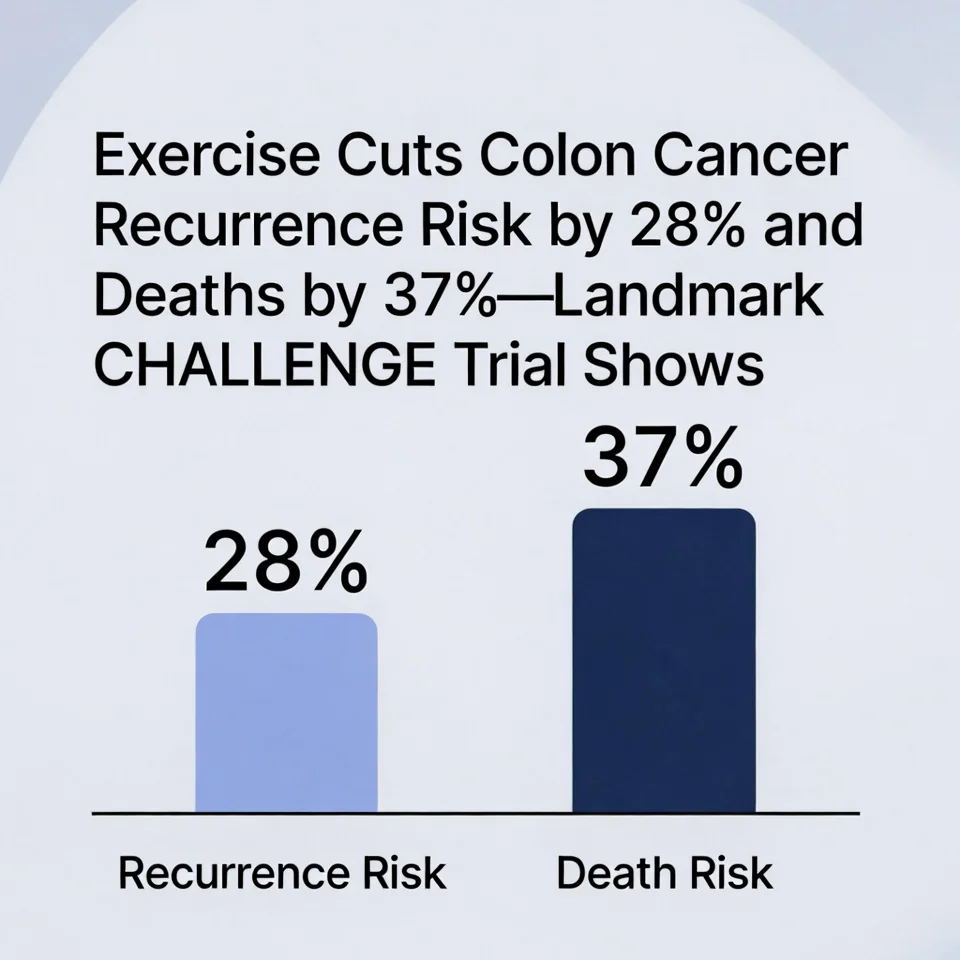
The CHALLENGE trial, a landmark phase 3 randomized controlled study published in the New England Journal of Medicine in 2025, has provided the strongest evidence yet that regular moderate exercise can dramatically lower the risk of colon cancer recurrence and improve survival rates in survivors—effects comparable to some adjuvant therapies.
Key Findings from the Groundbreaking CHALLENGE Trial

In this international study involving 889 patients with stage III or high-risk stage II colon cancer who had completed surgery and adjuvant chemotherapy, participants were randomized to either a structured 3-year exercise program or health education materials alone.
- The exercise group achieved a 28% lower risk of disease recurrence, new primary cancer, or death (primary endpoint: disease-free survival, HR 0.72).
- 5-year disease-free survival reached 80.3% in the exercise group versus 73.9% in the control group.
- Overall survival benefits were even more striking, with a 37% lower risk of death (HR 0.63), translating to 8-year overall survival of 90.3% in the exercise group compared to 83.2% in the control group.
These results highlight exercise as a powerful, accessible tool for colon cancer survivors aiming to reduce recurrence and extend life.
How Much Exercise Was Needed to See These Benefits?

The program emphasized sustainable, moderate-intensity aerobic activity—no extreme regimens required. Participants aimed for at least 20 MET-hours per week of recreational exercise, supported by personalized coaching.
Practical examples that met the target include
- Brisk walking at about 4 METs: Roughly 5 hours per week (e.g., 45–60 minutes, 3–5 days a week).
- Higher-intensity options like jogging (≈10 METs): Around 2 hours per week.
Most participants chose brisk walking as their main activity, making it realistic for everyday life. The key was consistency over the 3-year period, with gradual buildup and ongoing support.
Why Does Exercise Help Prevent Colon Cancer Recurrence?

While the precise biological pathways are still being explored, evidence suggests regular physical activity influences several cancer-related processes:
- Enhances immune system function to better detect and eliminate cancer cells.
- Lowers chronic inflammation, which can fuel tumor growth.
- Improves insulin sensitivity and reduces circulating growth factors that promote cancer.
- Positively alters the tumor microenvironment to make it less hospitable for recurrence.
These mechanisms offer a natural, side-effect-minimal complement to standard treatments.
Expert Insights on This Game-Changing Research

Experts have hailed the findings as transformative for survivorship care. The trial demonstrates that structured exercise is not just supportive—it’s clinically effective.
One prominent oncologist noted the impressive magnitude of benefit, comparing it favorably to established treatments like chemotherapy in terms of impact on outcomes.
This research empowers patients with a proactive, low-risk strategy to take control of their long-term health.
The Bottom Line: Make Movement Part of Your Colon Cancer Recovery

For colon cancer survivors, incorporating moderate exercise like brisk walking into daily life could meaningfully boost chances of staying cancer-free and living longer. Unlike medications, it comes with minimal side effects (though some musculoskeletal issues, like strains, were slightly more common in the exercise group).
Always consult your oncologist or healthcare team before starting any new routine, especially post-treatment, to ensure it’s safe and tailored to your needs. This study reinforces that small, consistent steps—like regular walks—can deliver outsized benefits in the fight against colon cancer recurrence.
FAQ
Q: Who was this study for? A: Patients with stage III or high-risk stage II colon cancer who had finished surgery and adjuvant chemotherapy.
Q: Is any exercise better than none? A: Yes, but the trial used a structured program targeting at least 20 MET-hours/week for optimal results. Even lower levels may help, but aim for moderate aerobic activity consistently.
Q: Can I do other activities besides walking? A: Absolutely—cycling, swimming, jogging, or circuit training all count if they reach moderate intensity and meet the MET goal.
Q: Are there risks to exercising after colon cancer treatment? A: Minor musculoskeletal events (e.g., strains or fractures) were more frequent in the exercise group, but overall benefits far outweighed risks for most. Get cleared by your doctor first.
Q: How does this compare to chemotherapy? A: Exercise isn’t a replacement, but its survival impact rivals additive benefits seen with some chemo regimens in observational data—making it a valuable addition to standard care.

Health & Wellness Writer | Research-Informed Health Content Creator
A.K.M. Monjurul Hoque is a health and wellness writer specializing in health, beauty, fitness, nutrition and healthy living. His content is informed by health journals, books, seminars, training programs, and discussions with experienced healthcare professionals. He writes clear, practical and research-informed articles for general education and encourages readers to seek personalized advice from qualified medical professionals.