





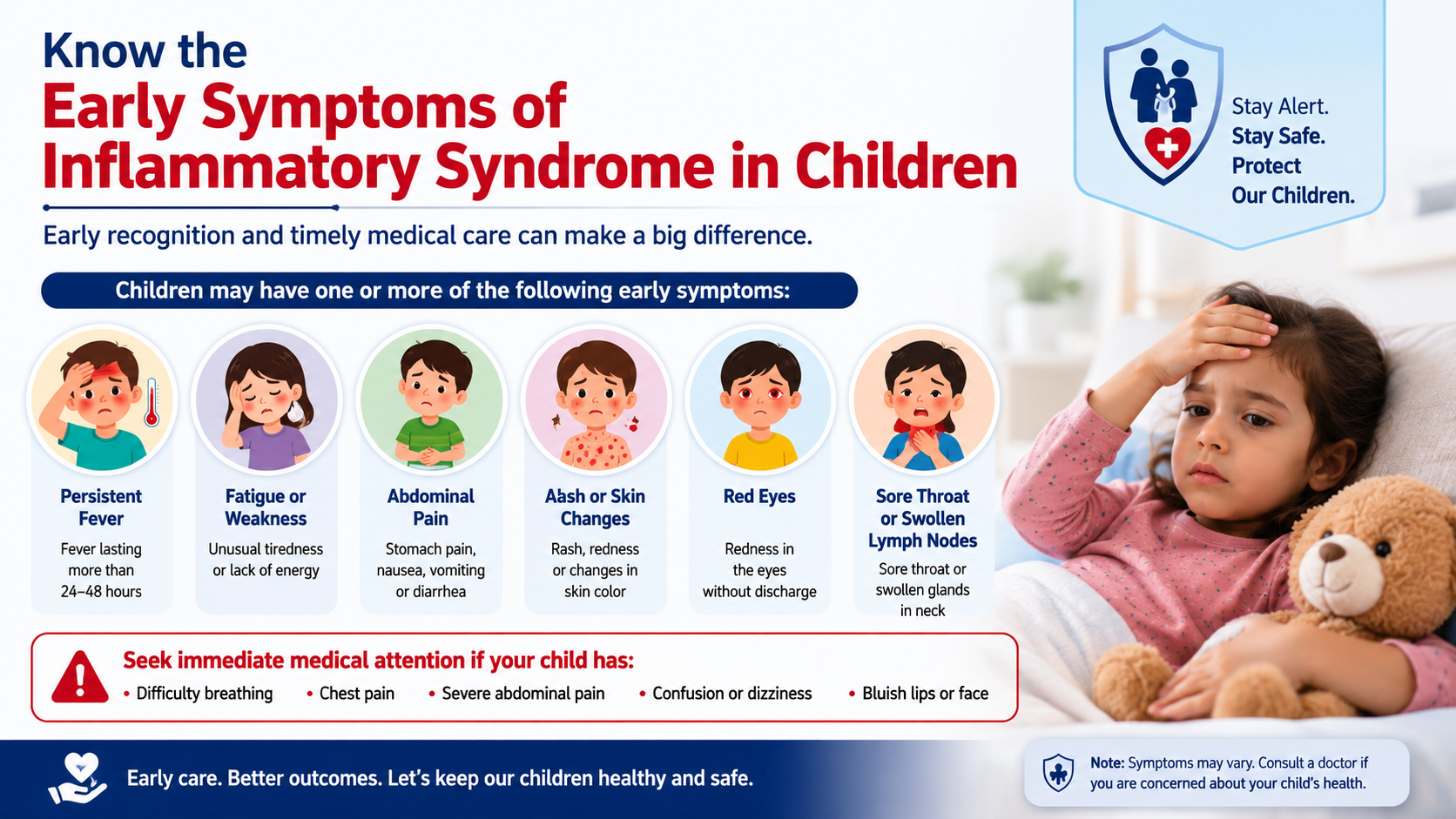
Know the Early Symptoms of Inflammatory Syndrome in Children
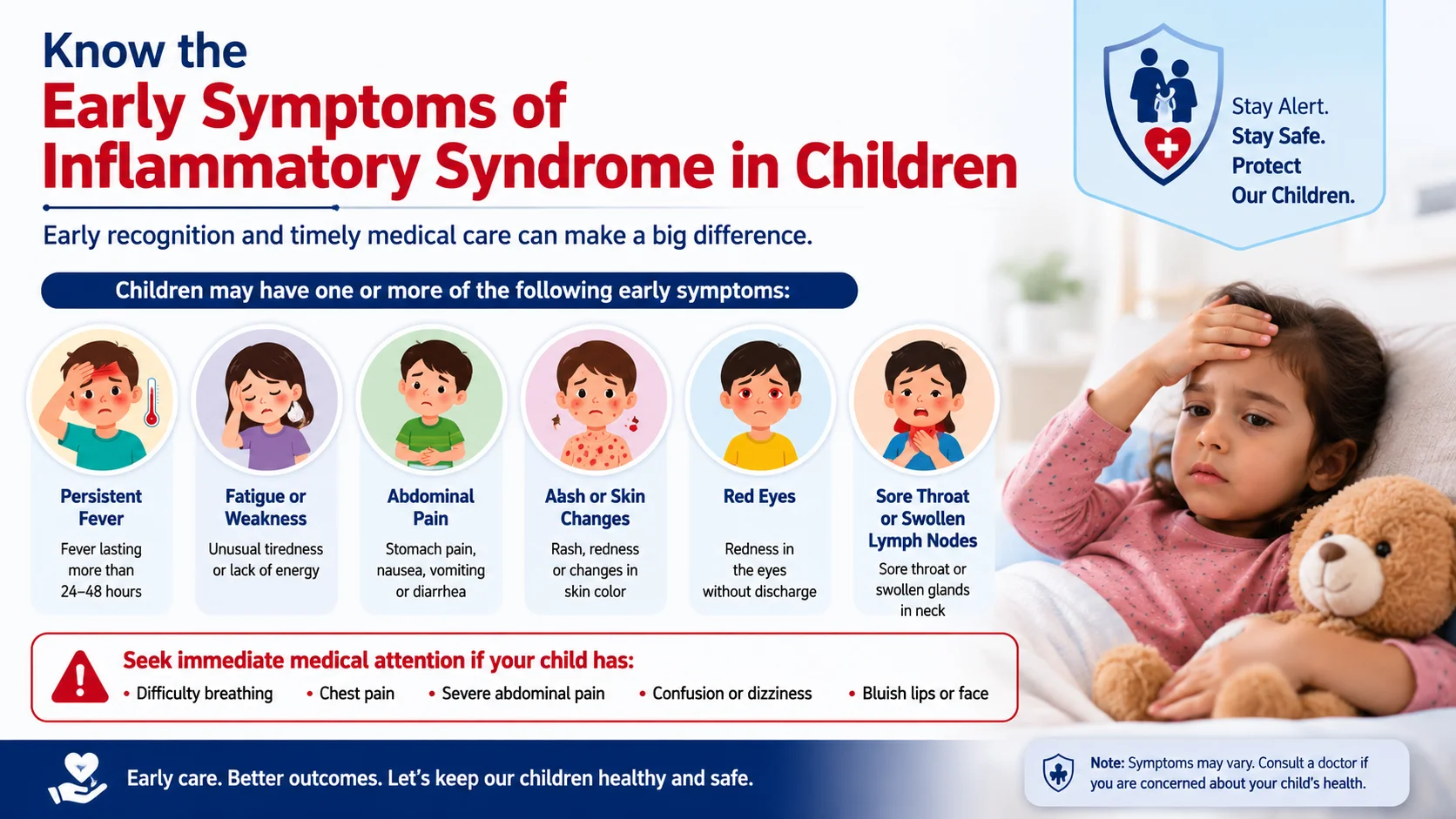
As it’s called, Multisystem Inflammatory Syndrome in Children or MIS-C, is a severe complication of COVID-19. It causes inflammation of several organs.
Multisystem Inflammatory Syndrome in Children (MIS-C), also known as Inflammatory Syndrome in Children, is a rare but severe syndrome. It is closely linked with COVID-19, and usually occurs weeks after someone has been infected. MIS-C is an inflammation of numerous organs such as the heart, lungs, kidneys, brain, skin, eyes and gastrointestinal organs.
Symptoms include fever and stomach pain and more severe cases may lead to heart dysfunction. Early diagnosis and treatment helps in managing this condition. If your child gets a fever, belly ache, or other troubling symptoms that don’t go away, take him/her to a doctor. Quick treatment can greatly improve outcomes for the children who have it.
Early Warning Signs
A fever and rash are common early symptoms. A fever that lasts for several days may be a symptom. Rashes may occur on the skin that are red or pink. The rash may be itching and/or painful. Sometimes it appears as little red dots.
These symptoms include stomach pain, vomiting and diarrhea. A child can be very uncomfortable with that. They might have difficulty eating or drinking. Look for signs of not getting enough water, such as dry lips or less urination.

Credit: www.yalemedicine.org
What Is Inflammatory Syndrome?
‘The inflammatory syndrome is a very serious disease. It leads the body’s immune system to attack itself. This can cause swelling and pain. Kids can get different kinds of inflammatory syndromes. One type is Kawasaki disease. Particularly one of them, called Multisystem Inflammatory Syndrome in Children (MIS-C). These conditions require medical attention. Treatment is available to control the symptoms.
Children of various ages can develop inflammatory syndrome. Younger children may be at higher risk. There’s a lot that genetics play as well. Some genes passed on by parents may result in children becoming sick. Such risks can be different from family to family. Doctors look at genes to learn more about this. Not all children with the genes that predispose them to illness will develop the illness. And that’s only a piece of the puzzle.
Children with asthma, diabetes or heart problems may be at particular risk. Such conditions can cause the body to be weak. When the body is weak, it is unable to resist diseases effectively. We closely monitor these kids,” doctors say. It’s extremely important for these health conditions to be managed properly. Healthy lifestyle can reduce the risk. Having a proper diet and doing physical exercise are good first steps.

Credit: www.dicardiology.com
Diagnosis Procedures
The doctors inquire about the child’s symptoms. They would like to know if the child had a fever. They also inquire about rashes or stomach pain. Parents should inform doctors of recent infections. This allows doctors to have a better understanding of the child’s condition.
Doctors use blood tests to test for inflammation. These tests search for elevated levels of certain proteins. They also might order tests of white blood cell counts. Occasionally doctors look for signs of infection with a urine test.
Treatment Options
Doctors might use anti-inflammatory drugs, such as ibuprofen, to bring down swelling. These can assist the child’s body in healing more quickly. Other drugs may be used to treat infections (antibiotics). Steroids may be necessary to settle down very problematic symptoms in some children. To get the best results, always abide by the doctor’s advice.
Fluids are given to children by IV to maintain hydration. It allows their body to function better. They may need oxygen therapy if they are struggling to breathe. Sometimes, children have to stay in the hospital for observation. It’s important for parents to make sure they are eating right and sleeping well at home too.
Complications
Kids with inflammatory syndrome can have serious heart problems. Inflammation of the heart can occur. This inflammation causes the heart to be less able to pump blood. If left untreated, heart failure can result. Special medicine may be necessary for some children to assist with their heart. Add to that the complications of irregular heartbeats. These issues can cause the heart to beat inappropriately fast or too slow. Regular check-up should be provided for these children.
In childhood infectious and auto-immune diseases (such as inflammatory syndrome) at My Yq are associated with respiratory problems. The lungs could be inflamed. This causes difficulty with respiration. Children may require some additional oxygen to assist them. Some may need a machine to help them breathe. Common symptoms are coughing and shortness of breath. Kids may require specific tests to evaluate lung function and treatments can make kids feel better and breathe easier.
Prevention Tips
The body is healthy with lots of fruits and vegetables. But, of course, we also require water on a daily basis to keep hydrated. One of them is exercise which keeps the body fit. A well-deserved sleep keeps one’s mind alert. Follow my tips for good health, withstand junk food.
Doctors assist in identifying problems before they become big. Growth and health is monitored at regular checkups. Vaccines protect against disease): Parents should visit and ask questions. This will help children to follow doctor’s orders and remain healthy.

Credit: www.mdpi.com
When To Seek Medical Help
Children may appear with red eyes and red lips. They may have a very high temperature. Some kids are complaining about severe stomach ache. Some others may experience difficulties breathing. Also indicative are rashes or swollen hands and feet. These symptoms are life-threatening and should be treated right away.
Conclusion
It is essential to understand inflammatory syndrome in children for timely detection and treatment. Parents should keep themselves updated and consult health professionals. Know, and act quickly to protect a child & # x27; s health. Remember to be on the lookout and proactive for child’s safety and safety. Having the correct information enables parents to make well-informed decisions about their children’s health.
Frequently Asked Questions

Health & Wellness Writer | Research-Informed Health Content Creator
A.K.M. Monjurul Hoque is a health and wellness writer specializing in health, beauty, fitness, nutrition and healthy living. His content is informed by health journals, books, seminars, training programs, and discussions with experienced healthcare professionals. He writes clear, practical and research-informed articles for general education and encourages readers to seek personalized advice from qualified medical professionals.