



The Drumstick: Why This Humble Vegetable Belongs in Every Summer Kitchen
Summer has a way of changing how you want to eat. Heavy meals feel like a burden. Rich curries that work perfectly in winter suddenly feel wrong when it’s 38 degrees and humid. What the body actually wants in the heat is something light, hydrating, and genuinely nourishing — and the drumstick, quietly, is one of the best answers to that.
Known as moringa in many parts of the world and shajne in Bengal, the drumstick is one of those vegetables that gets overlooked precisely because it’s so ordinary. It’s not fashionable. It doesn’t have a marketing budget. But nutritionally, it punches well above its weight — and in summer specifically, it’s difficult to find a better seasonal vegetable to build meals around.
Summer Eating, Done Right
The problem with most foods in hot weather isn’t the food itself — it’s the preparation. Heavy oil, dense spices, thick gravies. These all make digestion harder and body temperature feel worse. Drumsticks naturally lend themselves to the opposite approach.
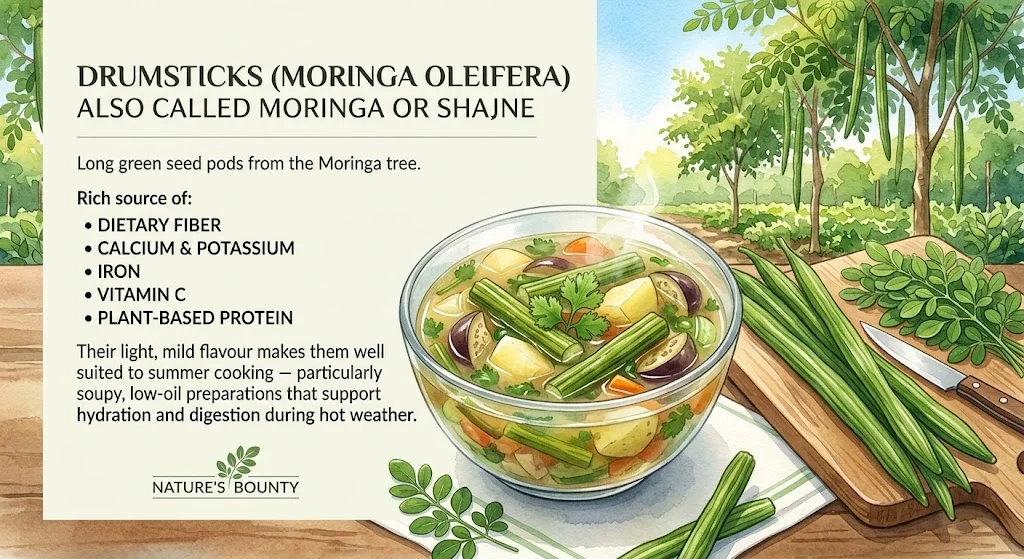
A simple drumstick soup or light curry — minimal oil, a few whole spices, some tomato and onion, the pods simmered until tender — is genuinely refreshing. It hydrates. It’s easy on the stomach. And it doesn’t leave you feeling the way a heavy meal does in summer, which is sluggish and vaguely regretful. That combination of hydration and digestive ease is partly why drumsticks have been a summer staple in South Asian cooking for so long. People cooked with them seasonally for good reason.

What’s Actually Inside a Drumstick
The nutritional content of drumsticks is genuinely surprising for something that looks this unassuming. A few things stand out.
Calcium is present in meaningful quantities. For older adults especially, where bone density loss becomes a real concern, getting calcium from food sources rather than relying entirely on supplements is worthwhile. Drumsticks contribute to that.
Potassium helps regulate blood pressure by balancing the effects of sodium in the diet. In a food culture where salt intake is often high, regular potassium from whole food sources matters. Drumsticks are a solid source.
Iron — plant-based iron, which is less readily absorbed than iron from meat. The practical workaround here is simple: eat your drumsticks with something that contains vitamin C. A squeeze of lemon juice over the dish, or a tomato-based preparation, meaningfully improves absorption. This isn’t complicated, and it’s the kind of detail that makes a real difference over time.
Dietary fiber is perhaps the most immediately felt benefit for most people. Drumsticks are genuinely high in fiber, which supports regular digestion and helps with constipation — a more common problem in summer than people acknowledge, partly due to dehydration and reduced appetite.

The Protein Question
Drumsticks aren’t a primary protein source — that’s worth being clear about. But the soft pulp inside the pods does contain plant-based protein, and the way you cook them can make that protein more nutritionally complete.
The easiest approach is combination. Add drumsticks to a dal — lentil soup — and you get a genuinely balanced amino acid profile from the two together. The flavours work well naturally, the lentils bring the protein density, and the drumsticks bring the texture, fiber, and minerals. A drumstick and fish curry is another traditional pairing that achieves the same thing from a different direction. Neither of these is a complicated recipe workaround — they’re just how drumsticks have been cooked for generations, and the nutritional logic behind them is sound.
A Few Things Worth Knowing
Drumsticks are safe and beneficial for most people, but a few specific situations warrant some caution.
If you have hypothyroidism, moringa has been flagged in some research as potentially affecting thyroid function. It’s not a reason to avoid it entirely, but it is a reason to mention it to your doctor if you’re eating it frequently.
If you’re on blood-thinning medications like warfarin, the vitamin K content in moringa can interact with how those medications work. Again, not a reason to avoid it, but a conversation worth having with your prescribing physician.
High fiber intake can cause bloating or digestive discomfort in people who aren’t accustomed to it — or if intake increases too quickly. Starting with moderate portions and building up is the sensible approach.
Allergic reactions to moringa are uncommon but do occur. If you’re trying it for the first time, a normal-sized portion is fine, but paying attention to how your body responds is sensible.
Conclusion
Drumsticks don’t need a rebrand or a new name to be relevant. They’re already exactly what they are: a practical, nutritionally dense, genuinely seasonal vegetable that suits summer cooking better than almost anything else.
The light preparations they lend themselves to — soupy curries, simple broths, dal combinations — happen to be precisely what the body needs when it’s hot and appetite is low. The minerals they provide, calcium, potassium, and iron, address health concerns that are real and common, particularly in older adults. The fiber supports digestion in a season when digestive comfort often suffers.
This is the kind of food that doesn’t generate headlines but quietly earns its place on the table. Put it on yours this summer.
Disclaimer
This article is for general informational and educational purposes only and does not constitute medical advice, diagnosis, or treatment. The nutritional information provided reflects general dietary science and should not be used as a substitute for professional guidance from a qualified healthcare provider or registered dietitian. Individuals with thyroid conditions, bleeding disorders, or those taking prescription medications — including blood thinners — should consult their doctor before significantly increasing their intake of drumsticks or moringa. Individual responses to dietary changes vary. Some people may experience digestive sensitivity with high fiber intake. Always seek professional medical advice for specific health concerns.
FAQ
Sources

Health & Wellness Writer | Research-Informed Health Content Creator
A.K.M. Monjurul Hoque is a health and wellness writer specializing in health, beauty, fitness, nutrition and healthy living. His content is informed by health journals, books, seminars, training programs, and discussions with experienced healthcare professionals. He writes clear, practical and research-informed articles for general education and encourages readers to seek personalized advice from qualified medical professionals.