




What Men Over 40 Should Actually Be Eating
Turning 40 tends to arrive with a few uninvited guests. Energy levels that used to be reliable start dipping. The midsection becomes harder to manage. Recovery after exercise takes longer than it used to. Hair thins. Sleep changes. And a quiet question starts forming in the back of your mind: is this just what getting older feels like now?
Not entirely. A lot of what men experience in their 40s and beyond is real and biological — but it’s also more responsive to lifestyle than most people realize. The body doesn’t simply switch into decline mode on your fortieth birthday. What changes is that your nutritional needs shift, your margin for poor habits narrows, and the foods you eat start to matter more, not less.
This isn’t about extreme diets or complicated protocols. It’s about understanding which foods actually support how a man’s body works after 40 — and making them a consistent part of how you eat.
1. Eggs
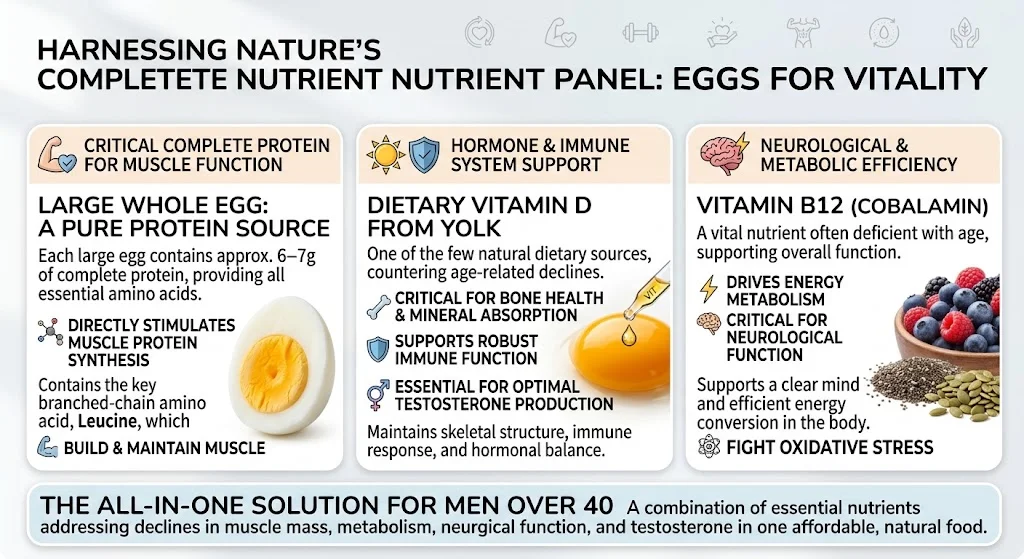
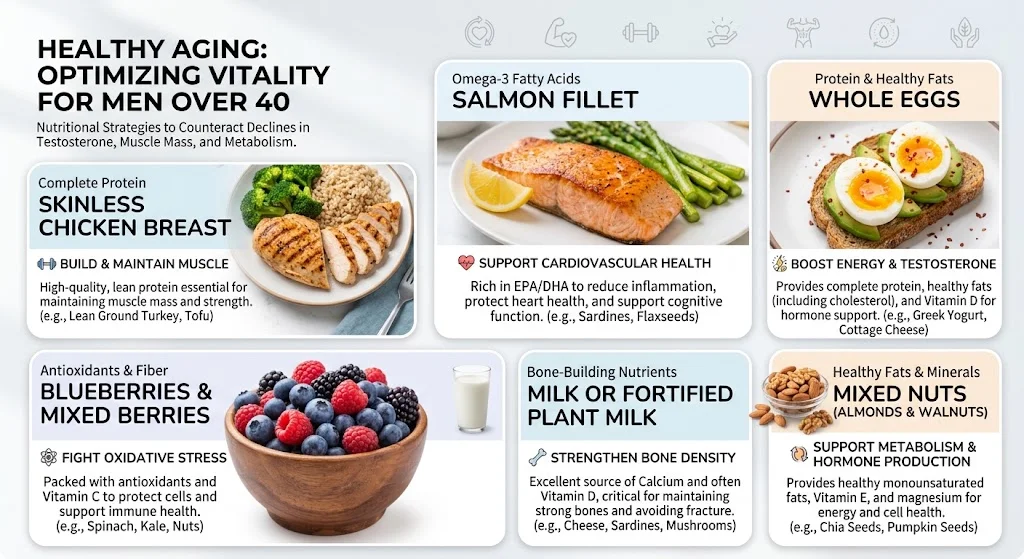
Eggs are one of the most nutritionally efficient foods available to men at any age — but they become particularly useful after 40. Each egg contains all nine essential amino acids, making the protein inside it complete and highly bioavailable. Your body can actually use it. That matters because after 40, muscle protein synthesis becomes less efficient, meaning you need adequate high-quality protein just to maintain what you have.
Beyond protein, eggs provide vitamin D and B12 — two nutrients that become harder to get in sufficient quantities as we age — and both play a role in energy metabolism and neurological function. There’s also a meaningful connection between the nutrients in eggs, particularly the healthy fats and cholesterol in the yolk, and the raw materials the body uses to produce testosterone.
Boil them, poach them, scramble them. They work at any meal. The method matters less than the habit.

2. Nuts and Seeds
There’s a tendency to think of nuts as a minor snack — something to eat when nothing else is around. They deserve more credit than that. A small daily portion of walnuts, almonds, or mixed seeds delivers omega-3 fatty acids, vitamin E, magnesium, and fiber, all in one package.
Walnuts in particular are one of the best plant-based sources of omega-3s. These fats help maintain the integrity of cell membranes throughout the body, support cognitive function, and reduce systemic inflammation — which is one of the underlying mechanisms behind many of the health problems that become more common after 40. Vitamin E acts as an antioxidant, helping to protect cells from oxidative damage. Magnesium supports muscle function, sleep quality, and blood pressure regulation.
Pistachios are worth a specific mention for circulation. They contain compounds that support nitric oxide production, which helps blood vessels dilate properly — relevant for cardiovascular health and general physical performance.
A handful a day is enough. Portion matters here since nuts are calorie-dense, but within a sensible amount, the nutritional return is significant.

3. Fatty Fish
Salmon, sardines, mackerel, tuna — these are the foods that nutritionists consistently rank among the most important for men’s cardiovascular and cognitive health as they age. The reason is omega-3 fatty acids, specifically EPA and DHA, which are found in their most bioavailable form in fatty fish.
These fats reduce inflammation, improve blood flow, and support healthy cholesterol ratios. For a man over 40 whose cardiovascular risk begins to increase, this is meaningful rather than theoretical. Better circulation means every organ and tissue in the body receives more of what it needs — oxygen, nutrients, hormonal signals.
There’s also emerging research around omega-3s and telomere length. Telomeres are the protective caps at the ends of chromosomes, and their shortening over time is one of the markers of biological aging. Some studies suggest that higher omega-3 intake may help preserve telomere length—though this research is still developing and should be understood as promising rather than conclusive.
Two to three servings of fatty fish per week is the generally recommended target. Grilled, baked, or even canned sardines count.

4. Colorful Fruits and Vegetables
This is the category most men consistently under-consume — and consistently underestimate. The variety matters here more than any single item. Spinach, broccoli, carrots, berries, apples, peppers — each colour reflects a different set of phytonutrients and antioxidants, and together they do something that no supplement can replicate: they provide a broad, overlapping network of cellular protection.
Free radicals are unstable molecules produced through normal metabolism and amplified by stress, poor sleep, pollution, and processed food. Over time, they damage cells, accelerate visible aging, and contribute to chronic disease. Antioxidants neutralize them. But different antioxidants target different types of free radicals, which is why variety — eating across the colour spectrum — produces meaningfully better results than any single fruit or vegetable eaten repeatedly.
The practical version of this advice is simpler than it sounds. Add something green to every main meal. Eat berries a few times a week. Choose a different vegetable than usual when you shop. The specifics matter less than the consistency of the habit.
5. Healthy Fats—Olive Oil and Avocado
Fat got a bad reputation it didn’t entirely deserve. The distinction that matters isn’t between fat and no fat — it’s between the types of fat. Unsaturated fats from sources like extra virgin olive oil and avocado actively support health in ways that saturated and trans fats don’t.
Olive oil is high in oleic acid and polyphenols that reduce LDL cholesterol oxidation and lower cardiovascular inflammation. Used regularly as a cooking fat and salad base, it’s one of the simplest evidence-based additions to a man’s diet after 40. Avocados bring a different set of benefits: vitamins K, C, E, and B6, potassium, and fiber, alongside the monounsaturated fats that support hormonal health and cholesterol balance.
Neither of these foods requires a complicated routine. Olive oil on your vegetables. Half an avocado with lunch or breakfast. That’s genuinely enough to make a difference over time.
6. Dairy and Dairy Alternatives
Bone density isn’t something most men think about until there’s a problem. But after 40, bone mass begins a gradual decline, and the process is largely silent until it becomes a fracture risk or a diagnosis of osteopenia. Calcium and vitamin D are the two nutrients most directly involved in maintaining bone structure, and dairy products — milk, yogurt, cheese — are among the most efficient dietary sources of both.
For men who don’t eat dairy, fortified plant-based milks, fortified orange juice, tofu made with calcium sulfate, and leafy greens like kale provide meaningful amounts of calcium. Vitamin D remains harder to get from food alone for most people, which is one of the reasons it’s among the most commonly deficient nutrients in men over 40 — and one of the most frequently recommended supplements.
Strong bones underpin everything else. They support muscle function, enable consistent exercise, and protect against the injuries that can derail an active lifestyle.
It’s Not Just What You Eat
Food matters enormously. But it works best alongside a few other fundamentals that men over 40 often let slide: consistent resistance exercise to counter the natural decline in muscle mass, adequate sleep for hormonal regulation and recovery, proper hydration, and a reduction in the processed foods and excess sugar that accelerate cellular aging and metabolic dysfunction.
None of this requires perfection. It requires direction and consistency. The goal isn’t to eat flawlessly — it’s to eat well most of the time, move regularly, and understand that how you feel at 50 or 60 is substantially shaped by what you do in your 40s.
Age is a factor. It isn’t a verdict.
Conclusion
Getting older doesn’t mean declining. It means your body needs different things — more protein, more deliberate nutrition, more attention to the micronutrients that keep systems running smoothly. The foods in this article aren’t exotic or expensive. They’re practical, evidence-supported, and sustainable as daily habits.
Start with whatever feels most manageable. Add eggs to your breakfast routine. Swap your afternoon snack for nuts. Get fatty fish on your plate twice a week. Let the changes compound. The cumulative effect of consistent, well-chosen nutrition over months and years is far more powerful than any short-term intervention.
Your energy, your strength, your mental clarity — these aren’t fixed by the year you were born. They’re shaped, in large part, by what you put on your plate.
Disclaimer
This article is for general informational and educational purposes only. It is not intended as medical advice, diagnosis, or treatment. Nutritional needs vary based on individual health status, genetics, medications, and lifestyle factors. Men over 40 with existing health conditions, hormonal concerns, or specific dietary restrictions should consult a qualified healthcare provider or registered dietitian before making significant changes to their diet. Reference to testosterone, cardiovascular health, or aging-related processes reflects general nutritional science and should not be interpreted as medical guidance for specific conditions.
FAQ
Sources

Health & Wellness Writer | Research-Informed Health Content Creator
A.K.M. Monjurul Hoque is a health and wellness writer specializing in health, beauty, fitness, nutrition and healthy living. His content is informed by health journals, books, seminars, training programs, and discussions with experienced healthcare professionals. He writes clear, practical and research-informed articles for general education and encourages readers to seek personalized advice from qualified medical professionals.