





Apple Cider Vinegar in the Morning: What It Actually Does and How to Use It Safely
Health trends come and go. Most of them involve something expensive, hard to find, or complicated to prepare. Apple cider vinegar is the opposite of all of that. It’s been sitting in kitchen cupboards for generations, costs very little, and the research behind its benefits — while not dramatic — is genuinely interesting.
The habit is simple: a small amount of diluted ACV, drunk first thing in the morning before eating. That’s it. No blending, no supplements, no special equipment. And for a lot of people who try it consistently, the effects on digestion, energy, and appetite are noticeable enough to stick with.
Here’s what the evidence actually says about why it works — and how to do it without damaging your teeth or irritating your throat.

What’s Actually in Apple Cider Vinegar
Before getting into the benefits, it helps to understand what you’re actually drinking. ACV is made from apple juice that’s been fermented twice — first into alcohol, then into acetic acid. That acetic acid is the active ingredient behind most of the effects people notice.
If you see ACV labelled “with the mother,” that’s the unfiltered version. It looks slightly cloudy and contains strands of beneficial bacteria, enzymes, and proteins left over from fermentation. This version is generally considered more beneficial than the clear, filtered kind, which has had most of those compounds removed.
The taste is sharp and sour — more intense than most people expect the first time. That’s why dilution isn’t optional. It’s genuinely necessary to make it safe and tolerable.

1. Appetite and Weight Management
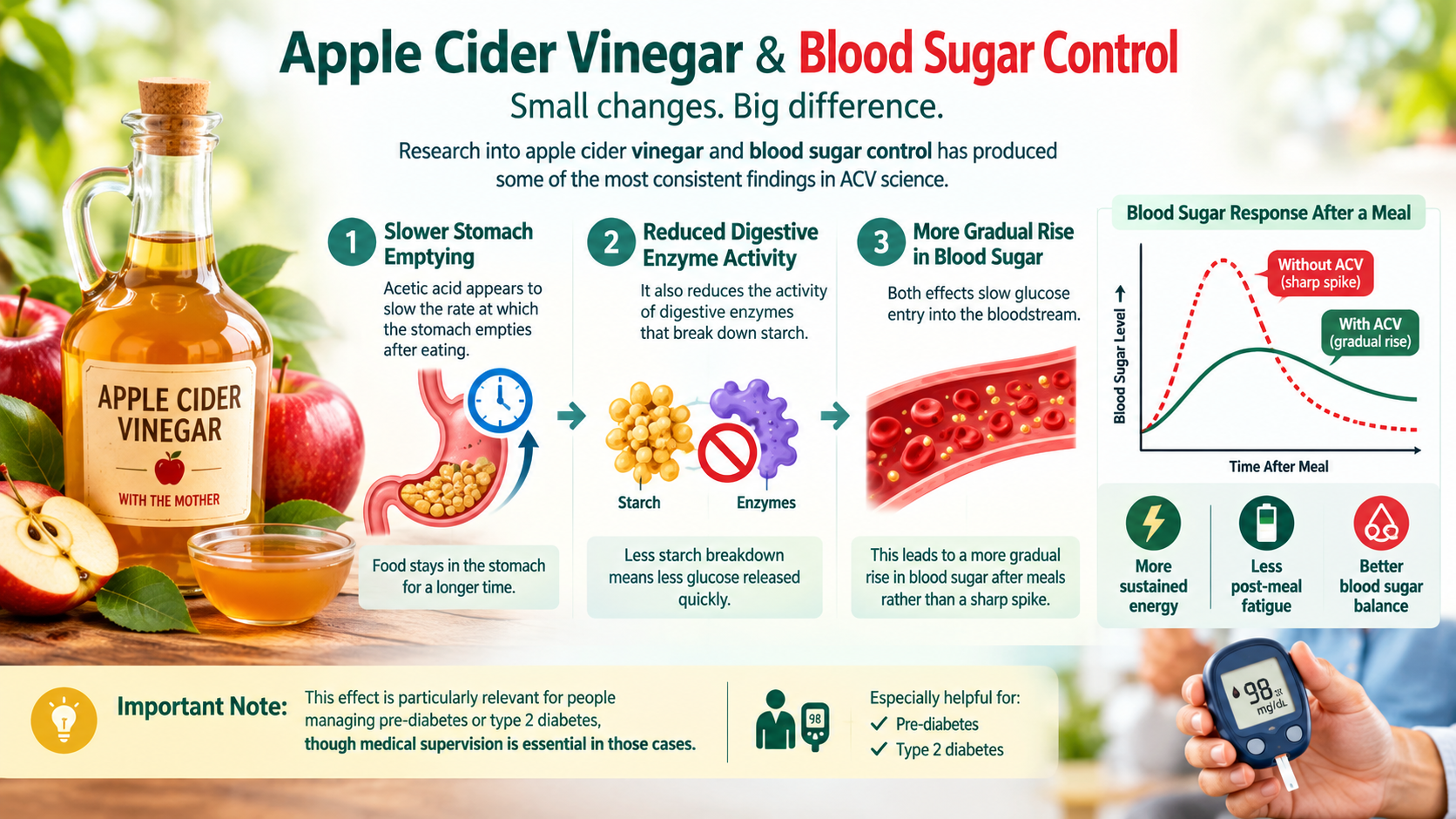
This is probably the most researched benefit of morning ACV, and the mechanism is reasonably well understood. The acetic acid in ACV appears to increase feelings of fullness — researchers believe it does this partly by slowing gastric emptying, meaning food stays in your stomach longer before moving on.
In practical terms: drinking diluted ACV before your first meal of the day may mean you eat a bit less at that meal and feel satisfied longer afterward. Over weeks and months, that modest reduction in appetite can contribute meaningfully to weight management without requiring dramatic dietary changes.
It’s worth being clear about what this isn’t. ACV won’t burn fat directly or transform body composition on its own. It’s a supporting factor — useful when combined with sensible eating habits, not a substitute for them.
2. Digestion
Your stomach needs sufficient acid to break food down properly. When acid levels are lower than they should be — something that becomes more common with age — digestion slows, and that uncomfortable heavy feeling after meals becomes more frequent.
ACV, being acidic itself, may help support stomach acid production and create better conditions for digestive enzymes to do their work. Some people find that taking it before meals reduces bloating and that uncomfortable post-meal fullness noticeably. It also creates an environment in the gut that tends to favour beneficial bacteria over harmful ones, which connects to broader gut health over time.
This doesn’t mean ACV is appropriate for everyone with digestive issues. People with acid reflux or gastroesophageal reflux disease (GERD) may find that additional acid makes things worse rather than better. If your digestive symptoms are ongoing, a doctor’s input is more useful than a home remedy.

3. Blood Sugar and Energy Levels
One of the more robustly studied benefits of ACV involves blood sugar regulation. Acetic acid appears to slow how quickly the stomach empties after eating and reduces the rate at which starch is broken down into glucose. Both effects mean blood sugar rises more gradually after a meal — a steadier curve rather than a spike.
Why does that matter? Sharp blood sugar spikes are typically followed by sharp drops — and those drops are what cause the familiar energy crash an hour or two after eating. Keeping the curve flatter means more stable energy through the morning and fewer cravings driven by glucose fluctuation.
For people managing type 2 diabetes or pre-diabetes, this is an area where ACV has shown genuine promise in studies. But it’s also an area where medication interactions become a real concern. If you’re taking anything to manage blood sugar, speak to your doctor before adding ACV to your routine.
4. Heart Health
The evidence here is less robust than for blood sugar, but worth mentioning. Some studies — primarily in animals, with limited human trials — have found associations between regular ACV consumption and lower levels of LDL cholesterol and triglycerides, alongside modest increases in HDL (the beneficial type).
These aren’t dramatic effects, and they shouldn’t be treated as a cardiovascular treatment. But as one part of a diet and lifestyle approach that takes heart health seriously — alongside reducing processed food, eating more fibre, exercising regularly — it fits without much cost or effort.
5. Skin
This one is less direct than the others. ACV doesn’t get applied to the skin in this context — the benefit comes from inside. The argument is that by supporting digestion and gut health, ACV helps the body process and eliminate waste more efficiently. Skin health has well-documented connections to gut health, and some people report clearer skin as one of the more noticeable changes after consistent ACV use.
ACV also has natural antimicrobial properties. When diluted and occasionally used topically as a toner, some people find it helps with acne-prone skin by balancing pH. But that’s a separate use case — topical, not the morning drink discussed here.
How to Do It Without Causing Problems
This section matters. ACV used incorrectly causes real, preventable harm — primarily to tooth enamel and the lining of the throat and oesophagus. Both are avoidable with the right approach.
Always dilute. Never drink ACV straight. The standard is 1 to 2 teaspoons (5 to 10ml) in a full glass of water — roughly 240ml. Start at 1 teaspoon if you’re new to it and see how your body responds before increasing.
Use a straw. This directs the liquid past your teeth, reducing contact with enamel. ACV is acidic enough to cause measurable enamel erosion over time if you’re sipping it directly from a glass daily.
Rinse after. Follow your ACV drink with plain water to clear residual acid from your mouth. Don’t brush your teeth immediately afterward — brushing while enamel is softened from acid can cause more damage.
Time it right. 15 to 30 minutes before breakfast is the commonly recommended window. This gives the ACV time to support digestive priming before food arrives.
Don’t exceed 2 tablespoons per day total. More is not better here. Higher amounts are associated with digestive irritation, low potassium, and other unwanted effects.
Who Should Be Careful
People on diabetes medications — ACV’s blood sugar lowering effect can compound with medication, potentially causing blood sugar to drop too low. Medical supervision is important.
People on diuretics — ACV can affect potassium levels, and combining it with diuretics that also lower potassium creates a risk of hypokalaemia.
People with acid reflux or GERD — additional acid may worsen symptoms. Some people find it helps, but others find it significantly worse. Start cautiously and stop if symptoms increase.
People with kidney conditions — the kidneys process the acids from ACV, and those with compromised kidney function may not eliminate them efficiently.
Pregnant and breastfeeding women — there isn’t sufficient research on safety in these groups. Caution and a conversation with a midwife or doctor is the appropriate approach.
Conclusion
Apple cider vinegar isn’t a miracle. It’s a simple, low-cost, fermented food product with a modest but genuine set of evidence-backed benefits — better blood sugar regulation, some support for digestion and appetite control, potential cardiovascular contributions, and gut health support.
The habit takes about two minutes. The cost is minimal. The main requirement is consistency — occasional use won’t produce the same results as a steady daily routine over weeks.
Start with one teaspoon in a full glass of water before breakfast. Use a straw. Rinse afterward. Give it a month and pay attention to how you feel. That’s really all there is to it.
Disclaimer
This article is for general informational and educational purposes only and is not intended as medical advice, diagnosis, or treatment. Apple cider vinegar is a food product, not a medicine, and should not be used as a substitute for professional medical care. The health effects described reflect current nutritional research and may not apply equally to all individuals. People with diabetes, kidney conditions, acid reflux, GERD, or those taking prescription medications — particularly blood sugar medications, blood thinners, or diuretics — must consult a qualified healthcare provider before incorporating ACV into their daily routine. Undiluted ACV can cause serious damage to tooth enamel, the throat, and the oesophagus. Always dilute before consuming.
FAQ
Sources

Health & Wellness Writer | Research-Informed Health Content Creator
A.K.M. Monjurul Hoque is a health and wellness writer specializing in health, beauty, fitness, nutrition and healthy living. His content is informed by health journals, books, seminars, training programs, and discussions with experienced healthcare professionals. He writes clear, practical and research-informed articles for general education and encourages readers to seek personalized advice from qualified medical professionals.