There’s magic in the colors in an old shoebox when you open it up and see all of your family photos, the slightly askew images, and the handwritten dates on the back. That’s compared to the thousands of crisp digital images you can scroll through on your phone, and you begin to see just how far photography has come. This is a “smaller cameras, sharper cameras” story, but it’s not a smaller cameras story or a sharper cameras story; it’s a story of a humanity that chooses to remember itself.
Let’s now stroll through the intriguing history of photography, from the chemical processes in the darkroom to the AI-driven tools shaping images today, and consider the significance of each advancement, not just in terms of technological progress, but also in how they defined the purpose and intent of capturing images.
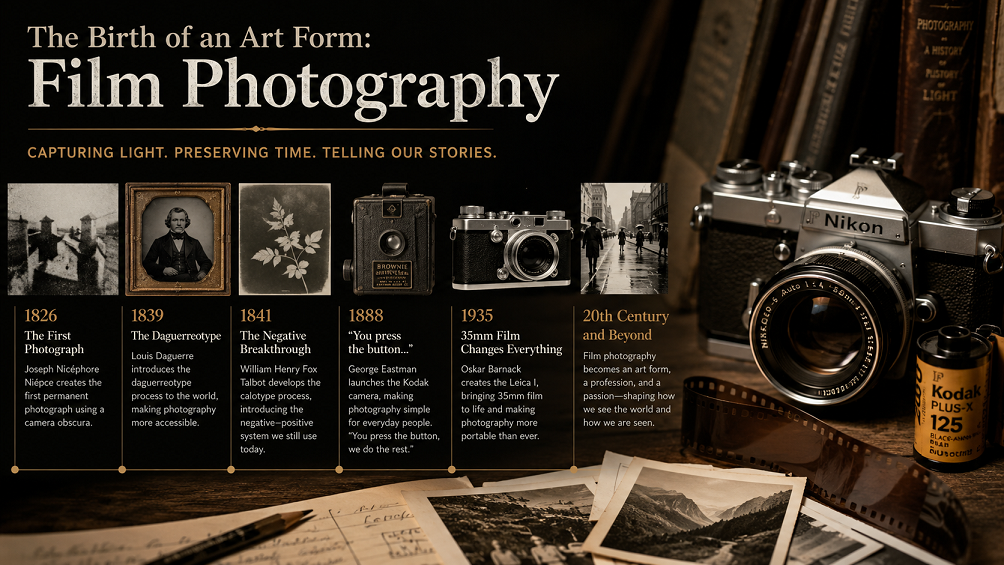
The Birth of an Art Form: Film Photography
Photography was a laborious art long before the advent of “say cheese”. Early cameras needed long exposures (sometimes minutes) so subjects had to be very still, sometimes with the aid of hidden stands and braces.
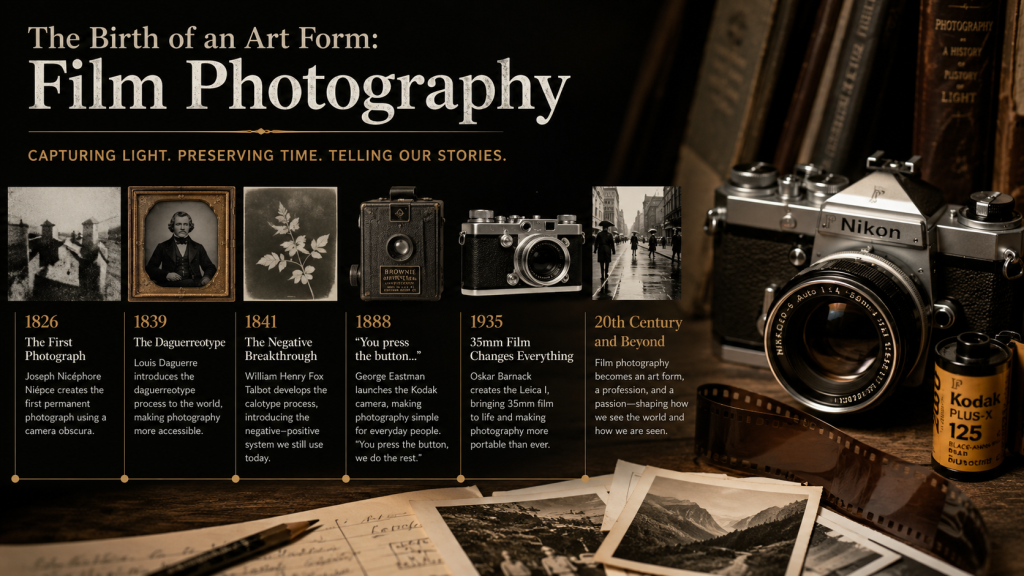
With the development of technology in the 1800s and 1900’s, the film roll became the norm. Photographers were mindful of each photo, as there was a limitation and cost for film. Usually 24 or 36 exposures could be loaded onto each roll, and one couldn’t just take pictures, hoping they’d turn out okay. Such a lack of adequate resources fostered a degree of deliberate purpose almost unknown today.
Next came the dark room – a small, dark room with strong chemical odor, where the photographer would develop his/her own negatives. For many, the most rewarding aspect of the whole process was to watch an image slowly appear on paper in the developer fluid. Transformed the act of photography into a physical one, rather like a meditative process.
The Digital Revolution
All that changed with the introduction of the digital camera in the late 80s and especially the 90’s and early 2000s. At once, photographers could view their photographs instantly and delete the poor ones and snap photos as much as their memory card would allow them.
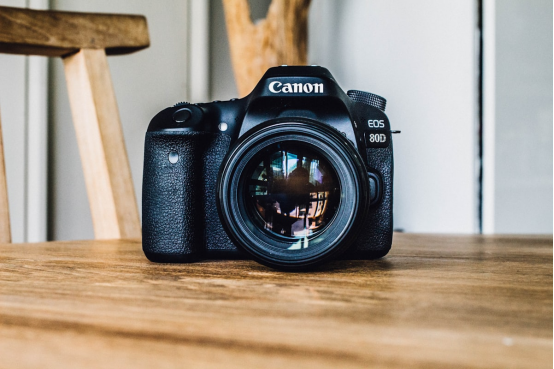
It was not just a psychological change but the technical one too. The notion of “wasting film” was forgotten, and some of the planning from past generations went out the window. However, in return, photography was more attainable than ever. No longer did one have to use a darkroom, costly chemicals, or years of training to take a decent photo.
Digital sensors continued to improve at a very fast pace. Megapixels increased, low-light capabilities improved, and software such as Adobe Photoshop allowed for all-new levels of creativity. Photography no longer meant the “here and now” of shutter-click, but was equally artful after the shutter had closed.
The Smartphone Era: Photography in Everyone’s Pocket
The smartphone could prove to be the most democratic camera ever. Ah, with cameras in phones that pretty much everyone owns, billions of people became photographers one day–whether they realized that or not.
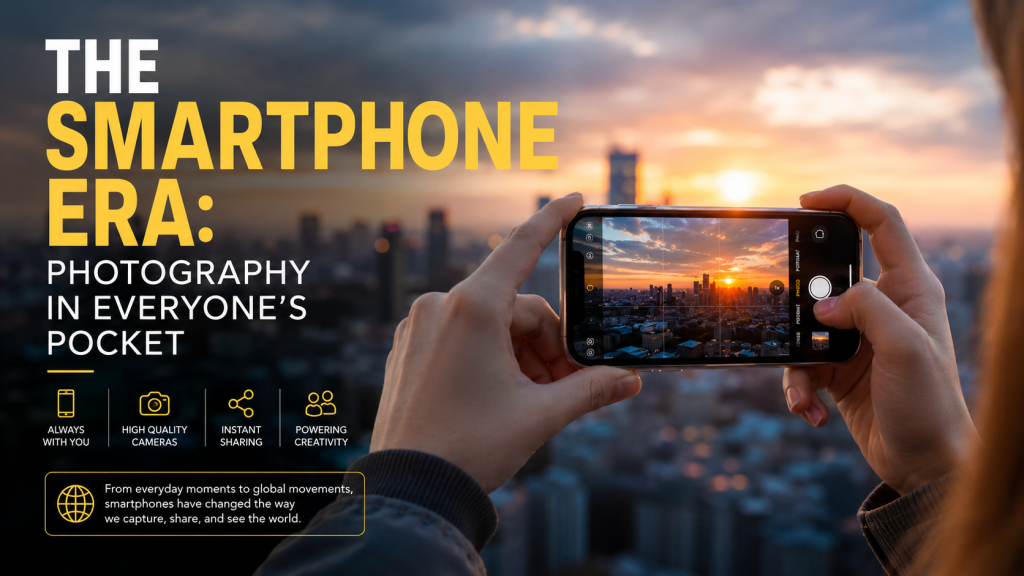
This was further accentuated through social media. Photographs were no longer just for personal memorabilia, but also for communication, real-time storytelling, and even a career for influencers and content creators. Innovations such as portrait mode, computational photography and AI-powered low-light images elevated the quality of the devices to a professional level without the size and weight.
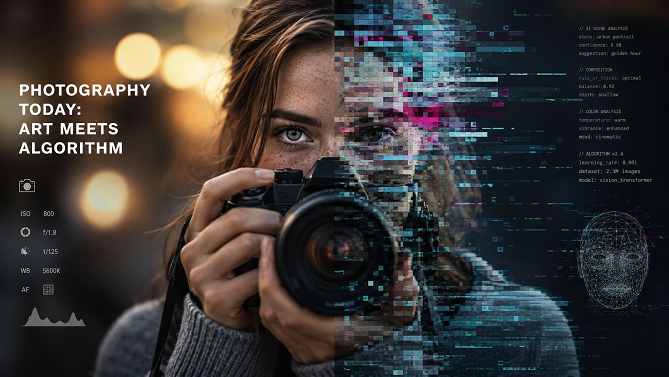
Photography Today: Art Meets Algorithm
In today’s day and age, AI has become a significant element in the field of photography. AI can automatically tweak lighting, crop out unwanted items, improve resolution, and even create images from text prompts. Mirrorless cameras have taken the place of the old-fashioned DSLRs, and they’re lighter with extremely high-quality pictures.
Drones have afforded new aerial views that were once only available with helicopters and hefty budgets. In the meantime, film photography has become a vintage genre.
Looking Ahead: The Future of Photography
Now, what next? There are a number of trends that appear to be inevitable for the next chapter:
- Computational photography will continue to ease the divide between what is “captured” and what is “created,” and AI will become more and more involved in the composition of images.
- AR and VR could revolutionize the way that people look at photographs; instead of just flat images, they can now look at the environment as a whole.
- Sustainability issues can impact the production of the cameras and the materials used in the cameras.
- As AI-generated images become closer to the original, authenticity verification tools are likely to become even more important.
The one thing that we know for sure is that photography will continue to change as it has done all along, always based on the tools and values of each generation.
Conclusion
Stretching from the patient chemistry of the film development process to the instant gratification of digital and smart-phones photography, this medium has been all about our relationship with memory, art, and technology. The coming of each era brought new tools as well as new views of the world and ourselves. In a world defined by AI and new technologies, there is one constant: the ability of the camera to capture a moment in time and document a story that can’t be told with words alone. Whether you’re taking photos with an old camera or the latest smartphone, you’re part of a tradition that has been developing for almost two hundred years, and it’s not over yet.
Frequently Asked Questions (FAQ)
AI assists with tasks like automatic editing, noise reduction, image enhancement, and even generating images from text descriptions, making advanced photo editing accessible to non-professionals.
Want to dive deeper into this topic? Check out this related resource for further reading.