





Pause Before You Post: Minnesota’s Groundbreaking Social Media Mental Health Alert Law
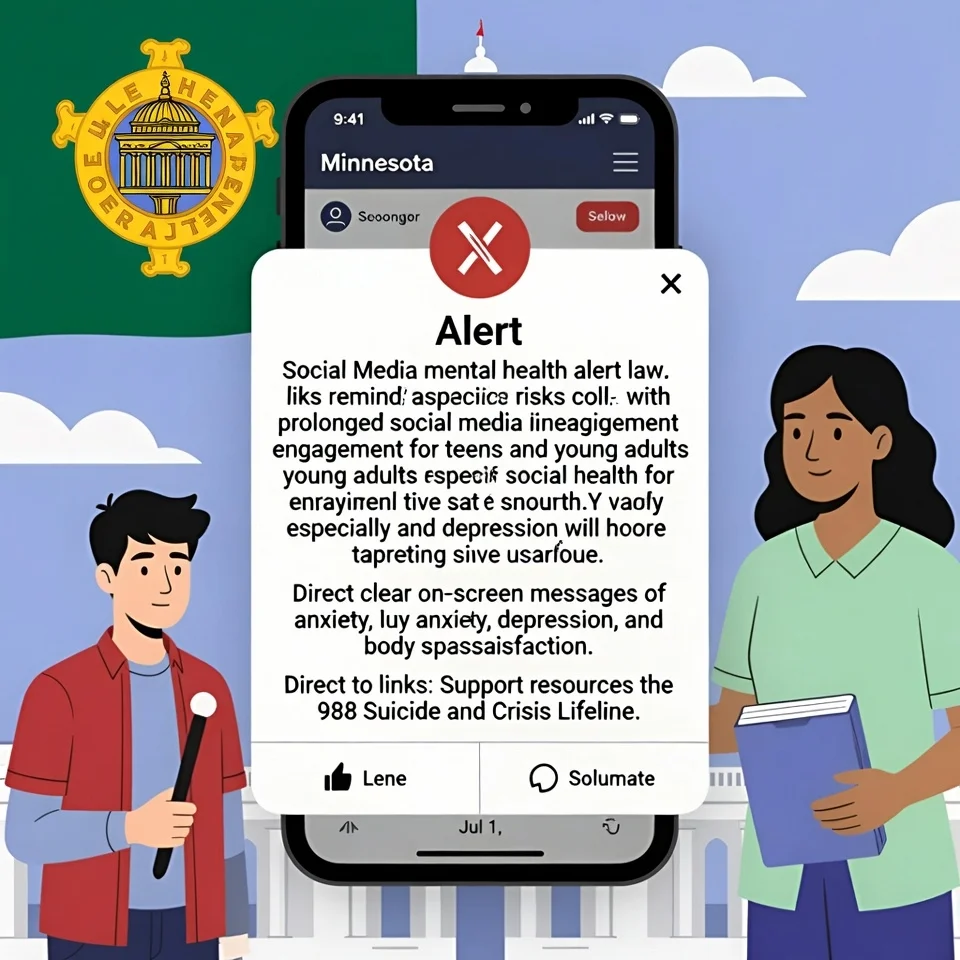
Minnesota is leading the charge in addressing the hidden toll of social media on mental well-being. Come July 1, 2026, major platforms will be required to display a prominent pop-up alert every time users in the state try to access their accounts. This “pause moment” is designed to remind people—especially teens and young adults—of the potential risks before diving into their feeds.
The law puts Minnesota front and center in the ongoing nationwide debate over how endless scrolling impacts mental health. At its core, it’s a simple intervention: force a brief acknowledgment of possible harms to encourage more mindful use.
What the Alert Involves

Users will encounter a clear, on-screen message highlighting the risks of prolonged social media engagement. The exact wording will follow guidelines developed by the Minnesota Department of Health, drawing from scientific evidence.
State Rep. Zack Stephenson, who championed the legislation, points to compelling research showing links between heavy platform use and issues like anxiety, depression, body dissatisfaction, and, in severe cases, suicidal ideation—particularly among youth. He compares the alerts to mandatory warnings on tobacco products or alcohol bottles, calling them a straightforward way to promote awareness.
The measure draws inspiration from warnings issued by former U.S. Surgeon General Vivek Murthy, who has highlighted studies connecting excessive screen time to eating disorders, sleep disruption, and declining emotional health in adolescents.
Enforcement with Real Consequences

This isn’t optional guidance—it’s mandatory, backed by the state’s attorney general. Platforms that fail to implement the alerts properly could face investigations and fines.
Additionally, the warnings must include direct links to support resources, such as the 988 Suicide and Crisis Lifeline, making help just a tap away.
Erich Mische, head of the nonprofit Suicide Awareness Voices of Education (SAVE), views these alerts as an essential educational tool. He stresses that they’re about informing users of risks like bullying, illegal drug exposure, or trafficking that can occur online, with a special focus on protecting vulnerable kids.
Rooted in Personal Tragedies

The law gained momentum from heartbreaking accounts shared during legislative hearings. Parents like Bridgette Norring, who lost her son after he bought a lethal substance via Snapchat, argued that a simple alert could prompt young people to reconsider impulsive actions. She frequently hears from teens battling insomnia and stress from nonstop notifications and believes easy access to crisis hotlines could make a real difference.
Another parent, Tabbatha Urbanski, testified about her 17-year-old son’s fatal overdose from drugs purchased on the same platform. These stories underscore the urgent, life-or-death stakes behind unregulated digital spaces.
Pushback from Critics

Not everyone is on board. Opponents, including some legislators, contend that mandating these messages infringes on free speech rights by compelling private companies to deliver government-scripted content.
NetChoice, an industry group representing tech giants, has criticized the approach as overreach. They argue the state should focus on public education campaigns rather than forcing platforms to act as messengers—and have signaled potential legal action if efforts to repeal it fail.
A Personal Reflection: Why This Matters in Our Daily Lives

In a world where our phones are constant companions, Minnesota’s law feels like a gentle but firm reminder to reclaim control. It’s not about banning social media or demonizing connection—it’s about fostering habits that prioritize our well-being over algorithms designed to keep us hooked. As someone who’s felt the pull of late-night scrolls leading to foggy mornings and unnecessary comparisons, I see this as a hopeful step. It invites us all to ask: Is this feed serving me, or am I serving it? If this sparks even a few more intentional log-offs or deeper conversations about digital balance, it could ripple far beyond Minnesota’s borders, helping build a healthier relationship with technology for generations to come.
Frequently Asked Questions (FAQ)
Q1: What’s the core purpose of Minnesota’s new social media law? A: It aims to safeguard mental health, particularly for younger users, by requiring platforms to show a visible warning about potential risks each time someone logs in, along with access to support resources.
Q2: When will these warnings appear on apps? A: The law takes effect on July 1, 2026, with health guidelines for the alerts finalized by March 1, 2026.
Q3: What prompted Minnesota to enact this legislation? A: Mounting research links extended social media use to mental health challenges like anxiety, depression, poor body image, sleep issues, and suicidal thoughts, especially in teens. Personal stories of loss from platform-related harms also drove strong support.
Q4: What are the penalties for non-compliant platforms? A: Companies could be subject to state-led investigations and civil fines enforced by the Attorney General.
Q5: Is there opposition to this law? A: Yes, industry groups like NetChoice and certain politicians argue it violates First Amendment rights by forcing companies to convey state-mandated messages, preferring direct public education instead. Legal challenges are anticipated.

Health & Wellness Writer | Research-Informed Health Content Creator
A.K.M. Monjurul Hoque is a health and wellness writer specializing in health, beauty, fitness, nutrition and healthy living. His content is informed by health journals, books, seminars, training programs, and discussions with experienced healthcare professionals. He writes clear, practical and research-informed articles for general education and encourages readers to seek personalized advice from qualified medical professionals.