Pluto, one of the most mysterious worlds in our outer solar system, continues to guard its secrets tightly. Since NASA’s New Horizons spacecraft completed its historic flyby in 2015, scientists have been eager for a second, closer look. Yet despite the curiosity and excitement surrounding Pluto, the reality is clear: another mission is unlikely anytime soon.
Why a Second Pluto Mission Is Still Out of Reach

With no approved missions currently in development, researchers must depend on two main resources: the extensive data collected by New Horizons and distant observations captured by high-powered telescopes such as the Hubble Space Telescope and the James Webb Space Telescope. These tools provide valuable information, but they cannot replace the detailed insights that only an orbiter could deliver.
Unfortunately, the challenges associated with returning to Pluto are significant. Budget uncertainties and shifting space exploration priorities have placed ambitious deep-space missions on the sidelines. Even if NASA approved a new mission today, development would likely take 10–20 years, with arrival projected no earlier than the late 2050s.
Budget Constraints Slow Progress

Proposed cuts to NASA’s planetary science division threaten both future missions and ongoing operations of spacecraft like New Horizons. Reduced funding for research grants also limits scientists’ ability to analyze existing data or expand observational programs using telescope time. While NASA is investing in major missions like Europa Clipper and Dragonfly, there is growing hesitation to commit to destinations beyond Mars, leaving Pluto and other outer worlds in limbo.
Why Another Pluto Mission Still Matters
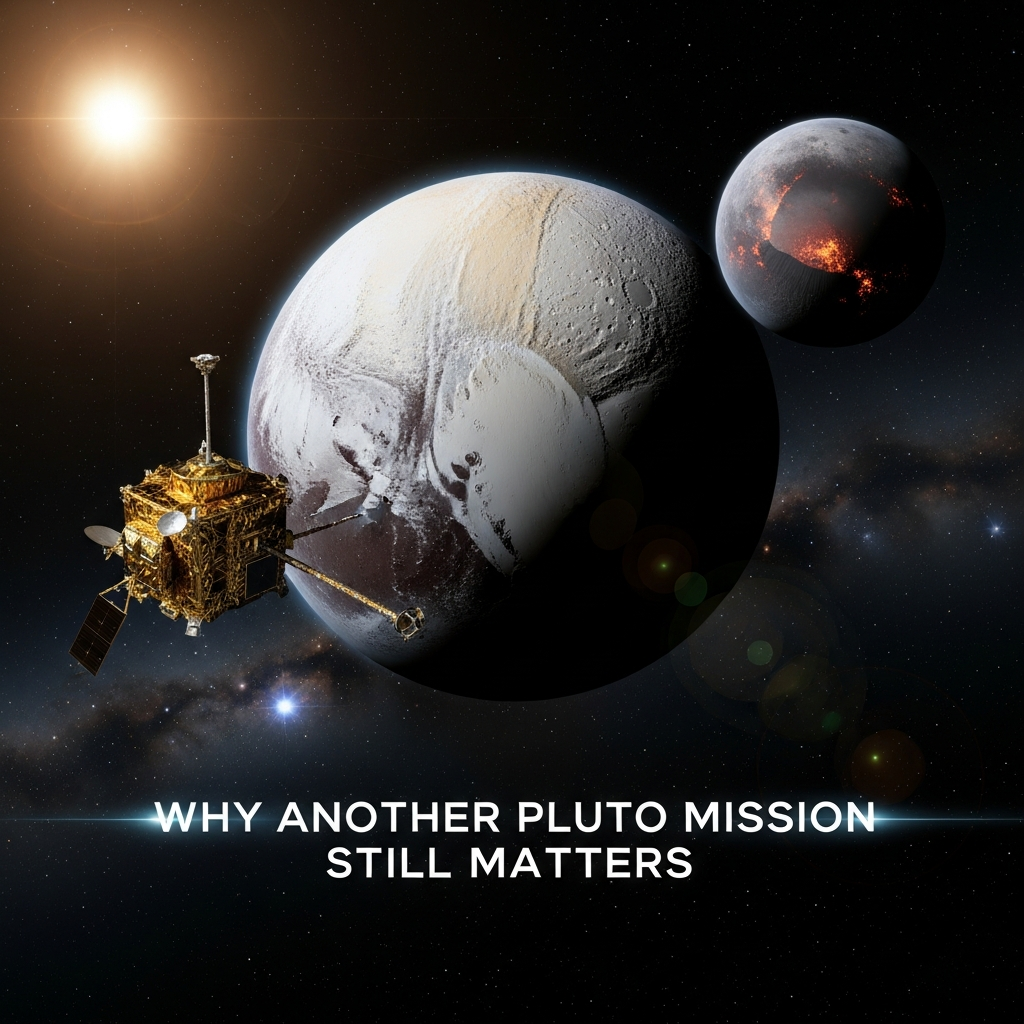
Despite these hurdles, researchers strongly believe that Pluto deserves another mission—specifically, an orbiter. New Horizons delivered stunning images and unexpected discoveries, but its rapid flyby revealed only a small part of Pluto’s complexity. An orbiter could:
- Map the entire surface in detail
- Study Pluto’s potential subsurface ocean
- Examine active cryovolcanoes
- Monitor atmospheric changes
- Explore long-term geological processes
Each of these mysteries requires long-term observation, which can only be achieved from orbit.
Future Mission Concepts: Persephone, Gold Standard & More
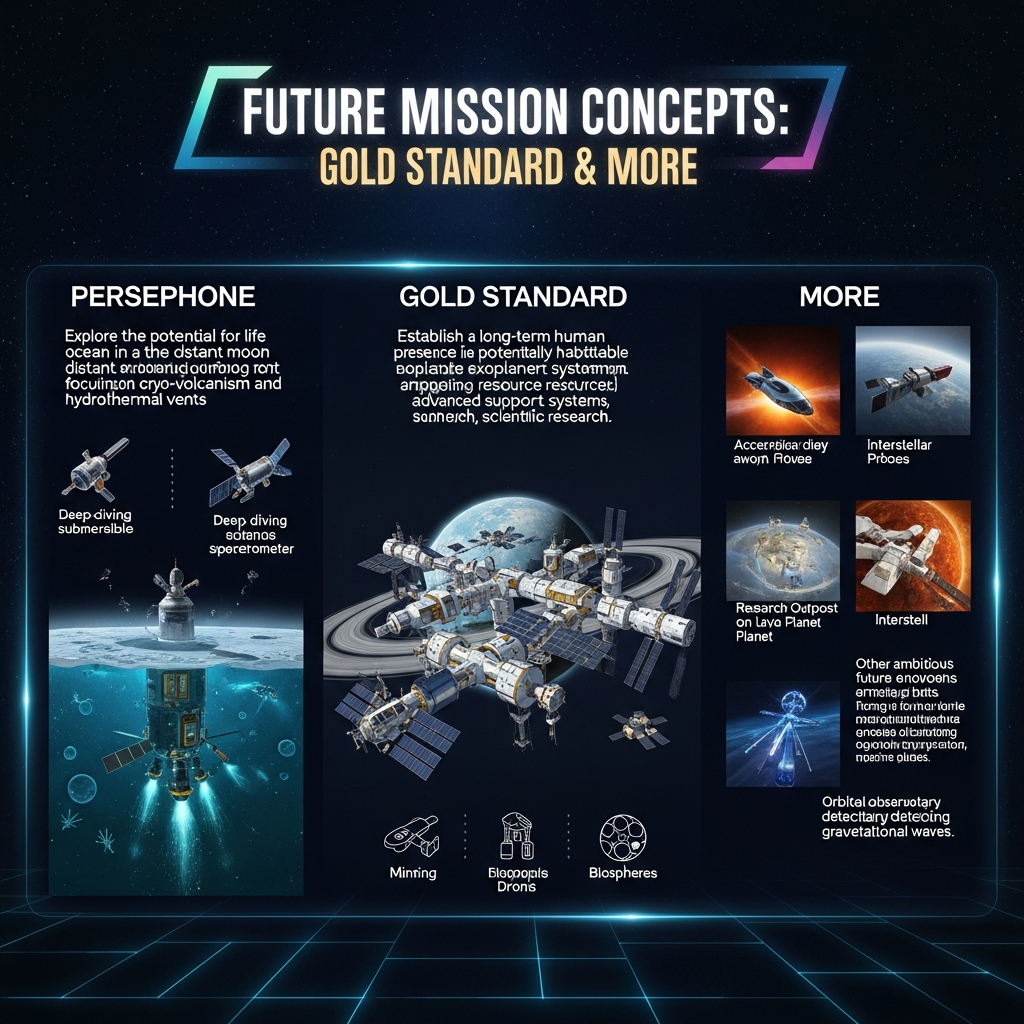
Two major mission proposals highlight the possibilities—and the challenges:
1. The Persephone Mission
Named after Pluto’s mythological wife, this concept outlines what it would take to send an orbiter to the dwarf planet. It would need:
- A powerful launch vehicle
- A 27+ year journey
- Jupiter gravity assist (only possible in early 2040s)
- Arrival around 2058
2. The Gold Standard Mission
A similar design, but with additional fuel to explore objects deeper into the Kuiper Belt. This mission also relies heavily on Jupiter’s alignment and advanced propulsion.
Both concepts face the biggest obstacle of all: cost. Reaching Pluto and successfully entering orbit requires significant power, fuel, and technological sophistication, making it extraordinarily expensive.
Could Advanced Propulsion Change the Timeline?
Emerging technologies like nuclear electric propulsion might reduce travel time and increase data transmission rates. However, these systems are still under development, and consistent funding for nuclear propulsion research remains uncertain.
Conclusion
The dream of returning to Pluto is still alive, but it remains distant. Scientific interest is strong, mission concepts exist, and new technology may one day speed up the journey. But between budget limitations, technological challenges, and planetary alignment constraints, a second mission is likely decades away. For now, scientists must rely on the legacy of New Horizons and hope that future generations will unlock the frozen secrets of this captivating world.
Frequently Asked Questions (FAQ)
1. Why can’t NASA send another mission to Pluto soon?
Pluto missions require enormous budgets, long development timelines, and planetary alignments that only occur every few decades. Current NASA priorities focus on the Moon, Mars, and major missions to Jupiter and Saturn.
2. What did New Horizons discover about Pluto?
New Horizons revealed a surprisingly active world with mountains of ice, possible subsurface oceans, nitrogen glaciers, and signs of cryovolcanic activity.
3. Why is a Pluto orbiter better than a flyby?
An orbiter can stay for years, mapping the entire planet and studying its climate, geology, and atmosphere—something a quick flyby cannot accomplish.
4. When could the next Pluto mission realistically launch?
If approved, development could begin in the 2030s or 2040s, with arrival likely in the late 2050s or early 2060s.
5. Could new propulsion technologies speed up the journey?
Possibly. Nuclear electric propulsion could shorten travel times, but the technology needs more testing and funding before it can be used for missions to Pluto.