
Testosterone—it’s a word you’ve likely heard in conversations about everything from muscle growth to sex drive. Often dubbed the “male hormone,” testosterone plays a vital role in the health of both men and women.[1][2][3] But with a growing culture encouraging men to boost their levels, it’s essential to separate the facts from the fiction. Let’s explore what testosterone is, why it’s important, and the difference between healthy optimization and risky enhancement.
What Exactly is Testosterone and What Does It Do?
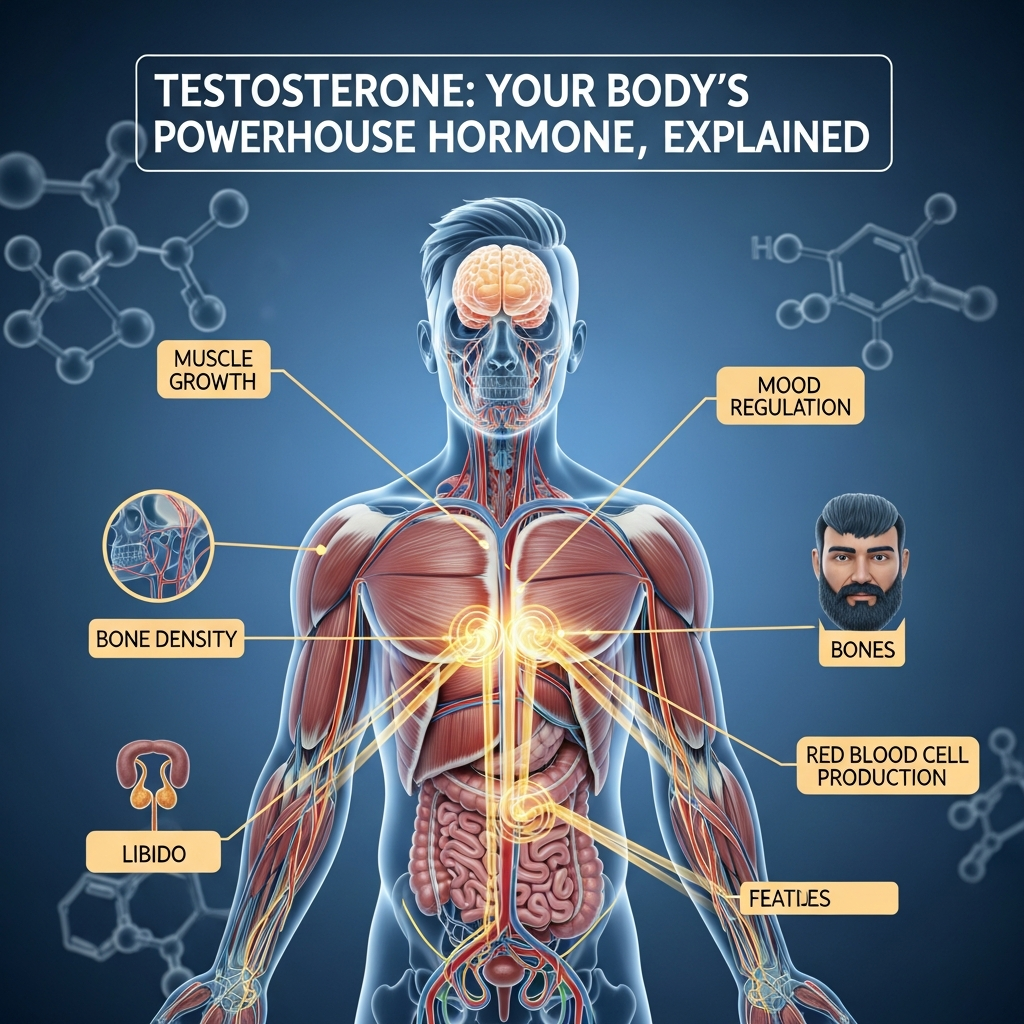
Testosterone is the primary male sex hormone, but women’s bodies produce it in smaller amounts as well.[2][4] It’s responsible for the development of male characteristics during puberty, such as a deepening voice, body hair, and muscle growth.[1][3][4]
Beyond puberty, testosterone continues to be a key player in several bodily functions for men:[4][5]
- Maintaining sex drive (libido)[1][3]
- Sperm production[1][2][3]
- Promoting muscle and bone strength[2][3][4]
- Red blood cell production[2][3][5]
- Influencing mood and energy levels[1][2]
As men age, their testosterone levels naturally decline, typically by about 1% a year after age 30 or 40.[6] For some, this decline can lead to a condition called hypogonadism, or low testosterone, which can cause symptoms like fatigue, low libido, and loss of muscle mass.[2][6][7]
The Difference Between Medical Need and Unnecessary Risk
For men diagnosed with hypogonadism, testosterone replacement therapy (TRT) can be a life-changing medical treatment.[7][8] Administered under a doctor’s supervision, TRT can help restore normal testosterone levels and improve symptoms.[7][8] Forms of TRT include gels, patches, injections, and pellets.[6][8]
However, a growing trend sees individuals without a medical need seeking testosterone to achieve superhuman physiques or performance. This misuse, often involving anabolic steroids (synthetic versions of testosterone), is where significant health risks emerge.[5][9][10] Social media and the pressure to achieve an “ideal” body contribute to this dangerous trend.[9]
The Real Dangers of Misusing Testosterone
Using testosterone without a medical diagnosis and supervision can throw your body’s natural hormone balance into chaos. Here are some of the serious risks involved:
- Heart Health at Risk: Misusing testosterone can negatively impact your cardiovascular system by increasing blood pressure and “bad” cholesterol levels.[9] This elevates the risk of blood clots, heart attacks, and strokes.[11]
- Reproductive and Hormonal Havoc: Introducing excess testosterone can signal your body to shut down its own production.[9][12] This can lead to shrunken testicles, a lower sperm count, and even infertility.[9][13] Another unwanted side effect for men can be the development of breast tissue (gynecomastia).[6][13]
- Liver Damage: Oral forms of anabolic steroids are particularly harsh on the liver, and long-term misuse can lead to serious damage.[10]
- Mental and Emotional Turmoil: Unregulated testosterone use can lead to significant mood swings, aggression, anxiety, and depression.[13][14]
- Physical Changes: Other unwelcome side effects can include severe acne, oily skin, and accelerated male pattern baldness.[13][15]
Natural and Safe Ways to Support Healthy Testosterone Levels
Instead of turning to risky shortcuts, you can support your body’s natural testosterone production through healthy lifestyle choices:
- A Balanced Diet: Focus on a diet rich in lean proteins, healthy fats like those found in avocados and nuts, and plenty of fruits and vegetables.[16][17] Foods rich in zinc, magnesium, and vitamin D may also be beneficial.[18][19]
- Consistent Exercise: A combination of strength training and cardiovascular exercise can help maintain a healthy weight and encourage testosterone production.[16][20]
- Prioritize Sleep: Your body produces most of its testosterone during deep sleep, so aiming for 7-9 hours of quality rest is crucial.[20]
- Manage Stress: Chronic stress can lower testosterone levels. Incorporating stress-reducing activities like meditation, spending time in nature, or hobbies can help.[19]
Conclusion: Smart Choices for Long-Term Health
Testosterone is a powerful and essential hormone, but it’s not a magic potion for instant muscles or eternal youth. Medically supervised testosterone therapy can be a safe and effective treatment for men with diagnosed low levels. However, misusing testosterone without a medical reason can lead to severe and lasting health consequences.
The safest and most sustainable path to well-being is through a healthy and balanced lifestyle. By focusing on good nutrition, regular exercise, sufficient sleep, and stress management, you can support your body’s natural hormone production and achieve lasting health without the dangerous side effects.
Frequently Asked Questions (FAQ)
What is Testosterone Replacement Therapy (TRT)?
TRT is a medical treatment for men diagnosed with low testosterone (hypogonadism).[8][21] It involves supplementing the body’s natural testosterone to restore normal levels and alleviate symptoms.[21]
Who is a good candidate for TRT?
Men experiencing symptoms of low testosterone, such as persistent fatigue, low sex drive, and decreased muscle mass, who have been diagnosed with hypogonadism through blood tests, may be candidates for TRT.[7][21] A thorough evaluation by a healthcare provider is necessary.
What are the common side effects of medically supervised TRT?
Even under medical supervision, TRT can have side effects, which may include acne, fluid retention, and an increased red blood cell count.[15][22] Regular monitoring by a doctor helps to manage these risks.[22]
Is TRT the same as using anabolic steroids?
No. TRT uses therapeutic doses to bring testosterone to a normal, healthy range under medical supervision.[23] Anabolic steroids are often misused in much higher doses to enhance performance or appearance, which carries significant health risks.[10][23]
Can I boost my testosterone levels naturally?
Yes, lifestyle factors play a significant role in testosterone production. Regular exercise (especially weight lifting), a balanced diet, getting enough sleep, and managing stress are all effective, natural ways to support healthy testosterone levels.[16][19][20]
Sourceshelp
- bio-test.ca
- healthline.com
- instituteofhumananatomy.com
- yourhormones.info
- clevelandclinic.org
- mayoclinic.org
- ncic.nhs.uk
- clevelandclinic.org
- alphabiolabs.ie
- clevelandclinic.org
- webmd.com
- endocrine.org
- www.nhs.uk
- drugwatch.com
- manual.co
- houstonmethodist.org
- webmd.com
- apollodiagnostics.in
- allianceurology.com
- va.gov
- elitehormones.com
- klinic.com
- balancemyhormones.co.uk