




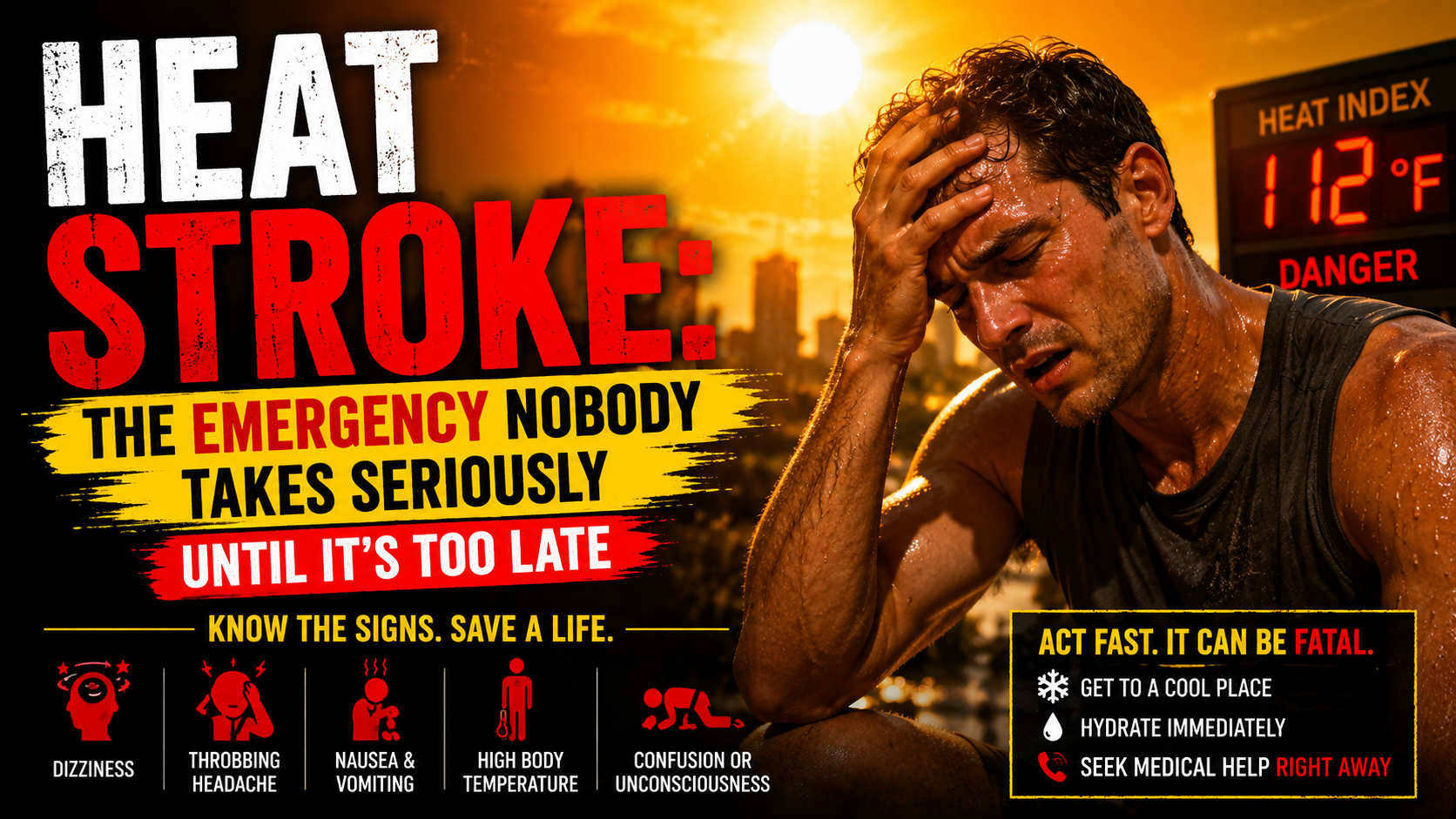
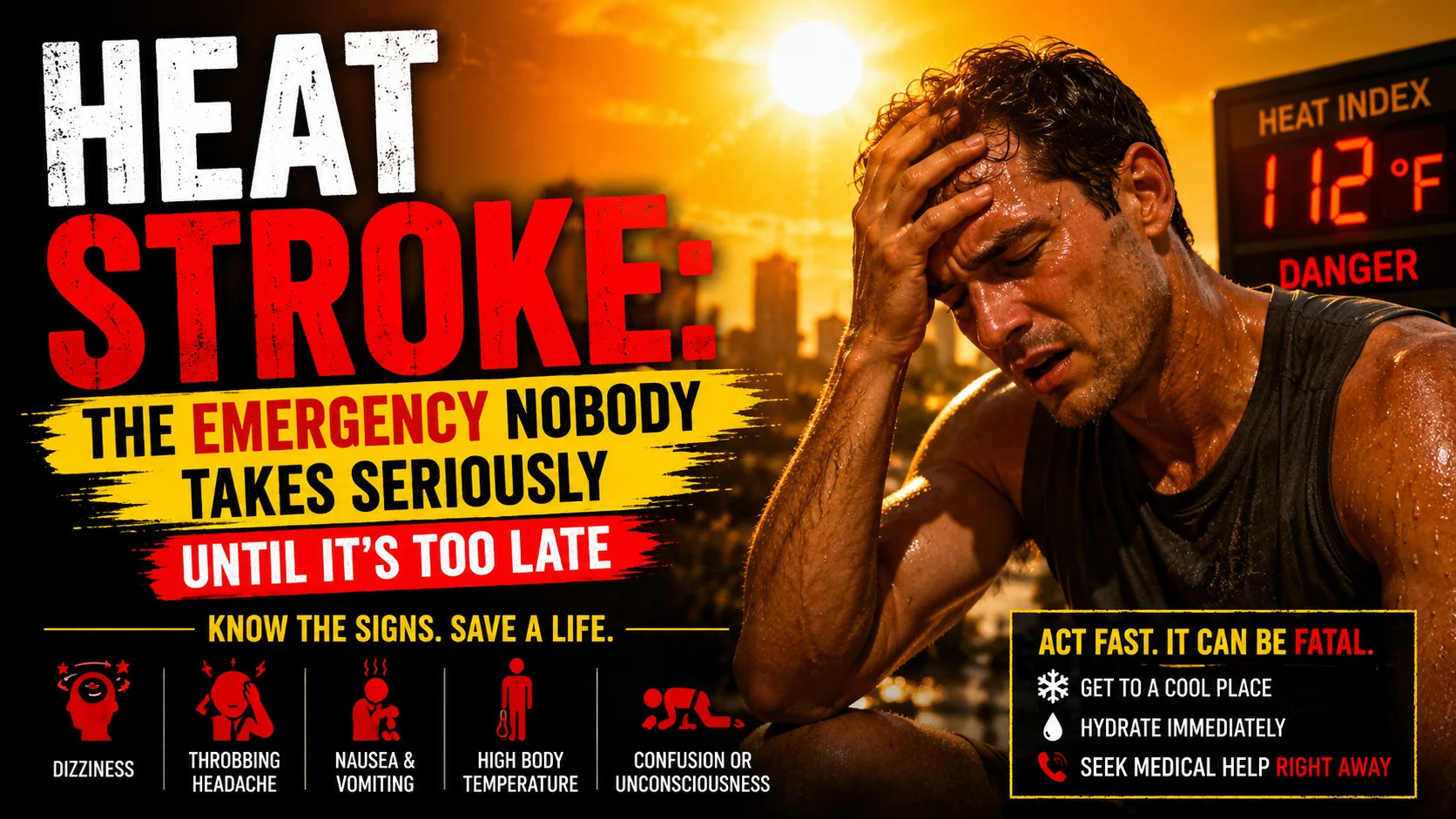
Heat Stroke: The Emergency Nobody Takes Seriously Until It’s Too Late
You’ve probably heard the warnings about heat stroke. To avoid it, drink plenty of water. Stay indoors. Avoid the midday sun. Every summer, many people end up in the emergency room—or worse—because they ignored advice they thought was meant for someone else. Someone who’s older. Someone who’s not as fit. Someone who’s ‘not used to the heat. ‘
Heat stroke is no joke.
What really happens inside your body in the heat
Under most circumstances, your body is a remarkable regulator of temperature control. It sweats. It increases blood flow to the skin. It makes you so uncomfortable that you move to shade, water, a fan—these things. This discomfort is intentional. It’s a natural body function.

Heat stroke occurs when this system goes out of control.
Your core body temperature rises above 40° Celsius (104° Fahrenheit). At that point, you don’t just feel hot. The proteins in your cells start to misshape—basically, they lose their shape and stop working. Enzymes that carry out important reactions start to malfunction. The lining of your intestines can become permeable, allowing bacteria to enter your bloodstream. The brain swells.
It’s not dehydration. It’s not lightheadedness. It’s the process of organ failure.
Heat stroke generally comes in two forms, and it’s important to know the difference between them. Common heat stroke occurs in people who are simply exposed to extreme environmental heat—such as an elderly person in an apartment without air conditioning or a child left in a car. Overexertion heat stroke catches athletes and workers off guard. They generate a lot of heat inside their bodies through muscle contractions and at the same time fight the surrounding temperature. Young, healthy, strong—and yet they are at risk.
The signs are not easy to spot (until they are obvious).
This is where it gets complicated.
Early warning: The person stops sweating. Or they start acting strangely—confused, irritable, and saying things that don’t make sense. Maybe they stumble. Maybe they just look… different. These things are easy to dismiss. They’re tired. They’ve had a long day. It’s hot; everyone is irritable.

Then things get worse quickly.
Seizures. Loss of consciousness. The skin becomes hot and dry—or, in the case of overexertion, the person can no longer speak normally, even though they’re drenched in sweat. The time between “something is wrong” and “this is a medical emergency”—can be surprisingly short. Twenty minutes. Sometimes even less.
The cruel irony is that one of the first things that is damaged by heat stroke is the brain’s ability to recognize when something is wrong. The person who needs to stop and ask for help the most is often the one least able to decide to do so.
What You Do—Right Now, Not After Calling Someone
Call emergency services. That part is obvious. But don’t stand there waiting.
Cool them down immediately. This is the intervention. Cooling is the treatment. Every minute of delay at a core temperature above 40°C (104° Fahrenheit) increases the risk of permanent damage to the brain, kidneys, and liver.
Ice water immersion is the most effective method if it’s available—submerge as much of the body as possible. If not: cold wet towels on the neck, armpits, and groin (where major blood vessels run close to the skin). Fan them. Pour water over them. Get creative and get cold.
Do not give them fluids by mouth if they’re confused or unconscious. Aspiration is a real risk.
Do not wait to see if they “come around on their own.”
Recovery and Aftereffects People Don’t Talk About
Even if a person survives heat stroke, they never fully recover.
Sensitivity to heat can last for months. Some survivors find that their bodies overheat easily for years afterward—once their thermoregulation system is disrupted, it never fully recovers. Long-term neurological effects also occur: memory problems, mood swings, and difficulty concentrating.

The kidneys are especially vulnerable during this time. Rhabdomyolysis—the breakdown of muscle tissue that releases proteins into the bloodstream that the kidneys are not designed to filter in that amount—can occur after exertional heat stroke and can lead to acute kidney injury a few days later, even after the person seems to have recovered.
Recovery takes weeks. Sometimes longer.
The People Who Don’t Realize They’re Vulnerable
Athletes who train in the heat know they need to acclimate gradually—at least 10 to 14 days of progressive exposure before the body adapts meaningfully. Most people know this in theory and underestimate how much it matters in practice.
But there are less obvious groups.
People on certain medications—antihistamines, diuretics, antipsychotics, and beta-blockers—have impaired heat dissipation and may not feel the warning signals as strongly. People who’ve been sick recently, especially with anything that caused fluid loss. Anyone who drank alcohol the night before. People who haven’t slept well. Overweight individuals, whose insulating body mass makes heat buildup faster.
The list is longer than most people expect. The point isn’t to make everyone afraid of a warm afternoon. The point is that vulnerability to heat stroke is not about weakness or being unaccustomed to hardship. It’s about physiology, and physiology doesn’t care about your self-image.
A Last Word
Heatstroke kills thousands of people worldwide every year, and the number is increasing as temperatures rise. In many cases, it is completely preventable. Shade, water, rest, recognizing and not ignoring your body’s real signals—these are not complicated steps.
The hard part is getting people to take this heat seriously before someone collapses.
Don’t be the one who learns this lesson the hard way.
Be aware yourself and make others aware.

Health & Wellness Writer | Research-Informed Health Content Creator
A.K.M. Monjurul Hoque is a health and wellness writer specializing in health, beauty, fitness, nutrition and healthy living. His content is informed by health journals, books, seminars, training programs, and discussions with experienced healthcare professionals. He writes clear, practical and research-informed articles for general education and encourages readers to seek personalized advice from qualified medical professionals.