





Home Workout Without Equipment: The Complete Guide (2026)
Fitness Guide · 2026 Edition
Home Workout
Without
Equipment
Build a stronger, leaner body using only your bodyweight — no gym membership, no machines, no excuses. The complete guide for beginners to advanced.
12 min readUpdated: May 2026Level: All levels

📋 TABLE OF CONTENTS
- What Is a Home Workout Without Equipment?
- Benefits of Working Out at Home
- Top 10 Best Bodyweight Exercises
- 7-Day Home Workout Plan
- Pro Tips for Better Results
- Common Mistakes to Avoid
- Conclusion
- Frequently Asked Questions (FAQ)
What Is a Home Workout Without Equipment?
A home workout without equipment means using your own bodyweight as resistance to build muscle, burn fat, and improve your overall fitness — all from the comfort of your living room, bedroom, or backyard. No dumbbells. No gym machines. No monthly fees.
This style of training is called calisthenics or bodyweight training, and it has been used for centuries by soldiers, athletes, and martial artists to develop incredible strength and endurance.
“You don’t need a gym to get fit. You need a plan, consistency, and the floor beneath your feet.”
Whether you are a total beginner or someone returning to fitness after a break, working out at home without any equipment is one of the most effective, accessible, and sustainable fitness strategies available today.
Benefits of Working Out at Home
Before diving into the exercises and workout plans, let us understand why so many fitness experts and everyday people are choosing home workouts over traditional gym sessions.
🆓
100% Free
Zero gym fees, no equipment costs
⏱️
Saves Time
No commute — workout in minutes
🏠
Always Available
Rain, shine, travel — any time, any place
🔥
Burns Fat
High-intensity moves torch calories fast
💪
Builds Strength
Develops functional, real-world muscle
🧘
Reduces Stress
Exercise releases endorphins naturally
Studies show that consistent bodyweight training can increase muscle strength by up to 30%, improve cardiovascular health, and significantly reduce the risk of chronic diseases such as type 2 diabetes and heart disease — all without stepping inside a gym.
Top 10 Best Bodyweight Exercises
These are the ten most effective exercises you can do at home with zero equipment. Each one targets multiple muscle groups, making them highly efficient for a full-body workout.
Strength
Push-Ups
Works chest, shoulders, triceps, and core. The king of upper-body bodyweight exercises.
Strength
Squats
Targets quads, hamstrings, glutes, and calves. Essential for lower-body power.
Core
Plank
Builds deep core stability, improves posture, and engages your entire midsection.
Cardio
Burpees
Full-body explosive movement. Burns the most calories per minute of any bodyweight exercise.
Strength
Lunges
Improves balance and builds unilateral leg strength. Great for glutes and hamstrings.
Cardio
Mountain Climbers
Combines cardio with core work. Elevates heart rate while strengthening the abs.
Core
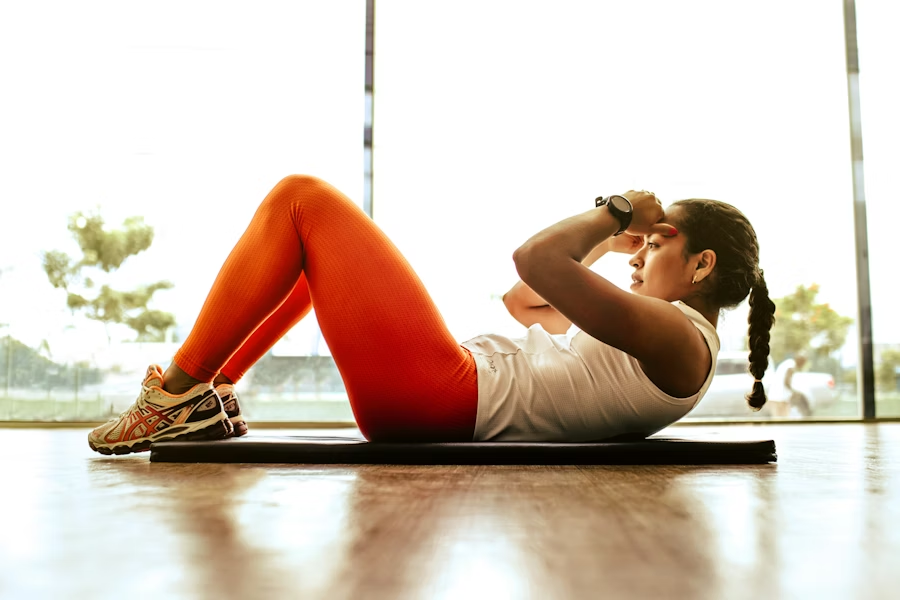
Crunches
Classic ab exercise targeting the rectus abdominis. Keep movements slow and controlled.
Strength
Tricep Dips
Use a chair or low surface. Isolates the triceps for strong, defined arms.
Cardio
Jumping Jacks
A simple but powerful warm-up and cardio move. Raises body temperature quickly.
Flexibility
Glute Bridges
Activates the posterior chain — glutes, hamstrings, and lower back. Great for posture.

Bodyweight training requires no equipment — just your body and a little floor space.
7-Day Home Workout Plan
This beginner-friendly weekly plan is designed to give you a balanced mix of strength, cardio, and recovery. Each session takes between 20 and 40 minutes depending on your pace.
| Day | Focus | Exercises | Duration | Level |
|---|---|---|---|---|
| Monday | Upper Body | Push-Ups, Tricep Dips, Shoulder Taps, Pike Push-Ups | 25 min | Beginner |
| Tuesday | Lower Body | Squats, Lunges, Glute Bridges, Calf Raises | 30 min | Beginner |
| Wednesday | Cardio Blast | Burpees, Jumping Jacks, High Knees, Mountain Climbers | 20 min | Moderate |
| Thursday | Core & Abs | Plank, Crunches, Leg Raises, Russian Twists | 25 min | Moderate |
| Friday | Full Body | Burpees, Squats, Push-Ups, Plank, Lunges | 35 min | Intense |
| Saturday | Active Rest | Light stretching, yoga, or a 20-min walk | 20 min | Easy |
| Sunday | Full Rest | Complete rest — let your muscles recover and grow | — | Rest |
Pro Tip
Always start with a 5-minute warm-up of light jogging in place, arm circles, and hip rotations. End every session with 5 minutes of stretching to reduce soreness and improve flexibility.
Pro Tips for Better Results
1. Focus on Form, Not Speed
The biggest mistake beginners make is rushing through exercises. Slow, controlled movements activate more muscle fibers, reduce injury risk, and produce far better results than sloppy, fast reps. Quality always beats quantity.
2. Progressive Overload Still Applies
Even without weights, you can progressively challenge your body by increasing reps, decreasing rest time, slowing tempo, or moving to harder exercise variations. For example, progress from knee push-ups → standard push-ups → wide push-ups → archer push-ups.
3. Consistency Beats Intensity
Three 30-minute home workouts per week performed consistently over 3 months will always deliver better results than sporadic intense sessions. Build the habit first; increase the difficulty second.
4. Pair Workouts with Proper Nutrition
No workout plan can outrun a poor diet. Fuel your body with lean proteins, complex carbohydrates, healthy fats, and plenty of water. Aim for 7 to 9 hours of quality sleep each night to maximize muscle recovery.
5. Track Your Progress
Keep a simple workout journal or use a free app to log your exercises, reps, and sets. Seeing your progress on paper is one of the most powerful motivators in fitness.
Common Mistakes to Avoid
Knowing what NOT to do is just as important as knowing the right exercises. Here are the most common mistakes people make with home workouts:
❌ Skipping the Warm-Up
Jumping straight into intense exercise without warming up increases injury risk dramatically. Even 5 minutes of light movement raises your body temperature and prepares your joints and muscles for work.
❌ Doing the Same Workout Every Day
Your muscles need variety and rest to grow. Doing the same exercises repeatedly leads to plateaus and overuse injuries. Follow a structured plan that alternates muscle groups, like the 7-day plan above.
❌ Ignoring Rest Days
Muscles do not grow during the workout — they grow during rest. Skipping recovery days is one of the fastest ways to burn out, overtrain, and get injured. Rest is part of the program.
❌ Poor Posture During Exercises
Bad form during push-ups, squats, or planks can cause long-term joint damage. If you are unsure of your form, record yourself on your phone and compare it to instructional videos online.
❌ Expecting Overnight Results
Visible fitness results typically take 4 to 8 weeks of consistent effort. Do not get discouraged in the first two weeks — this is when the most important internal adaptations (strength, endurance, metabolism) are happening invisibly.
Conclusion
A home workout without equipment is not a compromise — it is a powerful, proven, and highly effective approach to building the body and health you want. Every elite athlete, military unit, and martial artist in history has used bodyweight training as the foundation of their fitness.
You do not need expensive gym memberships, fancy machines, or a huge space. You need a plan, a commitment to consistency, and the willingness to show up for yourself every day — even when motivation is low.
Start with the 7-day plan above. Master the top 10 exercises. Follow the tips. Avoid the mistakes. Within 4 to 6 weeks, you will feel stronger, leaner, and more energetic than ever before — all from your living room.
Your fitness journey starts at home. Start today.
Frequently Asked Questions
Can I really build muscle with home workouts and no equipment?
Yes, absolutely. Bodyweight exercises create muscular tension and metabolic stress — the two primary drivers of muscle growth. By progressively increasing difficulty (harder variations, more reps, slower tempo), you can build significant muscle mass without any equipment.
How long should a home workout without equipment be?
For most people, 20 to 40 minutes per session is ideal. Beginners should start with 20-minute sessions 3 times per week and gradually increase to 5 days per week as their fitness improves. Quality and consistency matter more than session length.
Is home workout without equipment good for weight loss?
Yes! High-intensity bodyweight exercises like burpees, mountain climbers, and jump squats burn a significant number of calories. Combined with a healthy diet and proper sleep, home workouts are highly effective for fat loss and weight management.
How many days a week should I do home workouts?
Beginners should aim for 3 days per week with rest days in between. Intermediate and advanced exercisers can train 4 to 5 days per week, alternating between different muscle groups. Always include at least one full rest day per week.
What is the best home workout without equipment for beginners?
The best beginner home workout combines push-ups, squats, planks, lunges, and jumping jacks. These five exercises alone target every major muscle group in the body. Perform 3 sets of 10 to 15 reps each with 60-second rest periods between sets.
Do I need to warm up before a home workout?
Yes, always. A 5-minute warm-up of light cardio (jogging in place, jumping jacks) and dynamic stretching (leg swings, arm circles) prepares your muscles, increases blood flow, and dramatically reduces the risk of injury.
Can I do home workouts every day?
Training every single day is not recommended for most people because muscles need 48 hours of recovery after intense exercise. If you want to be active daily, alternate intense workout days with light activity days such as walking, stretching, or yoga.
Are home workouts as effective as gym workouts?
For most fitness goals — including fat loss, general strength, cardiovascular health, and improved body composition — home workouts are equally effective as gym workouts. Research consistently shows that the biggest factor in results is not the equipment available but rather consistency and progressive effort over time.
© 2026 Home Fitness Guide · Written for educational purposes · Always consult a physician before starting any new exercise program · Stay Consistent. Stay Strong.

Health & Wellness Writer | Research-Informed Health Content Creator
A.K.M. Monjurul Hoque is a health and wellness writer specializing in health, beauty, fitness, nutrition and healthy living. His content is informed by health journals, books, seminars, training programs, and discussions with experienced healthcare professionals. He writes clear, practical and research-informed articles for general education and encourages readers to seek personalized advice from qualified medical professionals.