




Want Better Sleep? Know This Warning Before Exercising at Night!
Disclaimer
“I’m not a medical professional — treat this as informed analysis, not a medical diagnosis; a qualified clinician should confirm anything consequential.”
Introduction: The Surprising Link Between Late-Night Gains and Sleep Loss
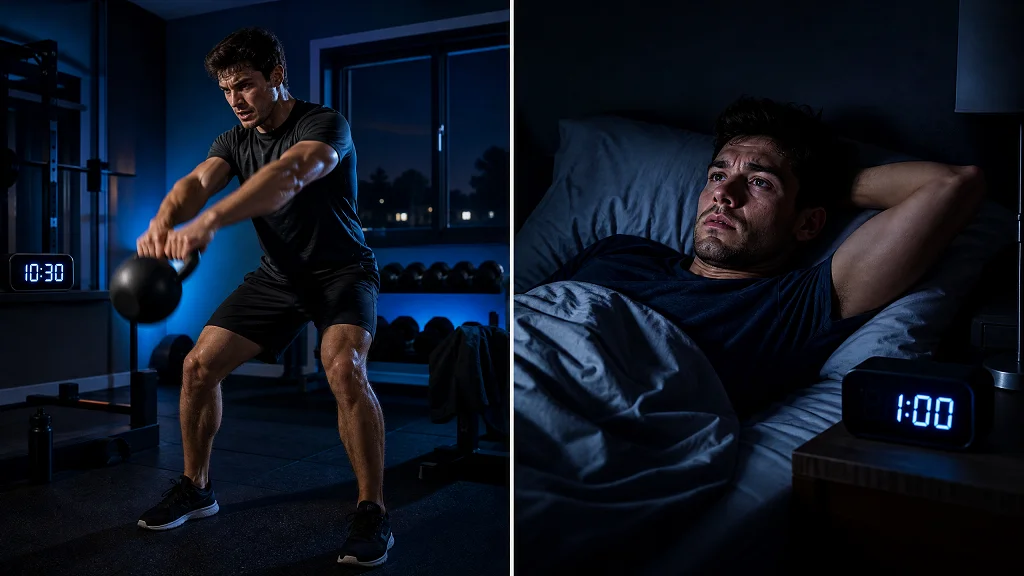
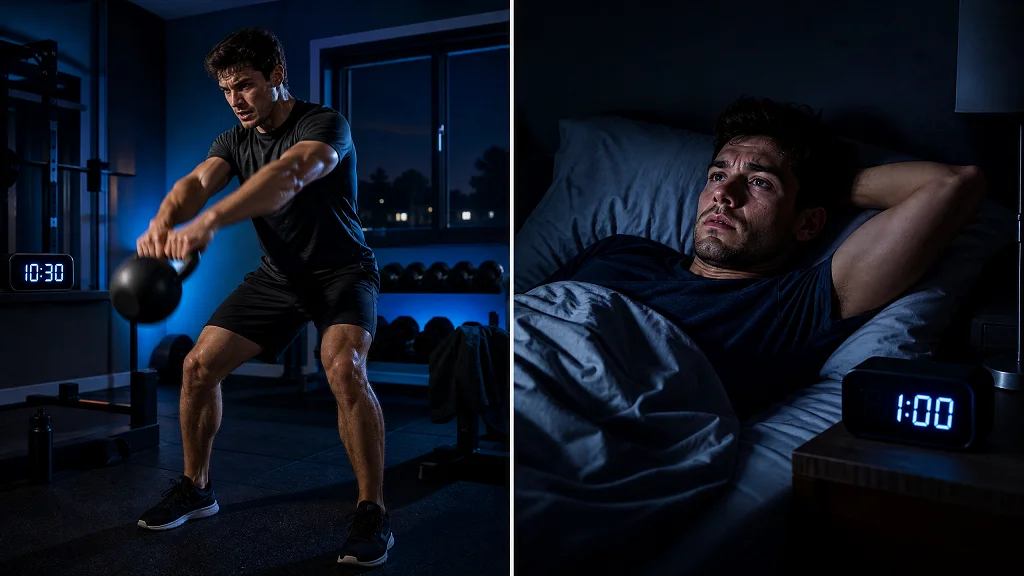
For years, the standard advice was simple: “Any exercise is good exercise, no matter the time.” However, a groundbreaking study involving nearly 15,000 individuals has turned this notion on its head. If you find yourself tossing and turning after a late-night gym session, you aren’t alone. New research suggests that the timing and intensity of your workout could be the silent thief of your restorative rest [1].
While staying active is a pillar of health, exercising too close to bedtime—specifically high-intensity training—can significantly delay sleep onset and reduce overall sleep quality. Understanding the “4-hour rule” might be the missing piece in your wellness puzzle.
The Science: Why Your 9 PM Workout is Keeping You Awake
A comprehensive study led by researchers at Monash University, analyzing data from 14,689 physically active individuals using wearable technology, revealed sensational insights into our nocturnal habits [1] [2]. The findings suggest a clear “dose-response” relationship between evening exercise strain and sleep disruption.
Key Findings from the Monash Study:
| Exercise Timing & Intensity | Impact on Sleep Onset | Sleep Quality Effect |
|---|---|---|
| Within 4 hours of bed | ~36 minutes longer to fall asleep | Reduced deep sleep cycles |
| High Intensity within 2 hours | Up to 80 minutes delay | Increased night-time restlessness |
| Light to Moderate Intensity | Minimal to no negative impact | May actually improve sleep for some |
The Biological Mechanisms
Why does this happen? Scientists point to three primary physiological triggers:
1. Core Body Temperature: To fall asleep, your body temperature needs to drop. Intense exercise raises your core temperature, and it can take several hours to cool back down to a “sleep-ready” state [3].
2.Adrenaline and Heart Rate: Vigorous activity spikes adrenaline and keeps your heart rate elevated. This state of “hyper-arousal” is the biological opposite of the relaxation needed for slumber [4].
3.Cortisol Spikes: Intense late-night workouts can increase cortisol (the stress hormone) levels, which suppresses melatonin, the hormone responsible for regulating your sleep-wake cycle [1].
The “Internal Link” Strategy: Optimizing Your Routine
If your schedule only allows for evening movement, you don’t have to quit entirely. The secret lies in downshifting.
What to Avoid 4 Hours Before Bed:
- High-Intensity Interval Training (HIIT)
- Heavy weightlifting or powerlifting
- Competitive sports (basketball, soccer, tennis) that trigger high adrenaline
What to Embrace Instead:
- Yoga and Stretching: Focus on restorative poses that activate the parasympathetic nervous system [5].
- Low-Intensity Cardio: A casual walk or a gentle cycle can help clear the mind without spiking your temperature.
- Breathwork: Techniques like the 4-7-8 method can help lower your heart rate and prepare the brain for rest.
Conclusion: Timing is Everything
Good sleep is the foundation of good health. While exercise is vital, doing it at the wrong time can be counterproductive, leaving you fatigued and poorly recovered. By respecting the 4-hour window and choosing lower-intensity activities in the evening, you can enjoy the benefits of fitness without sacrificing the restorative power of a good night’s sleep.
Frequently Asked Questions (FAQ)
References
1.Nature Communications – Dose-response relationship between evening exercise and objective sleep
2.Monash University News – Exercise before bed is linked with disrupted sleep
3.Harvard Health – Does exercising at night affect sleep?
4.Johns Hopkins Medicine – Exercising for Better Sleep
5.Sleep Foundation – What’s the Best Time of Day to Exercise for Sleep?
6.Washington Post – The worst time to exercise for a good night’s sleep

Health & Wellness Writer | Research-Informed Health Content Creator
A.K.M. Monjurul Hoque is a health and wellness writer specializing in health, beauty, fitness, nutrition and healthy living. His content is informed by health journals, books, seminars, training programs, and discussions with experienced healthcare professionals. He writes clear, practical and research-informed articles for general education and encourages readers to seek personalized advice from qualified medical professionals.