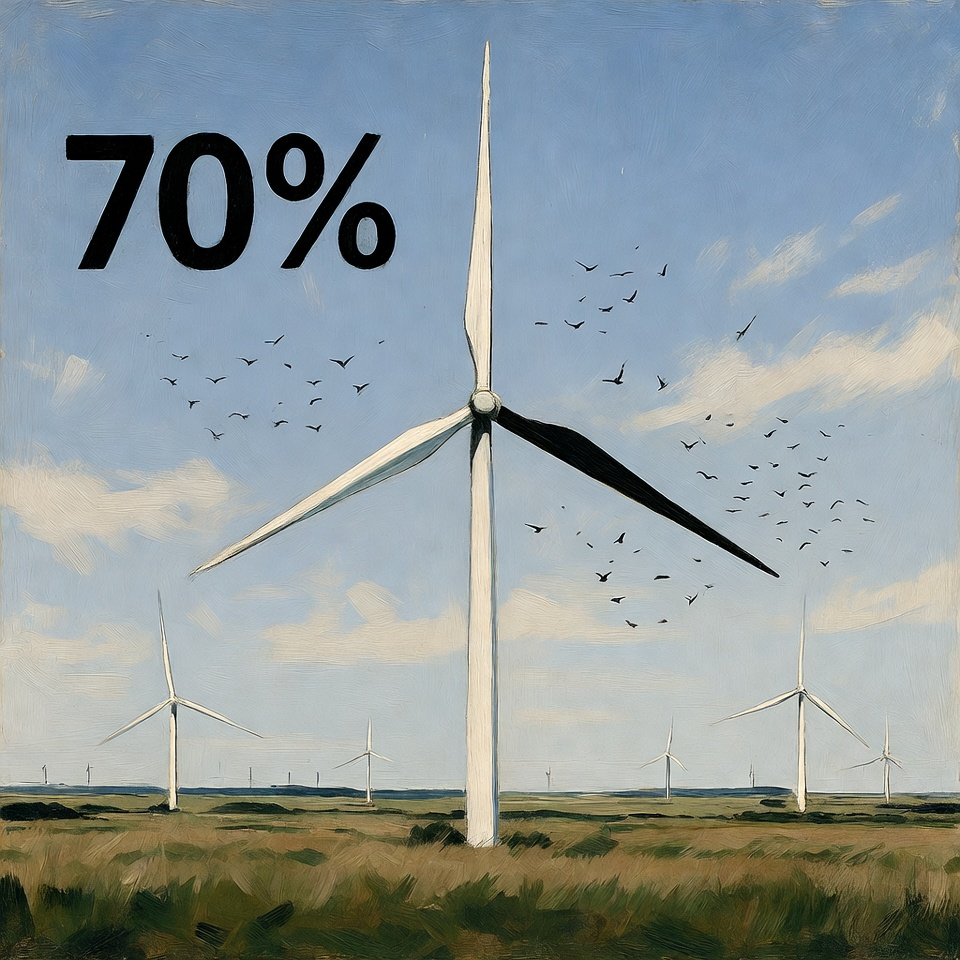
Wind farms stand as towering icons of renewable energy, harnessing the wind’s power to generate clean electricity and combat climate change. Yet, these massive structures have a hidden downside: they pose a serious risk to birds, with collisions causing significant fatalities each year.
Conservation experts and the wind industry have long searched for effective ways to minimize this impact. The breakthrough? A remarkably straightforward fix: painting one blade of each turbine black.
Why Birds Struggle to See Wind Turbine Blades
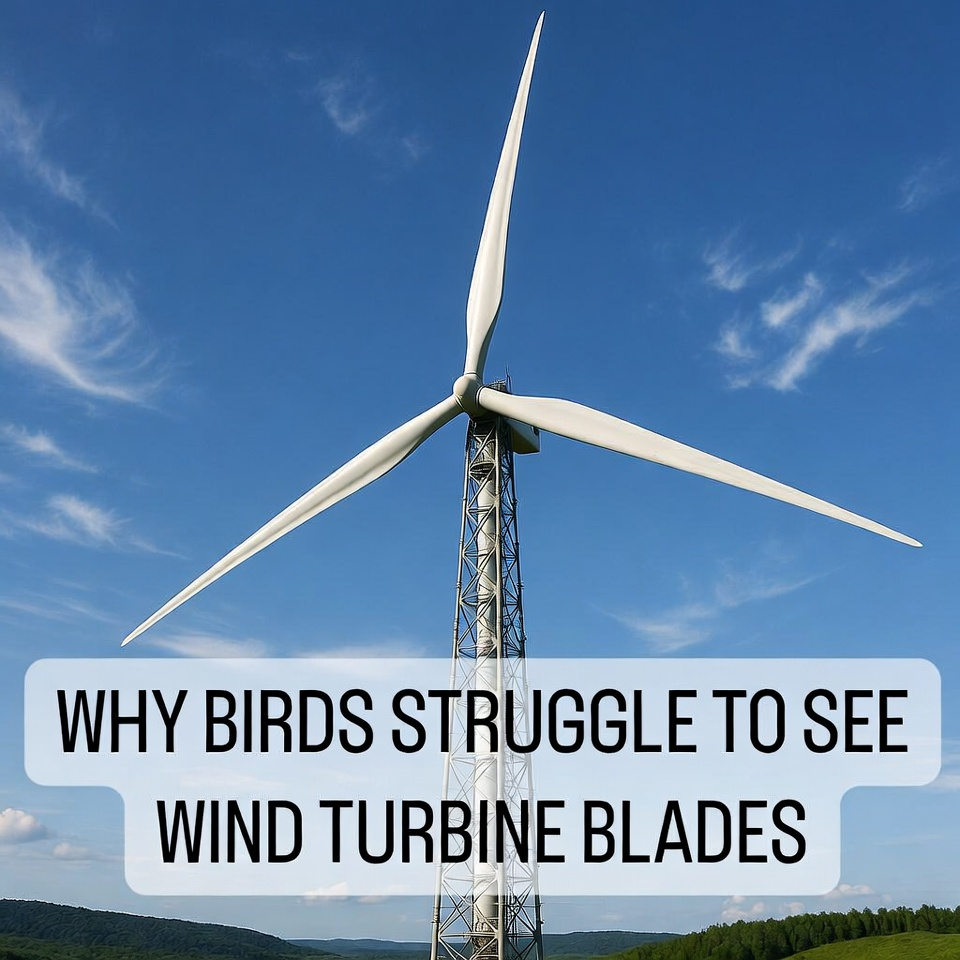
Birds possess remarkable vision adapted for survival. Many species have eyes positioned on the sides of their heads, providing wide panoramic views to detect threats or food. However, this setup creates a frontal blind spot directly ahead.
When soaring at high speeds, birds rely on motion detection. Traditional turbine blades, usually white or light gray, blend into the sky—especially against bright or overcast backgrounds—creating a “motion smear” effect. The spinning blades appear as a hazy, semi-transparent disk rather than solid obstacles.
Large, fast-flying birds like eagles, hawks, falcons, and seabirds face the highest danger, as their momentum leaves little room for sudden avoidance.
The Simple Yet Brilliant Solution: One Black Blade
Research, including a landmark long-term study at Norway’s Smøla wind farm, revealed that painting one of the three rotor blades black dramatically improves visibility.
As the turbine rotates, the contrasting black blade disrupts the uniform blur. It produces a clear, high-contrast flickering pattern that grabs birds’ attention through their peripheral vision. This acts as a natural warning signal, triggering instinctive avoidance behavior and giving birds precious extra seconds to steer clear.
A key 2020 study published in Ecology and Evolution found this approach reduced overall bird fatalities by over 70% (around 71.9% in the Smøla results), with even stronger protection for raptors—no white-tailed eagle deaths occurred post-painting.
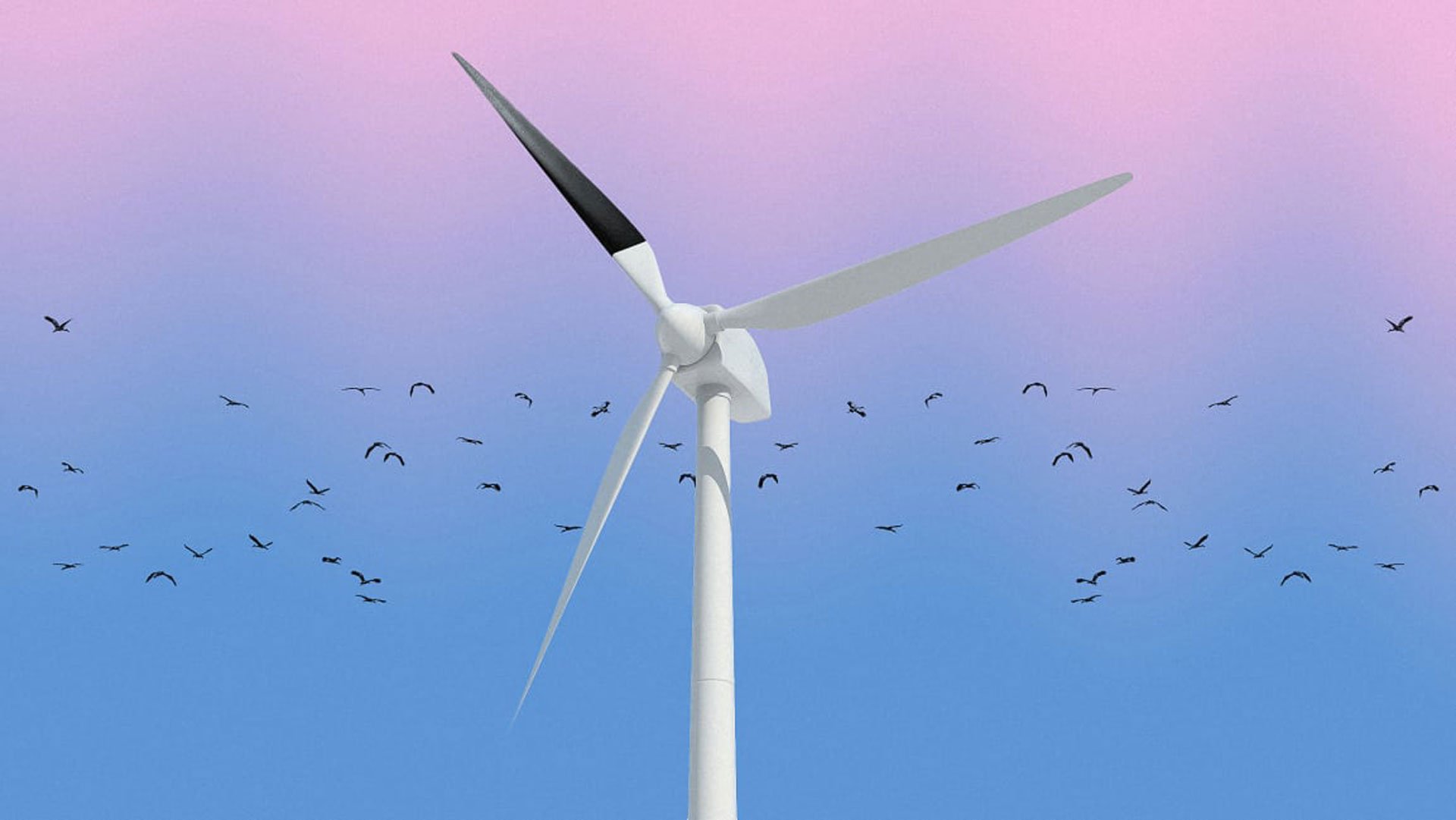
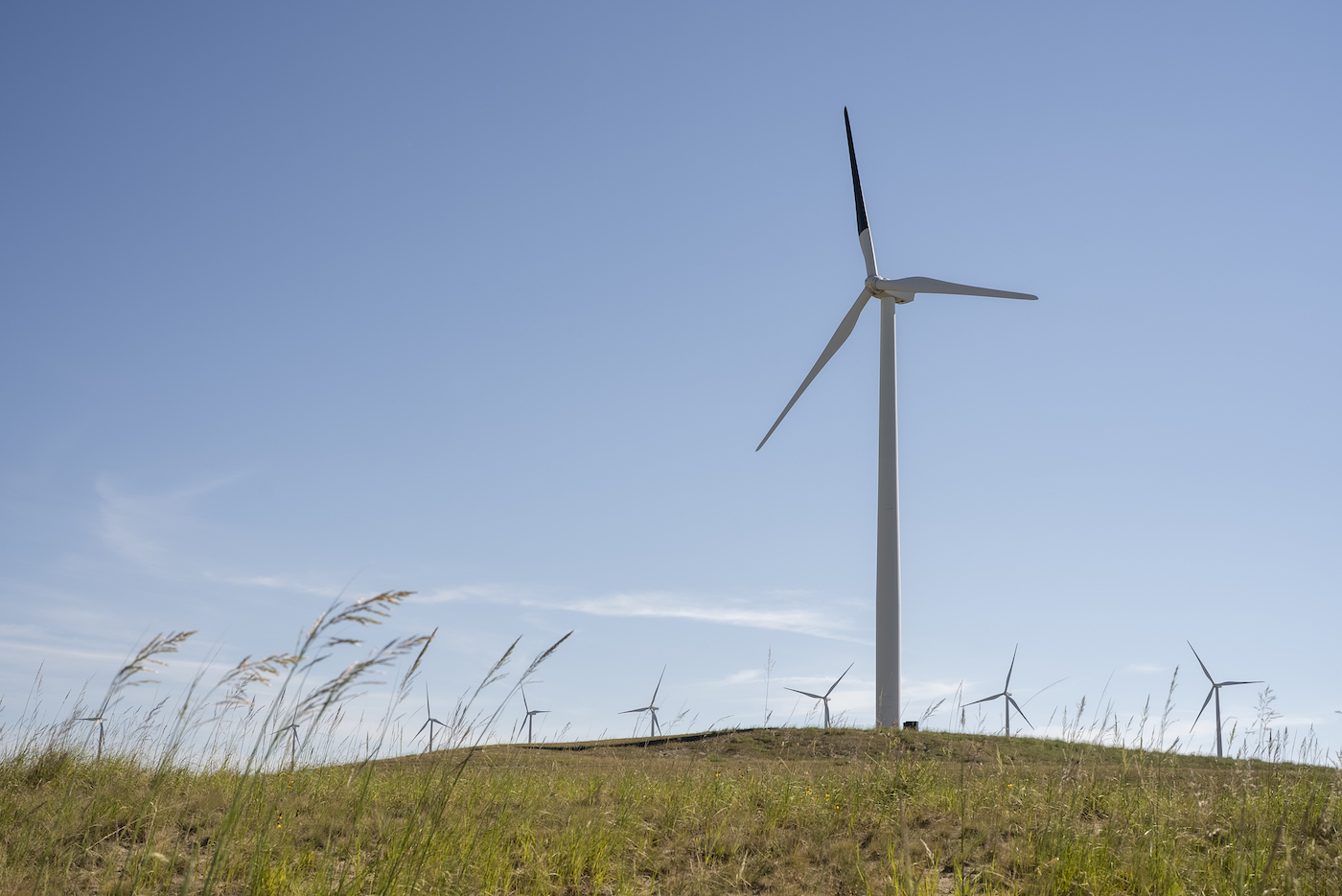
These images show real-world examples of wind turbines with one blade painted black, highlighting the stark contrast that helps birds detect the spinning rotors.
Why This Method Offers a True Win-Win

This low-tech solution delivers multiple benefits:
- Cost-effective—Painting requires minimal investment compared to advanced deterrents like radar systems or ultrasonic devices.
- No impact on energy production—studies confirm the paint doesn’t affect turbine performance or aerodynamics.
- Safe for other uses—it poses no issues for aviation safety, marine navigation, or visual landscape impact in most cases.
- Boosts sustainability credentials—Wind companies can demonstrate genuine wildlife commitment, reducing conflicts and supporting biodiversity.
Ongoing trials in places like Wyoming, Oregon, the Netherlands, and elsewhere continue to test and refine the approach, building on the promising Norwegian evidence.
Toward a More Sustainable Clean Energy Future

Balancing renewable growth with wildlife protection is essential for a truly green transition. Painting one turbine blade black proves that simple, thoughtful innovations can solve complex problems without compromising efficiency.
By adopting such measures, the wind industry moves closer to harmony between technology and nature—ensuring clean energy benefits both people and the planet’s feathered inhabitants.
FAQ
Does painting one blade black really reduce bird deaths by 70%? Yes, a major Norwegian study at Smøla wind farm documented a reduction of over 70% (specifically ~72%) in bird collisions after painting one blade black, with near-total elimination for some raptor species.
Why black specifically, and not another color? Black provides the strongest contrast against the usual white/gray blades and sky, breaking the “motion smear” most effectively. Some trials explore alternatives like red, but black has the strongest evidence base.
Is this solution being used widely now? It’s gaining traction with pilot projects in the US (e.g., Wyoming), Europe, and beyond, though full-scale adoption depends on site-specific testing and regulatory approvals.
Does it affect bats or other wildlife? The method targets visual cues for birds; bats rely more on echolocation, so effects on them are minimal or unproven. Ongoing studies examine broader impacts.
How much does it cost to paint a turbine blade black? Costs are low relative to turbine value—mainly labor for high-access painting—but exact figures vary by site and scale. It’s far cheaper than many other mitigation technologies.