





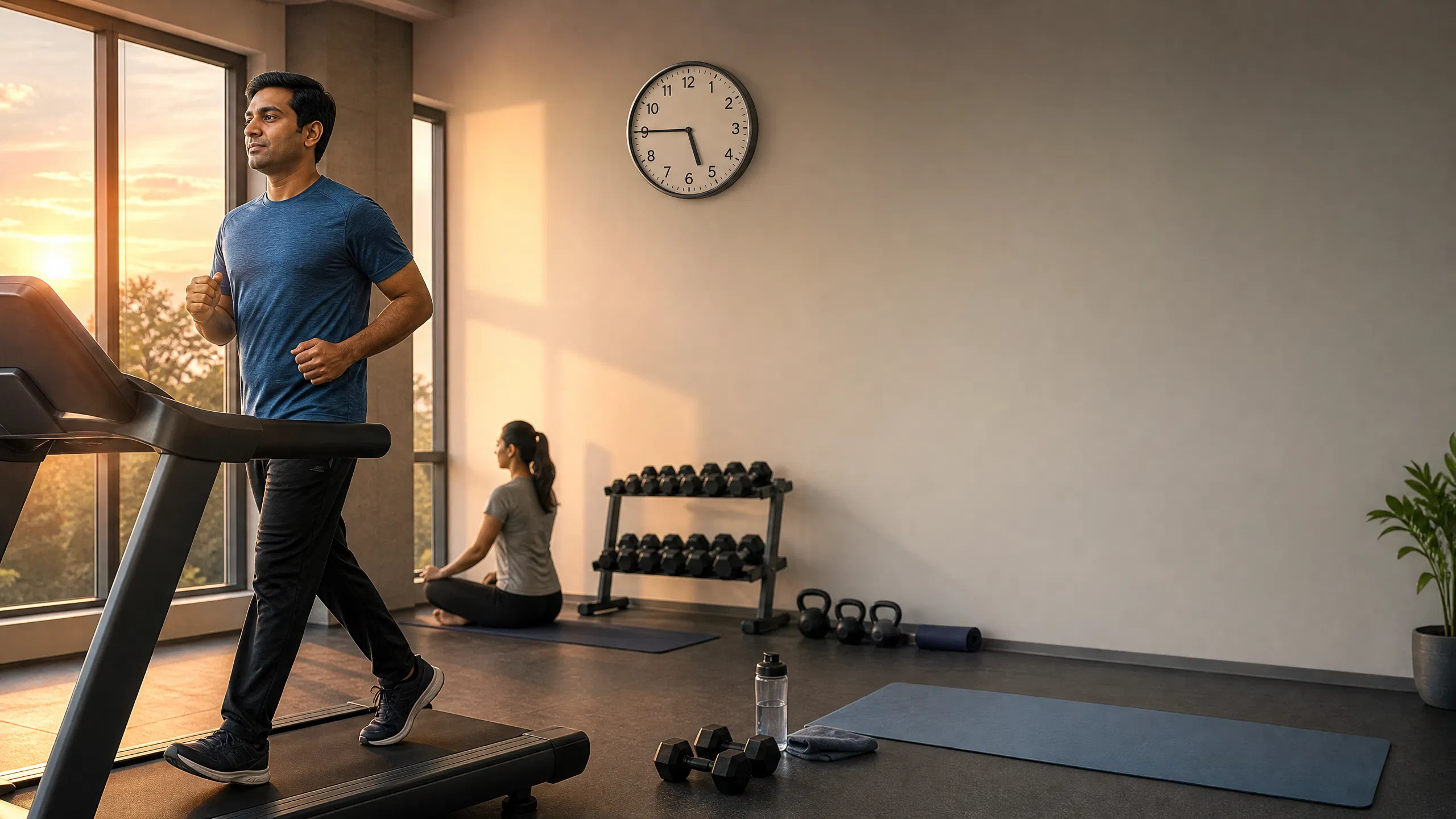
Can Evening Exercise Help With Weight Loss? A Practical Guide to Choosing the Right Time
Morning workouts are often treated as the ideal choice. But not everyone has the time or energy to exercise at sunrise. Some people feel stronger and more focused after work, while others simply find it easier to stay consistent in the evening.
That is why the better question is not “morning or evening?” It is: Which time allows you to exercise safely, comfortably, and regularly?
Some research suggests that afternoon or evening exercise may fit well with the body’s daily rhythm, performance, and sleep patterns. However, there is no reliable evidence that exercising in the evening automatically leads to losing 6 kilograms in 30 days. Weight change depends on food intake, total activity, sleep, stress, health, and long-term consistency.
Why Evening Exercise Works Well for Some People
Body temperature naturally rises during the day. For some people, this makes the muscles and joints feel more ready for movement in the afternoon or evening. Energy, coordination, and exercise performance may also feel better later in the day, although this varies from person to person.
An evening workout can also provide a healthy way to release stress. A walk, light cycling session, strength workout, or moderate cardio routine may help you shift out of work mode and into a calmer evening.
Still, very intense exercise close to bedtime does not affect everyone in the same way. Some people fall asleep normally after a late workout, while others feel too warm, alert, or restless. A 2025 study found that the timing and intensity of evening exercise can influence sleep. Finishing harder workouts several hours before bed—or choosing a lighter session later at night—may work better for some people .
Does Your Body Keep Burning Calories After Exercise?
After exercise, the body uses extra energy as it returns to its resting state. This is known as excess post-exercise oxygen consumption, or EPOC. The effect may be somewhat greater after high-intensity exercise.
However, EPOC is not a secret weight-loss shortcut. Its contribution is usually modest compared with your total daily energy use. Regular activity, balanced eating, and enough sleep matter much more over time.
A Practical Evening Workout Plan
You do not need an extreme routine to make evening exercise worthwhile. Adjust the structure below according to your fitness level, schedule, and sleep habits.
| Part of the workout | Time | Examples |
|---|---|---|
| Easy warm-up | 5–10 minutes | Easy walking, joint movements, and gentle mobility work |
| Cardio or HIIT | 10–20 minutes | Brisk walking, cycling, or short intervals of harder effort |
| Strength training | 20–30 minutes | Squats, presses, pulling exercises, hip-hinge movements, or bodyweight exercises |
| Cool-down | 5–10 minutes | Slow walking, relaxed breathing, and gentle stretching |
HIIT: Short Bursts of Harder Work
HIIT, or high-intensity interval training, alternates brief periods of hard effort with rest or easier movement. If you are new to exercise, there is no need to begin with a 20- or 30-minute hard session. Try alternating brisk walking with slower walking instead.
Pay attention to how nighttime HIIT affects your sleep. If your heart rate stays high, your body feels overheated, or you remain restless for a long time afterward, move the workout earlier or lower the intensity.
Strength Training
Strength training can improve muscle strength and make everyday activities easier. It is also a useful part of long-term weight management, but it does not guarantee rapid weight loss on its own.
Beginners can start with bodyweight squats, glute bridges, wall push-ups, band rows, and supported lunges. Stop if you feel pain, and ask a qualified trainer or physical therapist for help if you are unsure about your technique.
Finish With Gentle Movement
A few minutes of slow walking and light stretching can help your body settle after exercise. Stretching should never be forced or used to push through pain. Breathe slowly and choose movements that feel comfortable.
What Should You Eat Before an Evening Workout?
If you are hungry, try a light snack one to two hours before exercising. Options include:
- a banana with yogurt;
- fruit with a small serving of nuts;
- a light protein smoothie; or
- oatmeal or a small sandwich.
The right amount depends on your appetite, the timing of your workout, and how your body handles food before exercise. Heavy, spicy, or greasy food immediately before training may cause discomfort. Drink enough water, too.
The Truth About Evening Exercise and Weight Loss
There is no single “best” workout time for everyone. The most useful time is the one that allows you to exercise consistently on most days of the week.
Research into exercise timing is promising, but evening workouts do not guarantee fast weight loss. Claims such as “lose 6 kilograms in 30 days” can be unrealistic or unsafe for many people. Gradual weight loss is generally easier to maintain over the long term.
Make Sleep a Priority
If evening exercise helps you sleep well and feel refreshed the next day, it may be a good fit for your routine. If you struggle to fall asleep, feel unusually restless, notice prolonged heart pounding, or wake up exhausted, change the timing or reduce the intensity.
Anyone with heart disease, high blood pressure, diabetes, joint problems, pregnancy, or another ongoing health condition should speak with a healthcare professional before starting a new high-intensity exercise program.
Conclusion
Evening exercise can be an excellent option for many people. It may reduce daily stress, make regular movement easier, and support overall fitness. But simply changing the time of your workout will not guarantee weight loss. Food, sleep, exercise type, recovery, and consistency all play a role.
Try different times and notice how your body responds. If evening exercise feels good, does not disturb your sleep, and helps you stay consistent, it may be the right time for you.
Frequently Asked Questions

Health Disclaimer
I’m not a medical professional—treat this as informed analysis, not a medical diagnosis; a qualified clinician should confirm anything consequential. This article is for general education and does not replace individualized medical advice.
References
[2] Yue et al., Sleep Medicine — Different Intensities of Evening Exercise on Sleep
[3] American College of Sports Medicine — Physical Activity Guidelines
[4] American College of Sports Medicine — Weight-Loss Mythbusting
[5] Jayedi et al., JAMA Network Open — Aerobic Exercise and Weight Loss in Adults

Health & Wellness Writer | Research-Informed Health Content Creator
A.K.M. Monjurul Hoque is a health and wellness writer specializing in health, beauty, fitness, nutrition and healthy living. His content is informed by health journals, books, seminars, training programs, and discussions with experienced healthcare professionals. He writes clear, practical and research-informed articles for general education and encourages readers to seek personalized advice from qualified medical professionals.