
Forget the Numbers: 4 Functional Fitness Moves for Timeless Strength and Mobility
We spend a lot of energy watching numbers — cholesterol, blood pressure, whatever the scale says that morning. But as you get older, those numbers can end up hiding the thing that actually matters: how well you move. Functional fitness isn’t about getting your 25-year-old body back. It’s about building a body that can still do the real stuff — standing up out of a chair, chasing a grandkid across the yard — without a second thought.
Here’s a better question than any lab result can answer: are you just getting older, or are you actually still living well while you do it? The real answer shows up in how easily you handle ordinary moments, not in a printout from your doctor’s office. Becca Jordre, a physical therapist with the National Senior Games Association, put it this way: standard health metrics miss the point, because they only guess at what your body might be capable of. Movement itself shows what you can actually do — factoring in coordination, pain, skill, and even motivation, all at once. It’s less about what your body can’t do anymore, and more about what it still can.
Caine Wilkes — an Olympic weightlifter and USA weightlifting coach — makes a similar case: past a certain age, it stops being about how much you can lift or how fast you can run, and starts being about how well you move, because that’s what actually carries into a good quality of life down the road.
So set the numbers aside for a minute. Here are four moves that build strength built to last — the kind that shows up in daily life, not just on a chart.
1. The Sit-to-Stand: Your Gateway to Everyday Independence
It looks almost too simple to matter, but this one move tells you a lot — about your leg strength, your balance, how mobile you really are. Think of it as a quick daily gut-check on your ability to stay independent and avoid a bad fall. Jordre points to it as one of the clearer signs of long-term independence as people age.
How to do it:
- Sit on a sturdy chair, ideally with the back against a wall so it doesn’t slide.
- Stand up fully without using your hands or arms — let your legs and core do the work.
- Sit back down slowly and with control. No dropping.
- Do five reps, and don’t rush them. Smooth beats fast every time.
Work this into your routine and you’ll likely notice strength you didn’t know you still had — and daily movement starts to feel a little more automatic.
2. The Bodyweight Squat
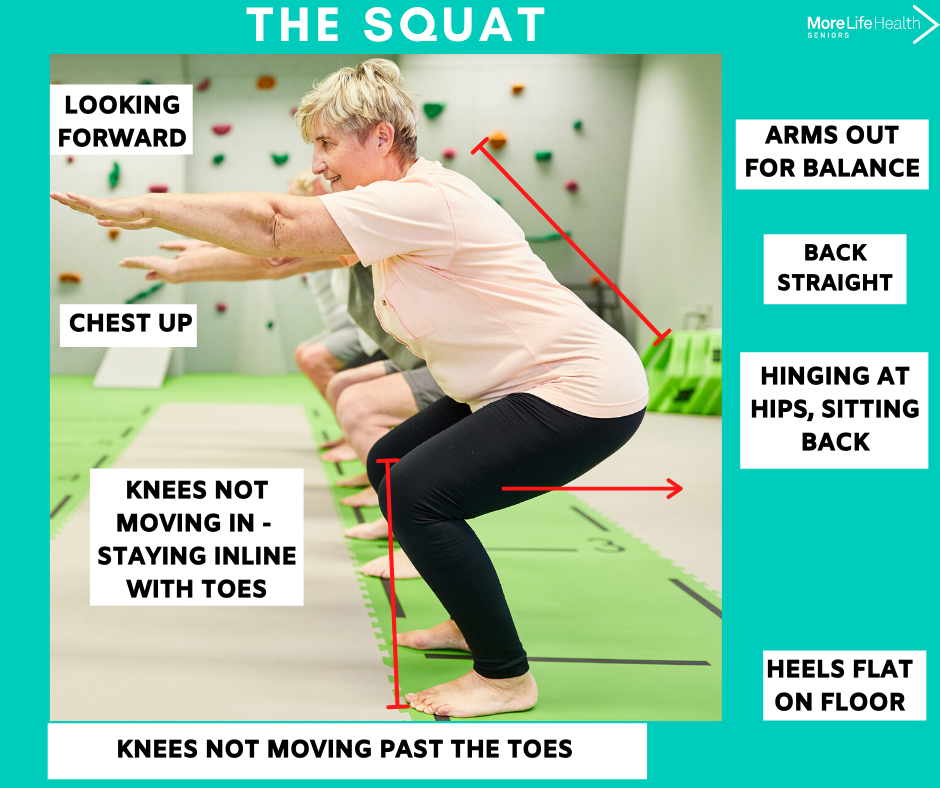
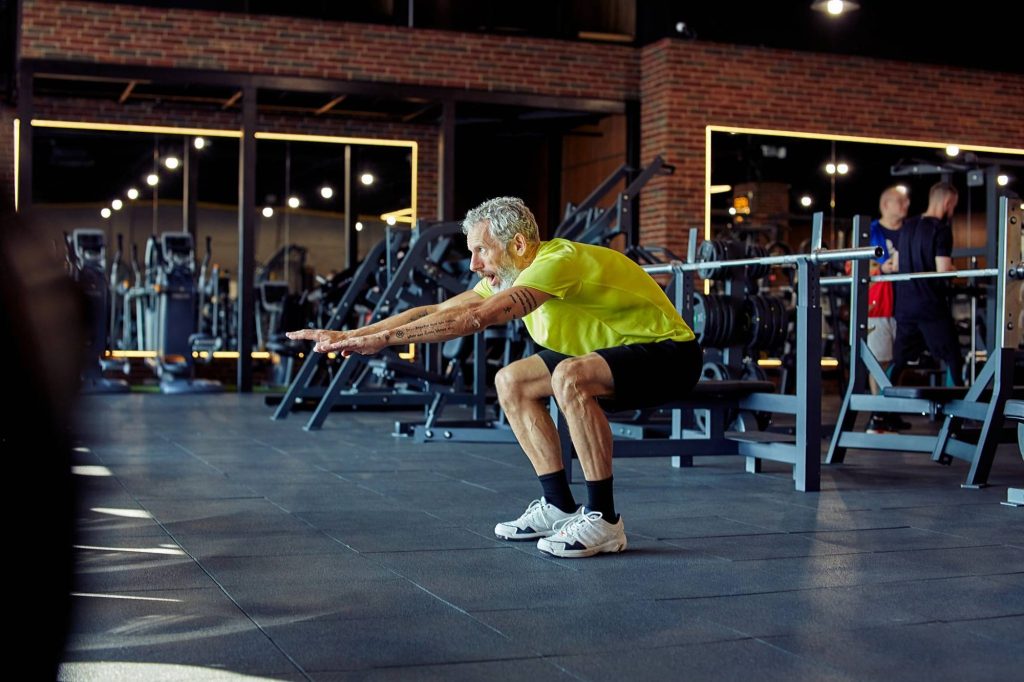
No gym, no equipment — just your own body weight and a bit of space. The squat builds strength and flexibility through your hips, knees, and ankles at the same time, which makes it genuinely useful for avoiding injury and getting through everyday bending and lifting without strain. Certified trainer Amanda Dvorak of Garage Gym Reviews calls it a solid window into how your lower body and joints are actually holding up.
How to do it:
- Stand with feet about shoulder-width apart, toes turned out slightly.
- Reach your arms forward for balance, or rest your hands on your hips.
- Bend at the hips and knees together, like you’re lowering into a chair that isn’t quite there.
- Go down until your thighs are roughly parallel to the floor. Keep your back straight and your core braced.
- Push through your heels to stand back up, squeezing your glutes at the top.
Beyond the strength it builds, this move keeps you loose — which makes ordinary tasks feel a lot less like work.
3. The Half-Kneel to Stand: Mastering Life’s Ups and Downs
Picking something off the floor. Kneeling in the garden. Getting back up afterward. Life is full of these small transitions between positions, and this exercise trains exactly that — coordination, leg strength, and the stability to handle them without thinking twice. Dvorak describes it as practice for the kind of everyday shifts that get harder with age, so you can move through them with more confidence instead of less.
How to do it:
- Start in a half-kneeling position — one knee on the ground, the opposite foot planted in front.
- Keep your posture upright and your core engaged.
- Shift your weight forward onto the front foot, driving up through your glutes and quads.
- Stand up fully, without pushing off with your hands.
- Reverse the movement slowly to lower back into the kneel.
Practice this one enough, and unexpected floor-to-standing moments stop feeling like a production.
4. The Bear Crawl: Waking Up Your Core and Coordination
Don’t let the name fool you — this one’s more coordination puzzle than intense workout, but it’s remarkably effective. It pulls together core stability, shoulder strength, hip mobility, and full-body coordination in a single move. Wilkes describes it as a test that hits coordination, stability, mobility, and endurance all at once.
How to do it:
- Get on all fours, knees hovering just above the ground, back flat.
- Step your left hand and right foot forward together, staying low the whole time.
- Alternate — right hand, left foot.
- Keep crawling forward at a steady pace, moving with control rather than speed.
It’s a strange one to explain but a satisfying one to do — and it brings back a kind of full-body coordination most routines never touch.
Step Into a Stronger Tomorrow
These four moves shift the focus away from rigid numbers and toward something more useful: how capably you actually move through your day. Functional fitness isn’t about resisting age — it’s about building a version of yourself that’s more resilient as time goes on, with the strength and ease to actually enjoy what’s in front of you. Start small, pay attention to how your body responds, and let the strength build from there. It really is never too late to move better.
Frequently Asked Questions
What is functional fitness, and why does it matter as we age? Functional fitness is built around movements that mirror what you actually do every day — sitting, standing, bending, reaching. It builds strength, balance, and flexibility, which helps prevent falls, protect mobility, and keep everyday life easier as you get older.
How often should I do these moves? Two to three times a week is a solid starting point, with 5 to 10 reps of each move. If you’re new to exercise, check in with a doctor or trainer first, and prioritize good form over speed.
Do I need any equipment? No — these are all bodyweight exercises you can do at home. A sturdy chair helps with the sit-to-stand, but that’s the only “equipment” involved.
Can beginners or people with mobility issues try these? Yes, with modifications — using your hands for support at first is completely fine. Start slow, and a physical therapist can help tailor the moves to where you’re currently at.
Will these help with weight loss or my other health numbers? They’ll build muscle and support your metabolism along the way, but that’s not really the point here. The goal is functional strength — pair these with a balanced diet if broader health metrics are also on your radar.
Sources
- Buckley, Alexa. “Do These 4 Moves at 60 to Prove You’re Fitter Than Most.” Eat This, Not That! https://www.eatthis.com/movement-challenges-at-60-that-show-youre-fitter-than-most/
- BarBend. “Build an Unstoppable Core and Upper Body with the Bear Crawl.” https://barbend.com/bear-crawl/
Disclaimer: This article is for general informational purposes only and does not constitute medical advice. Talk to a doctor or physical therapist before starting a new exercise routine, especially if you have an existing injury, chronic condition, or mobility limitation.

Health & Wellness Writer | Research-Informed Health Content Creator
A.K.M. Monjurul Hoque is a health and wellness writer specializing in health, beauty, fitness, nutrition and healthy living. His content is informed by health journals, books, seminars, training programs, and discussions with experienced healthcare professionals. He writes clear, practical and research-informed articles for general education and encourages readers to seek personalized advice from qualified medical professionals.