


Bite-Sized Business: How Restaurants Are Adapting Menus in the Age of Appetite Suppressants
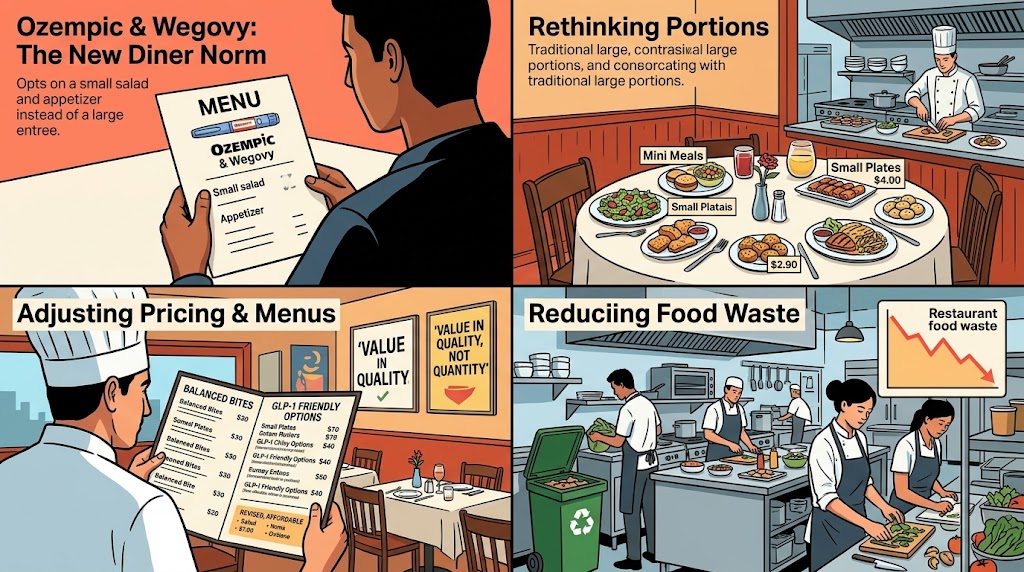
The Restaurant Industry Faces a New Appetite Reality
Something odd is happening at the American dinner table, and it has nothing to do with food trends or rising grocery costs. A growing share of diners are on GLP-1 medications — Ozempic, Wegovy, Zepbound, Mounjaro — drugs that were built to treat diabetes and obesity but that, as a side effect, blunt appetite dramatically. Restaurants built entire business models around abundance: bottomless breadsticks, oversized combos, plates piled high enough to guarantee a leftovers box. Now they’re having to unlearn that.
One Florida obesity specialist put it bluntly to Fox News Digital: patients who once considered restaurant portions completely normal now find them overwhelming, often managing only a third of what they order. Multiply that across the millions of Americans now on these drugs, and you get a supply-and-demand problem no restaurant can ignore for long.
Welcome to the era of bite-sized dining — where eating less doesn’t mean enjoying it less.
The Rise of the “Ozempic Menu”
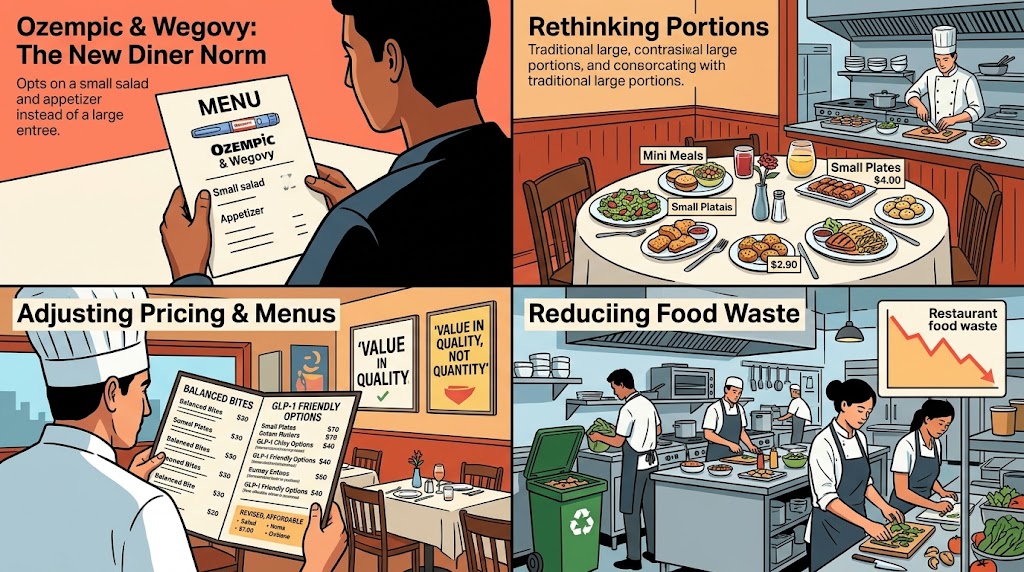
Instead of standard full-size plates, restaurants are rolling out smaller, more customizable options that diners have started calling “Ozempic menus,” even when the restaurant itself avoids the label. These sections tend to include:
- Mini meals and half portions
- Single-item or à la carte selections
- Small plates built for lighter appetites, often protein-forward
Olive Garden was one of the more visible names to make the shift, adding a “lighter portion” section with seven dishes at lower prices. Chipotle followed with a high-protein cup — cubed chicken packing 32 grams of protein, priced around what you’d pay for a latte. Shake Shack now offers lettuce-wrapped burgers under its “Good Fit Menu,” and Subway has added compact “Protein Pockets.” Smoothie King got there earliest, launching a dedicated GLP-1 support menu back in 2024.
How Restaurants Are Making the Shift
The trend isn’t confined to fast-casual chains. The Cheesecake Factory has trimmed portions too, and independent restaurants are following suit for reasons that go beyond just chasing a headline. In Connersville, Indiana, the owner of Daniel Girls Farmhouse Restaurant added an eight-item Mini Meals menu last fall after enough customers asked for it — and it now makes up roughly a fifth of the restaurant’s total orders.
Menu-consulting firms describe this as anything but accidental. It’s a direct response to a demographic that still wants the experience of eating out, just without the pressure to finish a plate built for someone eating twice as much.
Fine Dining Isn’t Sitting This One Out
Even white-tablecloth restaurants are adjusting. Italian spots have started offering single or small-batch servings of signature dishes — think a tasting portion of house-made meatballs or pasta — so guests can enjoy the same craftsmanship without committing to an entrée-sized plate. New York venues like Tucci and Clinton Hall have quietly added their own smaller-portion sections. Some chefs lean into the humor of it, only half-joking when they call a lighter tasting menu “Ozempic-friendly.”
Reducing Food Waste: A Hidden Benefit
There’s a side effect to all this that has nothing to do with pharmaceuticals: less food ends up in the trash. Industry estimates put restaurant food waste as high as 40 percent of what’s prepared. Smaller, more intentional portions chip away at that number in a few ways:
- Less food gets tossed uneaten
- Operational costs drop alongside waste
- Diners feel better about what they’re ordering, rather than guilty about what they leave behind
It’s a rare case where a pharmaceutical trend and a sustainability goal happen to be pulling in the same direction.
A Trend That Goes Beyond Weight Loss
Not everyone ordering off a small-plates menu is on a GLP-1 drug. Younger diners — particularly those in their late twenties and early thirties — were already moving this direction before any of these medications became mainstream: snacking through the day instead of eating three defined meals, splitting plates with friends, skipping the traditional dinner-at-7 schedule entirely.
As one culinary consultant told the Associated Press, the shift really comes down to how people think about their relationship with food and what counts as good value — not any single cause. Small portions just happen to serve GLP-1 users, budget-conscious diners, and mindful eaters all at once.
Is This the Future of Dining Out?
Industry insiders don’t see this as a fad that fades once the next wellness trend arrives. Restaurants — from national chains to single-location diners — are actively expanding their small-bite offerings, which suggests portion-conscious menus are becoming a permanent fixture rather than a seasonal special.
The shape of dining out is changing: less about the size of the plate, more about:
- Portions that match what people actually want to eat
- Flavor and craftsmanship over sheer volume
- Pricing that reflects smaller servings, not just smaller value
It’s a quiet shift, but a real one — happening one small plate at a time.
Conclusion
The rise of GLP-1 medications didn’t just change how millions of people eat at home — it’s rewriting how restaurants think about portions, pricing, and menu design altogether. By leaning into smaller plates, flexible pricing, and customizable options, the industry is adapting to a diner who simply wants less, without needing to sacrifice the experience of eating out.
Whatever’s driving an individual order — health goals, budget, sustainability, or just a lighter appetite — bite-sized dining is reshaping restaurant menus. And it’s making the case that smaller can still be satisfying.
Frequently Asked Questions
Sources
- Bardolf, D. “Ozempic boom collides with America’s eating habits as restaurants shrink portions.” Fox News, January 26, 2026. https://www.foxnews.com/food-drink/ozempic-boom-collides-americas-eating-habits-restaurants-shrink-portions
- Durbin, D. “Ozempic mania has even Olive Garden and The Cheesecake Factory cutting back on portion sizes.” Associated Press / Fortune, March 12, 2026. https://www.fortune.com/2026/03/12/ozempic-menus-glp-wonderful-restaurants-smaller-portions
- “Smaller portions, more protein: GLP-1s are quietly changing chain restaurant menus.” NBC News. https://www.nbcnews.com/news/us-news/smaller-portions-protein-glp-1s-are-quietly-changing-chain-restaurant-rcna254178
- “GLP-1 Course Menu: How the Ozempic Era Is Changing Restaurant Menus.” Fine Dining Lovers, October 16, 2025. https://www.finedininglovers.com/explore/articles/glp-1-course-menu
Disclaimer: This article is for general informational purposes only and does not constitute medical advice. GLP-1 medications should only be used under the guidance of a licensed healthcare provider.

Health & Wellness Writer | Research-Informed Health Content Creator
A.K.M. Monjurul Hoque is a health and wellness writer specializing in health, beauty, fitness, nutrition and healthy living. His content is informed by health journals, books, seminars, training programs, and discussions with experienced healthcare professionals. He writes clear, practical and research-informed articles for general education and encourages readers to seek personalized advice from qualified medical professionals.