



Why You Might Be Eating Well But Still Feeling Tired — And What to Do About It
You eat reasonably well. You’re not living off fast food. You include vegetables, you try to make sensible choices. And yet — you’re still tired. Still bloated sometimes. Still not feeling the way someone eating well is supposed to feel.
The issue might not be what you’re eating. It might be how well your body is actually absorbing it.
Nutrient absorption is the process by which your digestive system extracts the vitamins, minerals, proteins, and fats from your food and moves them into your bloodstream where they can actually be used. It sounds automatic — and mostly it is — but it’s also remarkably easy to disrupt without realizing it. And when it’s not working properly, even a genuinely healthy diet doesn’t deliver what it should.
Here’s what gets in the way, and what you can practically do about it.
How Digestion Actually Works
The journey food takes through your body is more involved than most people think — and each stage matters.
It starts in the mouth. Chewing breaks food into smaller pieces and mixes it with saliva, which contains enzymes that begin breaking down carbohydrates before food even reaches the stomach. This step is more important than it sounds.
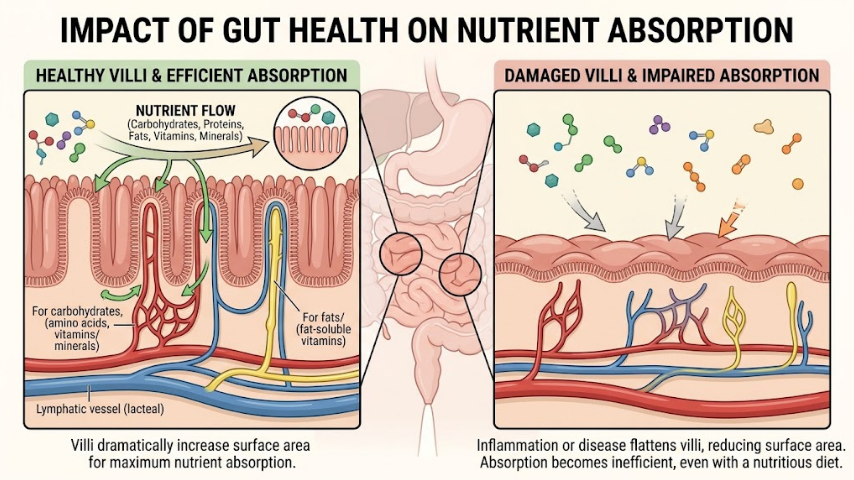
From there, food moves to the stomach, where acid and enzymes continue breaking it down into a semi-liquid form. Then it enters the small intestine — and this is where most of the real work happens. The walls of the small intestine are covered in tiny structures called villi, which absorb nutrients and pass them into the bloodstream. The large intestine handles the final stage: absorbing water and electrolytes from whatever’s left before waste is eliminated.
Every stage depends on the one before it. If food arrives in the small intestine poorly broken down, absorption suffers. If the gut lining is inflamed or damaged, the villi can’t do their job properly. The system is interconnected.

Signs That Absorption Might Be the Problem
These aren’t definitive diagnoses — but they’re signals worth paying attention to:
Persistent tiredness. Not the kind that a good night’s sleep fixes. The kind where you eat a full meal and feel no more energized afterward. Your body is getting the food — it’s just not extracting what it needs from it.
Digestive discomfort. Regular bloating, excessive gas, or unpredictable bowel habits. These often indicate that food isn’t being broken down and processed the way it should.
Skin or joint issues. Unexplained rashes, general muscle weakness, or swelling in the hands and feet can all be related to nutrient deficiencies caused by poor absorption.
Unexplained weight changes. Losing weight without trying — or in children, not gaining weight at the expected rate — is one of the more significant signs that the digestive system isn’t absorbing nutrients effectively.
If several of these apply to you consistently, it’s worth speaking to a doctor. Some causes of malabsorption are medical conditions that require proper diagnosis and treatment.
What Actually Interferes with Absorption
Gut lining damage. Conditions like coeliac disease, Crohn’s disease, inflammatory bowel disease, or chronic gut inflammation can damage the villi lining the small intestine. When those structures are compromised, absorption drops — sometimes significantly. This is a medical issue that needs proper treatment, not just dietary adjustment.
Enzyme deficiency. Your body relies on digestive enzymes — many produced by the pancreas — to break down fats, proteins, and carbohydrates. If enzyme production is low, food doesn’t get broken down properly before reaching the absorption stage, and much of it passes through unused.
Medications. Some common medications interfere with nutrient absorption in ways that aren’t always well communicated. Certain antacids affect iron and B12 absorption. Some antibiotics disrupt the gut bacteria that support digestion. Long-term use of some medications can lead to specific nutrient deficiencies over time.
Food combinations that work against you. Some nutrients compete with each other for absorption. Others need a partner to be absorbed at all. This last point is worth understanding in more detail because it’s something you can actually act on.

The Food Pairing Principle
This is one of the most underappreciated aspects of nutrition, and it’s entirely practical.
Iron needs vitamin C. Plant-based iron — from spinach, lentils, beans — is significantly less bioavailable than iron from meat. But pairing it with vitamin C makes a measurable difference. Squeezing lemon juice on a spinach salad, having orange juice with a bean-based meal, or adding tomatoes to a lentil dish all improve iron absorption meaningfully.
Fat-soluble vitamins need fat. Vitamins A, D, E, and K cannot be absorbed without dietary fat present. Eating a salad of spinach and carrots with no dressing, no avocado, no oil of any kind — the fat-soluble vitamins in those vegetables largely pass through without being absorbed. Add olive oil or avocado and the situation changes substantially.
Calcium and iron compete. Consuming very high amounts of calcium alongside iron-rich foods can reduce iron absorption. This doesn’t mean avoiding them together entirely, but it’s a reason not to take calcium supplements at the same meal as your highest iron foods.
Coffee and tea affect iron too. Tannins in tea and coffee bind to iron and reduce its absorption. Drinking these beverages close to iron-rich meals — particularly for people with low iron levels — is worth reconsidering.
Five Practical Things That Actually Help
1. Chew more than you think you need to
This sounds trivial. It isn’t. Digestion genuinely begins in the mouth, and the more thoroughly food is broken down before it reaches the stomach, the easier every subsequent stage becomes. Less bloating. Better enzyme contact. More efficient absorption. Most people chew far less than is optimal and swallow food in chunks that are larger than they realize.
2. Support your gut bacteria
Your gut is home to trillions of bacteria that play a direct role in digestion, immune function, and nutrient absorption. They need two things: probiotics (the bacteria themselves) and prebiotics (the fibre that feeds them).
Probiotic foods include yogurt with live cultures, kefir, sauerkraut, kimchi, and miso. Prebiotic foods include bananas, oats, garlic, onions, leeks, and barley. You don’t need both at every meal — just including them regularly in your diet supports a healthier gut environment over time.
3. Drink water, but timing matters
Staying well hydrated helps food move through the digestive system smoothly and supports the dissolution of water-soluble nutrients. Drinking a glass of water before a meal and staying hydrated through the day is beneficial. Drinking very large amounts of liquid during a meal may dilute digestive enzymes — the evidence here isn’t conclusive, but sipping rather than gulping during meals is a reasonable approach.
4. Keep the skin on fruits and vegetables where possible
The outer skin of many fruits and vegetables — apples, potatoes, cucumbers, carrots — contains fibre, antioxidants, and enzymes that support digestion. Peeling removes a meaningful proportion of the nutritional content and the gut-supporting fibre. Where the skin is edible and you’re comfortable with it, keeping it on is a low-effort nutritional improvement.
5. Pair your foods deliberately
As covered above — fat-soluble vitamins with healthy fats, iron with vitamin C. These aren’t complicated changes. They’re about understanding that what you eat together matters as much as what you eat individually.
Conclusion
Eating well is necessary but not always sufficient. The quality of your diet matters — but so does how effectively your digestive system extracts and uses what you eat. If you’re feeling consistently tired, bloated, or not quite right despite eating reasonably, absorption is worth considering.
The practical steps aren’t difficult. Chew properly. Eat fermented foods. Pair iron with vitamin C and fat-soluble vitamins with fat. Stay hydrated. Keep the skin on your vegetables. These are small changes that compound over time into genuinely better energy, digestion, and wellbeing.
And if symptoms persist — particularly ongoing fatigue, significant digestive issues, or unexplained weight changes — see a doctor. Some causes of poor absorption need medical investigation, not just a better food strategy.
Disclaimer
This article is for general informational and educational purposes only and does not constitute medical advice, diagnosis, or treatment. Symptoms of poor nutrient absorption — including persistent fatigue, digestive discomfort, unexplained weight loss, or skin and muscle issues — can indicate underlying medical conditions including coeliac disease, Crohn’s disease, pancreatitis, and other conditions that require professional diagnosis and treatment. This article should not be used as a substitute for consultation with a qualified healthcare provider. If you are experiencing persistent or worsening symptoms, please seek medical advice. Individual nutritional needs vary significantly based on age, health status, medication use, and other factors.
FAQ
Sources

Health & Wellness Writer | Research-Informed Health Content Creator
A.K.M. Monjurul Hoque is a health and wellness writer specializing in health, beauty, fitness, nutrition and healthy living. His content is informed by health journals, books, seminars, training programs, and discussions with experienced healthcare professionals. He writes clear, practical and research-informed articles for general education and encourages readers to seek personalized advice from qualified medical professionals.