





The Lemon Squeeze Secret: How to Get More From Lemon in Rice and Curry
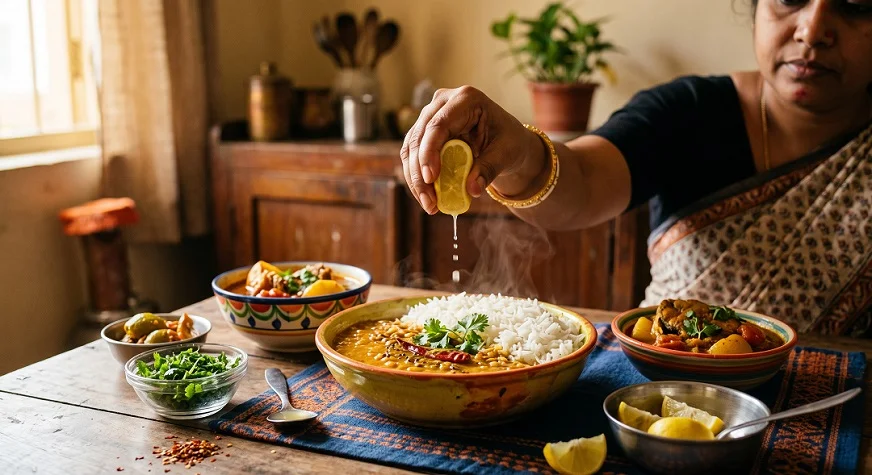
For many families, a meal feels incomplete without something bright and tangy on the side. A squeeze of fresh lemon over dal and rice, fish curry, vegetables, or salad can lift the entire dish—especially in Bengali and South Asian cooking.
But does it matter when you add the lemon?
A little timing can help preserve more of its vitamin C. The difference is not dramatic enough to turn lemon into a miracle food, and adding lemon to hot food is not dangerous for most people. Still, vitamin C is sensitive to heat, air, light, and prolonged storage. Adding lemon near the end of cooking helps protect its fresh flavor and may preserve more of this water-soluble vitamin.
Why Lemon Is a Useful Addition
Lemon is best known for its vitamin C content. This nutrient supports several normal functions in the body.
| Benefit | What vitamin C does |
|---|---|
| Immune function | Vitamin C supports normal immune-system activity. It does not guarantee protection from infections or cure illness. |
| Collagen production | It helps the body make collagen, which supports skin, blood vessels, bones, cartilage, and wound healing. |
| Iron absorption | Vitamin C can improve the absorption of non-heme iron, the type found mainly in plant foods such as lentils, beans, and leafy greens. |
| Antioxidant activity | It helps protect cells from oxidative damage as part of the body’s normal antioxidant defenses. |
A lemon squeeze can therefore be a flavorful way to add vitamin C to a meal. However, the amount you get depends on how much juice you use, the size and freshness of the lemon, and what else you eat during the day.
What Happens When Lemon Meets Heat?
Vitamin C can break down during cooking, particularly when food is exposed to high temperatures or heated for a long time. Because it is water-soluble, some vitamin C can also be lost into cooking water.
That does not mean all the vitamin C disappears the moment lemon touches hot rice or curry. The actual loss depends on temperature, cooking time, exposure to air, and the amount of juice used. A quick squeeze over a warm dish is very different from simmering lemon juice in a curry for a long period.
Heat can also change lemon’s flavor. Long cooking may dull its fresh acidity and, in some dishes, create a slightly bitter taste. If you want the brightest flavor, lemon is usually best added after the pan has come off the heat or just before serving.
The Simple Approach: Add Lemon at the End
The easiest method is to cook your dish as usual, turn off the heat, and let it cool for a few minutes. Then add fresh lemon juice and stir it through just before serving.
This small step helps retain more of the lemon’s delicate vitamin C than prolonged cooking would, while keeping its clean, refreshing taste. It also lets you control the acidity more easily, which is useful when preparing dal, rice, fish curry, vegetables, or salad.
There is no need to wait until food is completely cold. Warm food is fine. The main point is to avoid boiling or simmering the lemon juice for a long time.
Lemon Water: Hot, Warm, or Cold?
Lemon water can be enjoyed hot, warm, or cold. If preserving vitamin C is your priority, lukewarm or cool water is a better choice than very hot or boiling water. Heat does not remove every bit of vitamin C instantly, but prolonged exposure to high temperatures can reduce the amount.
Lemon water is also not a detox treatment, fat-burning drink, or cure for disease. Its main advantages are flavor, hydration, and a small contribution of vitamin C.
A Few Things to Keep in Mind
Lemon is healthy for most people, but it can cause problems for some. Its acidity may worsen heartburn or reflux in sensitive individuals. Frequent exposure to acidic drinks can also contribute to enamel erosion, especially when sipped slowly throughout the day. Rinsing your mouth with plain water afterward and avoiding immediate toothbrushing may help reduce acid-related wear.
People with kidney disease or a condition requiring dietary restrictions should follow advice from their healthcare professional rather than assuming that every “healthy” ingredient is suitable for them.
Conclusion
Adding lemon to rice, dal, curry, or vegetables is a simple tradition that brings freshness to a meal. If you want to preserve more of its vitamin C and keep the flavor lively, add the juice after cooking or just before serving instead of simmering it for a long time.
That is the real secret: not a complicated rule, but a small habit that protects flavor and makes the most of a naturally nutritious ingredient.
Frequently Asked Questions
Health Disclaimer
I’m not a medical professional—treat this as informed analysis, not a medical diagnosis; a qualified clinician should confirm anything consequential. This article is for general education and does not replace individualized nutrition or medical advice.
References
[3] Harvard T.H. Chan School of Public Health — Vitamin C

Health & Wellness Writer | Research-Informed Health Content Creator
A.K.M. Monjurul Hoque is a health and wellness writer specializing in health, beauty, fitness, nutrition and healthy living. His content is informed by health journals, books, seminars, training programs, and discussions with experienced healthcare professionals. He writes clear, practical and research-informed articles for general education and encourages readers to seek personalized advice from qualified medical professionals.