





Bee Acropolis: Discover the World of Bees and the Living Art of Beekeeping
Introduction: Where Nature, History, and Honey Meet
Bees have always occupied a special place in the human imagination. They appear in ancient stories as messengers of the gods, in religious traditions as symbols of renewal, and in everyday life as essential pollinators and producers of honey and beeswax. A visit to a bee-focused attraction—whether called Bee Acropolis, a bee museum, or an apiculture center—offers a chance to look beyond the jar of honey and understand the remarkable society inside a hive.
These experiences bring together natural history, traditional beekeeping, environmental education, and hands-on learning. Visitors can explore how colonies are organized, how honey is harvested, and why protecting pollinators matters to food systems and ecosystems. The supplied material appears to combine the idea of a bee-themed educational attraction with broader Greek beekeeping history; readers should confirm the official venue name, location, admission details, and current opening hours before planning a visit.
What Makes a Bee-Themed Visit Worthwhile?
A well-designed bee education center turns a familiar insect into a subject of wonder. Transparent observation hives can reveal the constant movement of worker bees, while exhibits may explain the roles of the queen, workers, and drones. Demonstrations of hive management and honey extraction show that beekeeping is both a traditional craft and a practice requiring patience, precision, and respect for living colonies.
Many such attractions also offer guided tours, school programs, workshops, and tastings. The strongest experiences do more than entertain: they help visitors understand the relationship between bees, flowering plants, agriculture, and biodiversity.
The Architecture of the Hive: Why Hexagons Matter
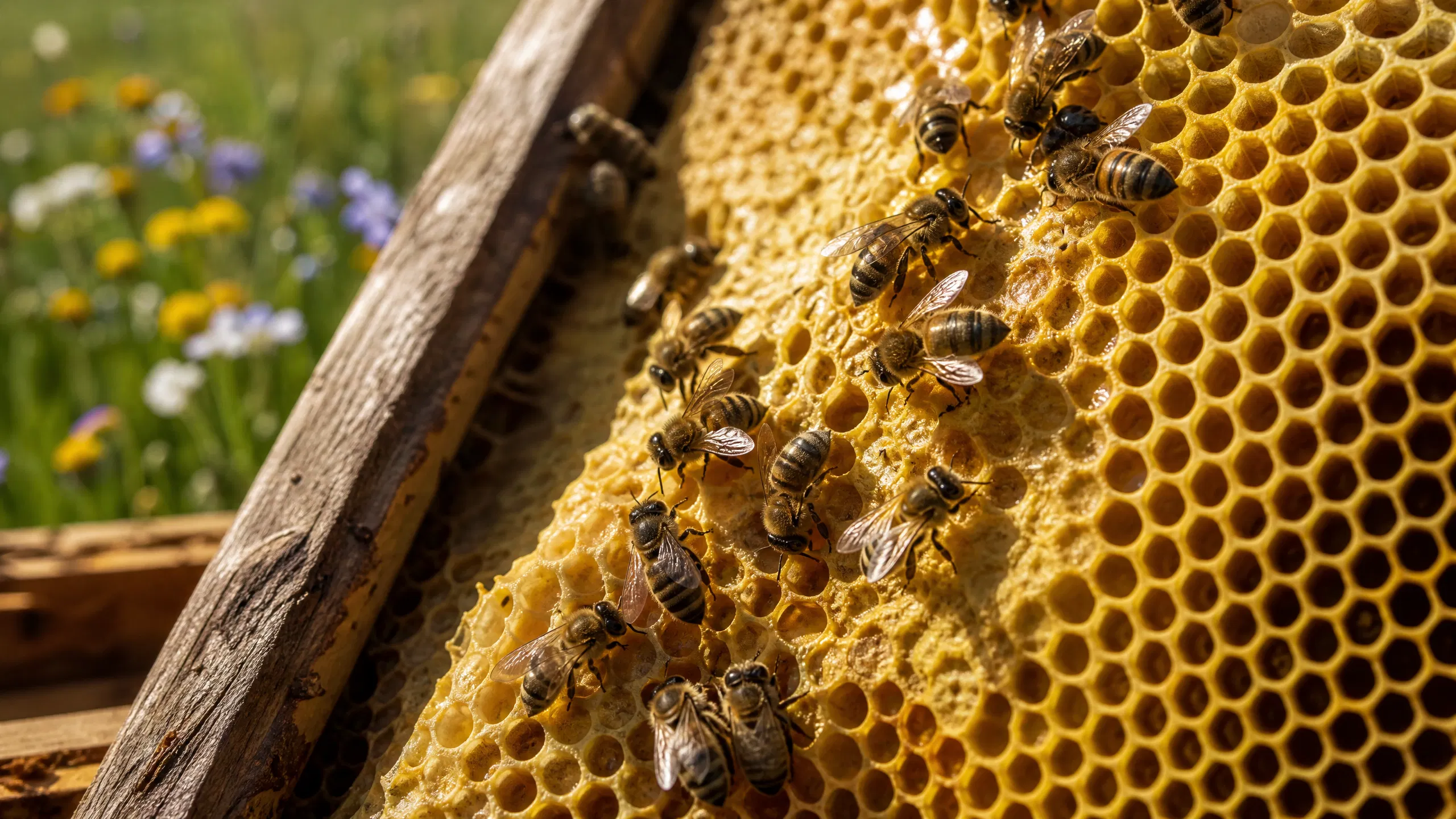
One of the most recognizable features of a honeybee hive is its repeating hexagonal pattern. Hexagonal cells fit together without wasted gaps, allowing bees to store honey and pollen and raise brood while using a relatively small amount of wax. The structure is strong, efficient, and remarkably economical.
Worker bees produce wax through glands on the underside of their abdomens. They soften the wax with warmth and shape it into a growing comb. Building a large colony is a collective process: many bees contribute to temperature control, cleaning, feeding larvae, storing food, and expanding the nest.
The hive’s geometry is not evidence that bees use human-style architectural plans. Instead, it emerges from instinct, body temperature, chemical signals, and thousands of small actions performed by individual insects. That natural process is precisely what makes the comb so impressive.
| Hive feature | Function |
|---|---|
| Hexagonal cells | Store honey and pollen and provide space for developing young. |
| Beeswax comb | Forms the structural framework of the colony. |
| Worker bees | Build comb, gather food, care for brood, and protect the hive. |
| Pheromone communication | Helps coordinate colony behavior and maintain social organization. |
Bees in Ancient Greece and Beyond
Beekeeping has deep roots in the Mediterranean. Archaeological evidence shows that people in Greece used ceramic vessels and other structures as hives, while traces of beeswax in ancient pottery demonstrate that humans managed bees thousands of years ago. [1] [2]
Honey was valued as food, medicine, and an offering. Beeswax became useful for candles, coatings, writing materials, and artistic work. Greek and Roman cultures also connected bees with fertility, order, productivity, and divine communication. These beliefs varied across time and place, but they reveal how closely bees were tied to both practical life and spiritual imagination.
The modern fascination with bees continues that tradition. Artists, designers, architects, and jewelers often borrow the honeycomb pattern or bee imagery to represent diligence, community, and interdependence.
Modern Technology Meets Ancient Beekeeping
Today, researchers can study hives using tools that earlier beekeepers could never have imagined. Imaging technologies, environmental sensors, genetic analysis, and non-invasive monitoring can provide insight into colony health while reducing the need to disturb the hive.
Archaeologists also use laboratory analysis to learn more about historical beekeeping. Ceramic hive fragments, residue analysis, and comparisons with traditional practices can help researchers reconstruct how ancient communities housed and managed bees. These discoveries should be described carefully: not every ancient clay container was necessarily a complete working hive, and conclusions depend on the evidence available at each site.
Why Bees Matter to the Modern World
Bees contribute to the reproduction of many flowering plants and help support agricultural systems. Honeybees are important managed pollinators, while wild bees and other insects also play major roles in pollination. Their health is influenced by habitat loss, pesticide exposure, parasites, disease, climate pressures, and reduced floral diversity. [3] [4]
Protecting bees does not require everyone to become a beekeeper. Small changes can make gardens, balconies, farms, schools, and public spaces more pollinator-friendly.
Practical Ways to Help Pollinators
Planting a variety of pesticide-free flowers that bloom across different seasons gives pollinators access to food for longer periods. Native plants are often especially valuable because local insects have evolved alongside them. Gardeners should avoid unnecessary pesticide use, leave some natural ground or vegetation where appropriate, and provide shallow water sources with stones or landing points so insects do not drown.
Communities can also support pollinators by creating school gardens, organizing educational events, protecting wildflower areas, and purchasing honey and other bee products from responsible local producers. The best conservation efforts combine habitat protection with education rather than treating bees solely as sources of commercial products.
Honey, Beeswax, and Propolis: What Visitors May Learn
A bee-focused attraction commonly introduces visitors to several products of the hive. Honey is made from floral nectar that bees transform, concentrate, and store. Beeswax forms the comb. Propolis is a resinous material collected from plants and used by bees to seal and protect parts of the hive.
Propolis is sometimes marketed as an immune booster or natural treatment. Although researchers have investigated its antimicrobial and anti-inflammatory properties, evidence for specific health claims remains limited and product quality varies. People with allergies to bee products, pollen, or certain resins may experience reactions, particularly with topical products. Anyone who is pregnant, breastfeeding, taking medication, or considering propolis for a medical condition should consult a qualified healthcare professional before using it. [5] [6]
A Better Way to Experience Bee Acropolis
To make the most of a visit, arrive with curiosity rather than assumptions. Ask how the attraction supports local beekeepers, whether the observation hives are managed for colony welfare, and how honey is harvested. If you are visiting with children, look for age-appropriate demonstrations that explain bee behavior without encouraging people to touch or disturb live colonies.
A thoughtful visit might include a guided hive tour, a lesson on honey extraction, a discussion about pollination, and time to explore the surrounding plants. The experience becomes more memorable when visitors connect the details of bee society with the larger landscape that sustains it.
Conclusion: A Small Insect, a Vast Lesson
Bee Acropolis represents a compelling idea: nature can be both a classroom and a cultural archive. The architecture of a honeycomb reveals the efficiency of collective work; ancient beekeeping connects modern visitors with long-standing Mediterranean traditions; and pollinator conservation reminds us that ecological health depends on relationships that are easy to overlook.
Whether you visit a dedicated bee museum, join a local apiary tour, or plant flowers at home, the lesson is the same. Bees are not background creatures. They are active participants in the food systems and landscapes that support human life. Protecting them is not simply an act of kindness toward one species—it is an investment in a healthier shared future.
Frequently Asked Questions
What is Bee Acropolis?
Bee Acropolis is presented in the supplied material as a bee-focused educational and cultural experience connected with beekeeping, honey production, and pollinator conservation. Because the name may refer to a specific venue or a broader concept, confirm the official location and operator before relying on travel details.
Why do bees build hexagonal cells?
Hexagons pack together efficiently, leaving no unused gaps between neighboring cells. This gives bees a strong storage structure while helping them use wax economically.
What can visitors learn at a bee museum or apiary?
Visitors may learn about colony biology, hive management, honey extraction, beeswax, propolis, pollination, traditional beekeeping, and current threats to pollinator health. Some venues also offer observation hives, workshops, tastings, and school activities.
Were bees important in ancient Greece?
Yes. Bees and honey were important in ancient Mediterranean foodways, crafts, medicine, and religious symbolism. Archaeological evidence also points to long-standing beekeeping practices in Greece. [1] [2]
Is propolis safe for everyone?
No. Propolis can cause allergic or skin reactions, especially in people sensitive to bee products, pollen, or resins. Its safety and effectiveness depend on the product and the person using it. Consult a healthcare professional before taking propolis for a health condition. [5] [6]
How can I help bees at home?
Grow diverse, preferably native flowers; avoid unnecessary pesticides; provide shallow water with stones; preserve some natural habitat; and support responsible local beekeepers. Even a small balcony garden can provide useful forage.
Disclaimer
This article is intended for general education and travel inspiration. It does not provide medical, environmental, or professional beekeeping advice. Claims about a specific attraction, historical site, event, or product should be verified with the official venue or a reliable authority before publication or travel. Propolis and other bee products may cause allergic reactions and should not be used to treat illness without professional guidance.
The article has been newly written from the supplied material and publicly available references. No writer or tool can guarantee a literal “100% plagiarism-free” result without checking every publication and database; use a recognized originality checker if formal verification is required.
References
1.Brown University — A Neolithic Beehive?
2.Wiley Online Library — Experiments with an Old Ceramic Beehive
3.FAO — Pollination Services for Sustainable Agriculture
4.U.S. Environmental Protection Agency — Protecting Pollinators
7.Bee Museum Rhodes — Official Museum Website


Health & Wellness Writer | Research-Informed Health Content Creator
A.K.M. Monjurul Hoque is a health and wellness writer specializing in health, beauty, fitness, nutrition and healthy living. His content is informed by health journals, books, seminars, training programs, and discussions with experienced healthcare professionals. He writes clear, practical and research-informed articles for general education and encourages readers to seek personalized advice from qualified medical professionals.