





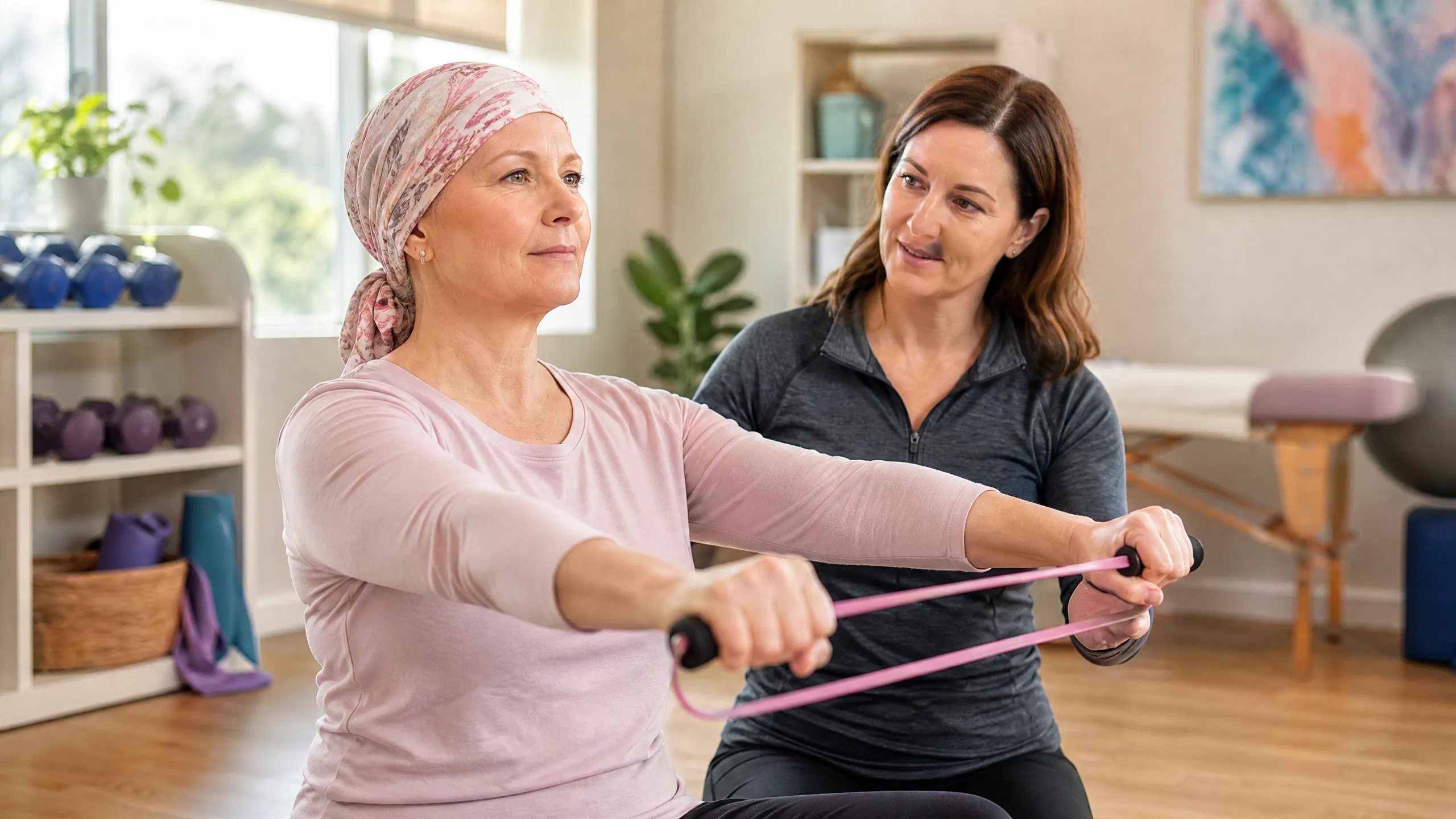
Exercise and Breast Cancer: How Movement May Support Recovery
Health note: I’m an AI, not a medical professional—treat this as informed analysis, not a medical diagnosis. A qualified clinician should confirm anything important for your situation.
Exercise is often discussed in terms of weight loss, muscle, or fitness. But for people living with breast cancer or recovering from treatment, movement can support much more than physical strength.
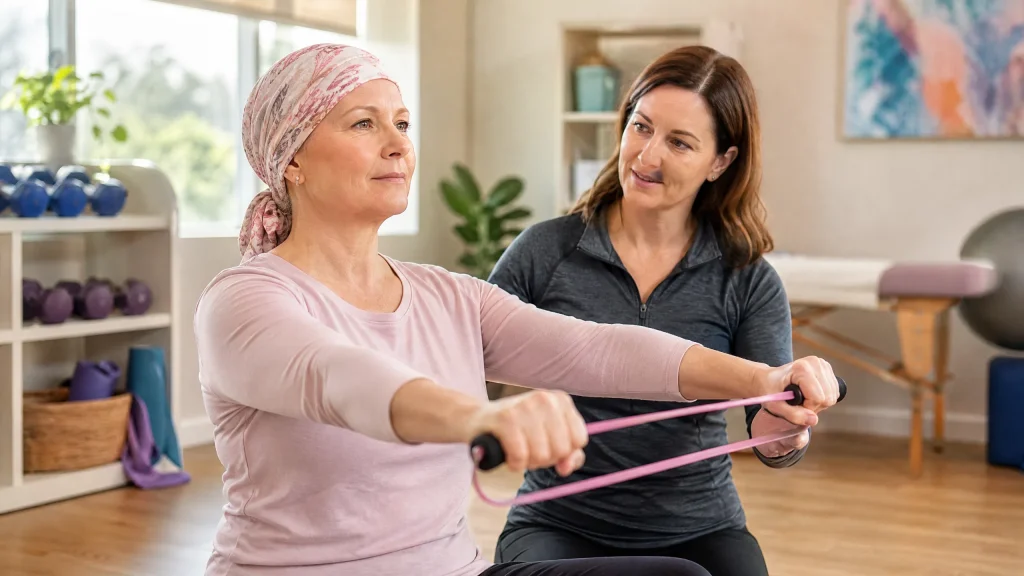
Research is exploring how exercise may affect the body at a deeper level. When muscles work, they release proteins called myokines into the bloodstream. Some of these proteins may help reduce inflammation and slow the growth of cancer cells in laboratory studies. That is promising, but it is important to be clear: exercise is not a cure for cancer, and laboratory results do not automatically predict what will happen in a person’s body.
What Recent Research Shows
One study looked at breast cancer survivors who took part in either resistance training or high-intensity interval training, often called HIIT. Resistance training included exercises such as presses and squats. HIIT involved short periods of harder effort followed by recovery.
Both types of exercise increased several myokines, including decorin, IL-6, and SPARC. When researchers tested blood samples from the participants in a laboratory, the samples reduced the growth of breast cancer cells by as much as 30 percent. The result was encouraging, but it was an in-vitro finding, meaning it took place in a laboratory rather than inside the participants’ bodies.
The study also included triple-negative breast cancer cells, which can be difficult to treat because they do not respond to hormone therapies. The findings suggest that exercise-related changes in the blood may deserve more research across different types of breast cancer.
Scientists still need longer and larger studies to understand whether these changes lead to better treatment outcomes or a lower risk of recurrence. For now, the strongest evidence supports exercise as part of supportive cancer care—not as a replacement for surgery, medication, radiation, chemotherapy, or other treatment recommended by an oncology team.
Benefits That Go Beyond the Laboratory
Exercise can offer practical benefits during and after breast cancer treatment. Strength training may help rebuild muscle and support bone health, especially when treatment or inactivity has reduced strength. Regular activity may also improve energy, mood, sleep, and everyday function.
Fatigue is one of the most common and frustrating effects of cancer and its treatment. Rest is important, but complete inactivity can sometimes make weakness and fatigue worse. A carefully adjusted exercise plan may help people feel more capable over time.
Cardiovascular exercise matters too. Supervised aerobic training and HIIT have been studied in people with breast cancer and may improve heart and lung fitness. The right level of effort depends on a person’s treatment, symptoms, fitness, and medical history.
| Type of exercise | Possible benefits |
|---|---|
| Walking or other aerobic activity | Supports heart health, stamina, mood, and daily energy. |
| Resistance training | Builds muscle strength and may support bone health. |
| Interval training | Can improve cardiovascular fitness when appropriately supervised. |
| Gentle mobility work | Helps maintain comfortable movement and body confidence. |
Starting Safely During or After Treatment
For many people, exercise can be safe and helpful during and after breast cancer treatment. That does not mean every workout is suitable at every stage. Treatment effects can change from week to week, and a routine that felt manageable before chemotherapy or surgery may need to be modified afterward.
Start with what you can do comfortably. That might be a short walk, gentle stretching, light resistance work, or a few minutes of movement spread throughout the day. Increase the time or intensity gradually rather than trying to make up for lost fitness in one session.
Your healthcare team can help you decide when to begin and how hard to work. A physical therapist, oncology rehabilitation specialist, or cancer exercise professional may also help with concerns such as lymphedema, balance, neuropathy, weakness, or surgical recovery.
Stop and contact your healthcare team if exercise causes unusual pain, dizziness, chest discomfort, severe shortness of breath, bleeding, sudden swelling, or symptoms that are getting worse.
Does Exercise Lower the Risk of Recurrence?
A growing body of research links regular physical activity with better outcomes among breast cancer survivors, including a possible reduction in the risk of recurrence and death. However, studies do not mean that exercise guarantees a person’s cancer will not return.
Many factors affect prognosis, including cancer type and stage, tumor biology, treatment, genetics, other health conditions, and access to care. Exercise is best viewed as one supportive part of a broader plan that includes medical treatment, follow-up appointments, nutrition, sleep, mental-health support, and symptom management.
The Most Helpful Routine Is One You Can Maintain
There is no single “best” workout for every survivor. Some people enjoy strength training. Others prefer walking, cycling, swimming, dancing, or short intervals on a stationary bike. The best plan is safe, flexible, and realistic enough to continue.
Consistency matters more than perfection. On difficult days, a gentle walk or a few minutes of mobility work may be enough. On stronger days, you may be ready for a longer session or more resistance. Listening to your body is not giving up; it is part of training intelligently during recovery.
Conclusion: Movement Can Be Part of Healing
The science behind exercise and breast cancer is developing quickly. Research into myokines offers an interesting explanation for how working muscles may influence inflammation and cancer-related processes. Studies of resistance training and HIIT have also shown improvements in fitness and changes in proteins that may affect cancer cells in the laboratory.
Still, the most immediate benefits are often simpler: more strength, better stamina, improved mood, less fatigue, and greater confidence in daily movement. Exercise should support medical care, not replace it. With guidance from your healthcare team, a gradual and personalized routine can become a practical part of recovery and long-term well-being.
Frequently Asked Questions

Disclaimer
This article is for general education and does not provide a diagnosis, treatment plan, or personal exercise prescription. Exercise research in breast cancer is encouraging, but laboratory findings and population studies do not guarantee a specific result for an individual. Speak with your oncologist or another qualified healthcare professional before beginning or changing an exercise program, especially during active treatment or after surgery. Do not use exercise as a substitute for cancer treatment.
The text has been newly rewritten from the supplied material. No writer or tool can guarantee a literal “100% plagiarism-free” result without checking every publication and database; use a recognized originality checker if formal verification is required.
References
1.National Cancer Institute — Physical Activity and Cancer Fact Sheet
2.American Cancer Society — Physical Activity When You Have Cancer
3.Campbell et al. — Exercise Guidelines for Cancer Survivors: Consensus Statement
4.American Society of Clinical Oncology — Management of Fatigue in Adult Survivors of Cancer

Health & Wellness Writer | Research-Informed Health Content Creator
A.K.M. Monjurul Hoque is a health and wellness writer specializing in health, beauty, fitness, nutrition and healthy living. His content is informed by health journals, books, seminars, training programs, and discussions with experienced healthcare professionals. He writes clear, practical and research-informed articles for general education and encourages readers to seek personalized advice from qualified medical professionals.