



Mental Health Awareness: A Holistic Approach to supporting Your Health and Wellness
Disclaimer: This article is purely for informational purposes only. It does not replace the advice, diagnosis or treatment of a medical professional. In case of an emergency, contact a mental health service or helpline immediately if you or a loved one or friend is in danger.
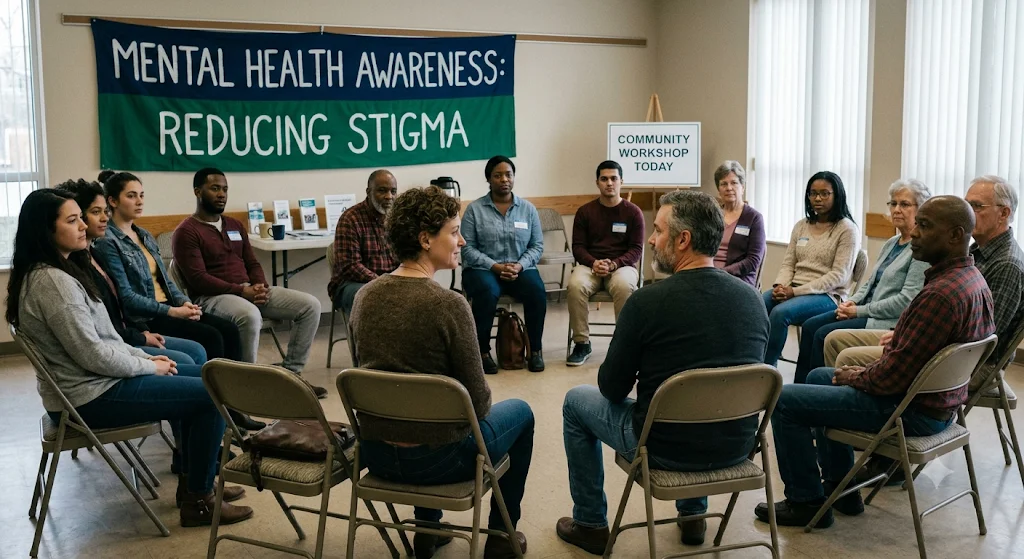
Mind is the bedrock of the whole of our life. It affects our thoughts, feeling and actions towards our surroundings. However, there is often a stigma associated with mental health issues. The initial step in breaking these barriers, while building empathy and creating a supportive society, is to promote awareness and education.
The reasons behind the importance of mental health
Mental health doesn’t just mean not having mental illness, it’s about feeling balanced in our lives and able to handle life’s pressures, work and enjoy our community.
Poor mental health has an impact
Where mental health is not taken care of, it will come out in different forms which curb our daily functioning:
- Cognitive Challenges: Trouble with concentration or decisions.
- Physical sign/ symptom: Fatigue, trouble sleeping, or for no apparent reason aches.
- Emotional Shifts: More irritable, mood swings and/or loss of interest in hobbies.
- Social Impact: Issues with relationships with others, diminished work/school functioning.
The Mind-Body Connection
It is crucial to remember that mental and physical health go hand in hand. A chronic stress response can cause physical problems such as high blood pressure, headaches and a compromised immune system. On the other hand, caring for the mind is one of the best ways to maintain physical whoabers.
Awareness and Education is Power
Global dialogues and campaigns (e.g., NAMI, Bell Let’s Talk) have changed the conversation.These campaigns seek to make mental health check-ins a common, everyday routine and services available for people who may be feeling alone.
The Function of Education
Schools: Teaching emotional intelligence and coping strategies – early resilience development. By sharing experiences in Communities: Workshops, it minimizes the fear of being judged. Social media can also be a great advocacy tool, if we are getting information from trusted experts and organisations.
Toolkits for promoting mental health in the community
You don’t need to make big changes in order to take care of your mind. Little small actions can bring long-term stability.
1.Self-Care Practices
- Physical Activity: Exercise produces endorphins, which are natural mood enhancers.
- Healthy Boundaries: It’s OK to say “no!”; Self-respect is a boundary.
- Quality Sleep: Do not neglect a good sleep and let your brain recover.

Credit: www.pinerest.org
2.Mindfulness Techniques
When we do practise mindfulness, we are guided into the “here and now” and that lessens our anxiety about the past or future:
- Deep Breathing: Relax the nervous system with simple 4-7-8 breathing.
- Gratitude Journaling: Redirecting the brain to search for the good things by focusing on what we are grateful for can help to rewire the brain.
- Body Scans: Practice focusing on sensations in the body to give you a focus during stressful moments.
Breaking away from stigma, telling the story
Our understandings of mental health can be shaped by cultural views. Some societies don’t think it is good to seek help, others make it part of their social life. That is the best way to counter those old stories – by telling a personal story. By doing so, people living with anxiety or depression can give others the “permission” to get help without shame.
Frequently Asked Questions
Conclusion
Healthy mind is not a destination, it is a journey. Through teaching, taking care of oneself and open discussion, we can break the stigma which prevents so many from experiencing relief. Important to remember: Seeking assistance is not a show of weakness; it’s an act of courage toward a healthier, happier life.
A variety of resources and professional support is available
To learn more about mental health, you can visit these globally recognized, credible organizations:
- World Health Organization (WHO) – Mental Health: Comprehensive information on mental health trends and global statistics.
- Centers for Disease Control and Prevention (CDC) – Mental Health: Evidence-based resources for improving mental well-being and managing stress.
- National Alliance on Mental Illness (NAMI): Extensive support programs and advocacy for those affected by mental health conditions.
Need Immediate Help?
If you are in distress or need someone to talk to, please reach out to these professional services available in Bangladesh:
- Kaan Pete Roi (কান পেতে রই): This is a suicide prevention and emotional support helpline.
- Helpline: 01779554392, 01779554393
- Website: kaanpeteroi.org
- National Tele-Health Service:
- Helpline: 333 (Press 2 for mental health services)
- Moner Bondhu (মনের বন্ধু): A platform for mental health and well-being.
- Helpline: 01776636446
- Website: monerbondhu.org
- National Institute of Mental Health (NIMH): For specialized medical treatment and consultation.
- Location: Sher-e-Bangla Nagar, Dhaka.
- Website: nimh.gov.bd
Important Note: If it is a life-threatening emergency, please visit the nearest government hospital or dial 999 (National Emergency Service in Bangladesh) immediately.

Health & Wellness Writer | Research-Informed Health Content Creator
A.K.M. Monjurul Hoque is a health and wellness writer specializing in health, beauty, fitness, nutrition and healthy living. His content is informed by health journals, books, seminars, training programs, and discussions with experienced healthcare professionals. He writes clear, practical and research-informed articles for general education and encourages readers to seek personalized advice from qualified medical professionals.
Health & Wellness Writer | Research-Informed Health Content Creator
A.K.M. Monjurul Hoque is a health and wellness writer specializing in health, beauty, fitness, nutrition and healthy living. His content is informed by health journals, books, seminars, training programs, and discussions with experienced healthcare professionals. He writes clear, practical and research-informed articles for general education and encourages readers to seek personalized advice from qualified medical professionals.