



Eat the Rainbow: Why Colorful Foods are the Secret to Better Nutrition and a Healthier Life
Whether you’re looking to improve how you feel, get more energy, or simply enhance your health, nutrition is a great starting point. However, when individuals talk about “eat healthy” it can be unclear or overwhelming. One of the simplest ways to get a healthier diet is to eat the rainbow—make your meals as colorful as possible. It’s easy and it’s effective.
Why’s Food Colours Matter?
The colors of those fruits and vegetables are not only beautiful but they are also high in vitamin, minerals, fiber, and antioxidants. These nutrients assist your body to function as it should and decrease the risk of health conditions such as heart disease and diabetes.
Nutrition isn’t simply a sustaining act. Smart food options can boost your immune system, help you keep your digestion happy, and keep your mind on track. Eating lots of processed food and sugary snacks, on the other hand, can take a toll on your health over time.
What does “Eat the Rainbow” really mean?
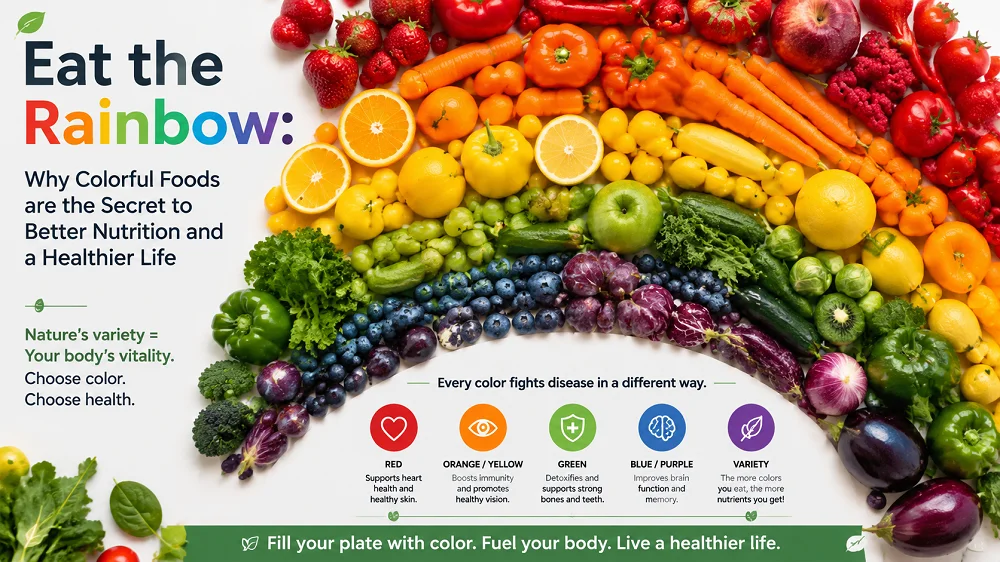
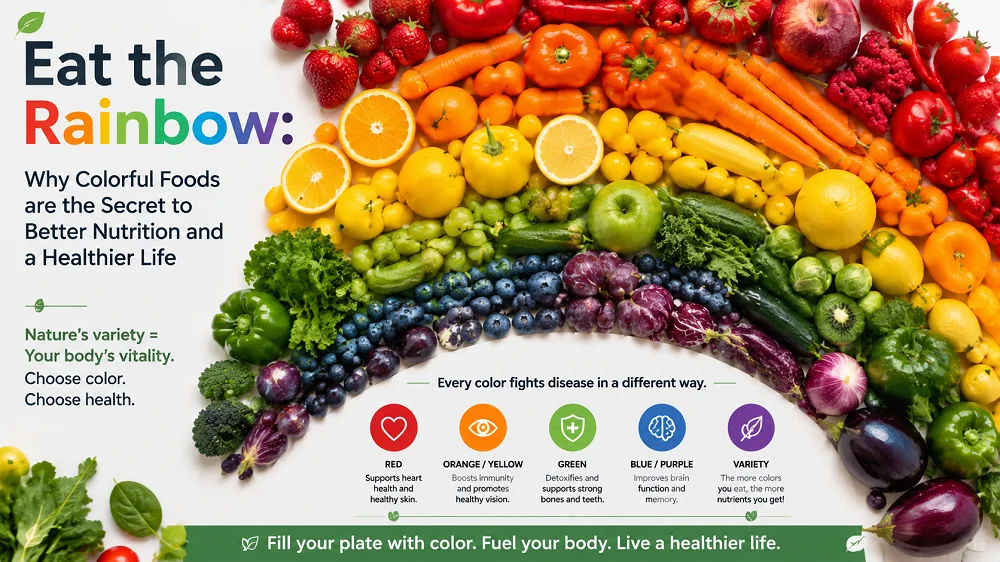
The various colors of your produce are provided by different plant compounds that offer different health benefits. Thus, the more colour on your plate the more diversity of nutrients you receive:
Green Foods
Consider foods like spinach, broccoli, green beans and cucumber. They are high in folate and vitamin K, which are essential for strong bones and a robust immune system.
Orange and Yellow Foods
Carrots, mangoes, sweet potatoes and pumpkin provide a high content of beta-carotene that your body converts to Vitamin A, which is fantastic for your eyesight as well as your immune system.
Blue and Purple Foods
Brain supporting antioxidants are abundant in blueberries, grapes, purple cabbage and eggplant, which help to combat aging.
White Foods
Avoid missing out on garlic, onions, mushrooms or cauliflower. Although not glamorous, they do contain nutrients and plant compounds that your body requires.
Remember the fibre!
Many of us don’t consume enough fiber, although it can keep us feeling satiated and aid digestion. Good sources? Whole grains, beans, lentils, nuts, seeds, fruit and, of course, vegetables.
These are easy tips for eating healthy
Have ½ of your plate filled with vegetables at lunch and dinner.
- Take one fruit each day.
- Refuse refined grains, such as white rice.
- Drink water frequently; don’t only have coffee or soft drinks. –
- Limit processed snack foods and soft drinks.
- Incorporate lean protein into meals, such as chicken, fish, tofu, or beans.
- Be mindful of serving sizes; sometimes a smaller portion is better.
Quick Example of a Balanced Day
Breakfast: Oatmeal with berries and nuts.
Lunch: Brown rice and lots of veggies, grilled chicken or grilled lentils.
Snack: Apple, or a handful of almonds.
Dinner: Vegetable Soup, whole grain bread and simple salad.
Internal links
External links
Wrapping Up
Good nutrition doesn’t require a lot of effort or a big investment. Simply remember to eat more brightly colored fruits and vegetables, drink plenty of fluids and select whole foods whenever possible.These small, consistent changes turn into habits and will bring you better health now and for years to come.
Disclaimer: This article is for education only. For medical or dietary advice always consult your doctor or dietitian.
Frequently Asked Questions (FAQs)

Health & Wellness Writer | Research-Informed Health Content Creator
A.K.M. Monjurul Hoque is a health and wellness writer specializing in health, beauty, fitness, nutrition and healthy living. His content is informed by health journals, books, seminars, training programs, and discussions with experienced healthcare professionals. He writes clear, practical and research-informed articles for general education and encourages readers to seek personalized advice from qualified medical professionals.