





Mother’s Milk: Why the First Few Days of Feeding Matter More Than You Think
Before any formula, before any solid food, before anything else — there is breast milk. For a newborn, it is quite literally the first thing their body receives, and what it contains in those earliest days is remarkable.
Most people know that breastfeeding is beneficial in a general sense. Fewer understand the specific reasons why — what’s actually in breast milk, how it changes in the first hours and days after birth, and why those early feeds carry so much significance for a baby’s long-term health. This article covers all of that in plain language, along with practical guidance on technique, feeding frequency, and safe milk storage.
What Colostrum Is — and Why It’s Different
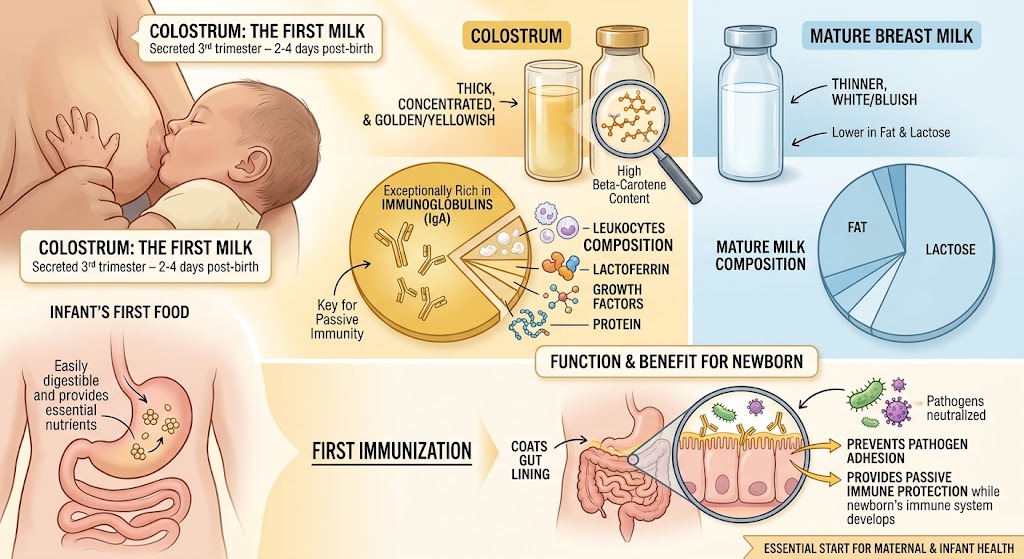
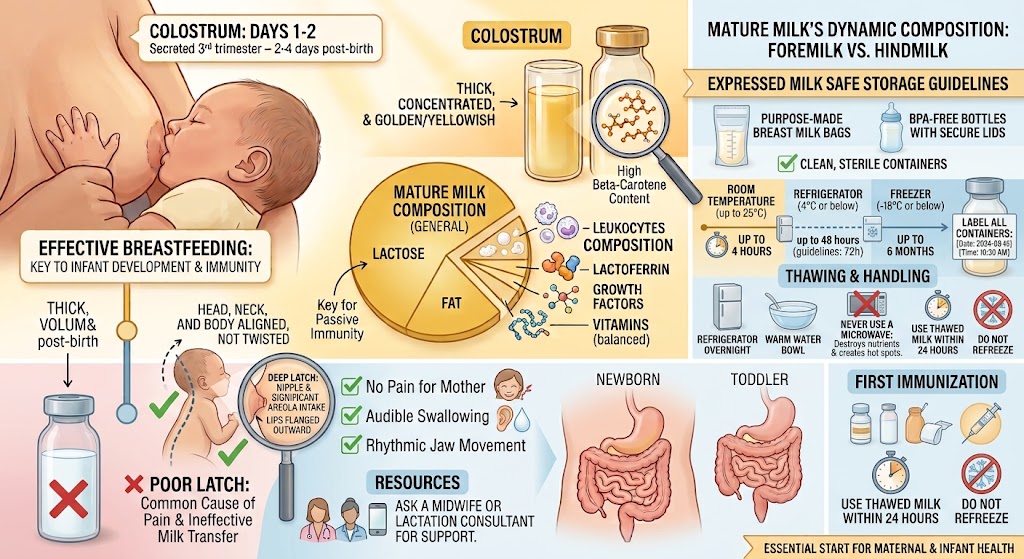
For the first two to four days after birth, a mother doesn’t produce what most people think of as breast milk. She produces colostrum — a thick, concentrated, golden-coloured substance that looks quite different from the thinner, whiter milk that arrives a few days later.
The difference isn’t incidental. Colostrum is specifically calibrated for a newborn’s needs in those first critical hours and days. It’s produced in small quantities, which is appropriate — a newborn’s stomach at birth is roughly the size of a marble, and colostrum’s density means a little goes a long way.
What’s inside it is where things get interesting.
Antibodies. Colostrum is extraordinarily rich in immunoglobulins — particularly secretory IgA — which coat the lining of the baby’s gut and respiratory tract, creating a physical barrier against bacteria and viruses. A newborn’s immune system is not yet capable of producing these defences independently. Colostrum effectively provides them on loan, protecting the baby while their own immune system develops.
High-quality protein. The protein in colostrum isn’t just for growth — it contains lactoferrin, which binds to iron in a way that makes it unavailable to harmful bacteria, and various enzymes that support digestion. The protein also stimulates the development of the infant’s gut lining.
Growth factors. These compounds help the intestines mature and seal, a process called gut closure, which reduces the permeability that makes newborn guts vulnerable to allergens and pathogens.
Vitamins and minerals. Colostrum is particularly rich in vitamin A — important for immune function, vision, and skin integrity — as well as vitamin E and zinc.
What Breast Milk Does for the Baby’s Body
Immunity
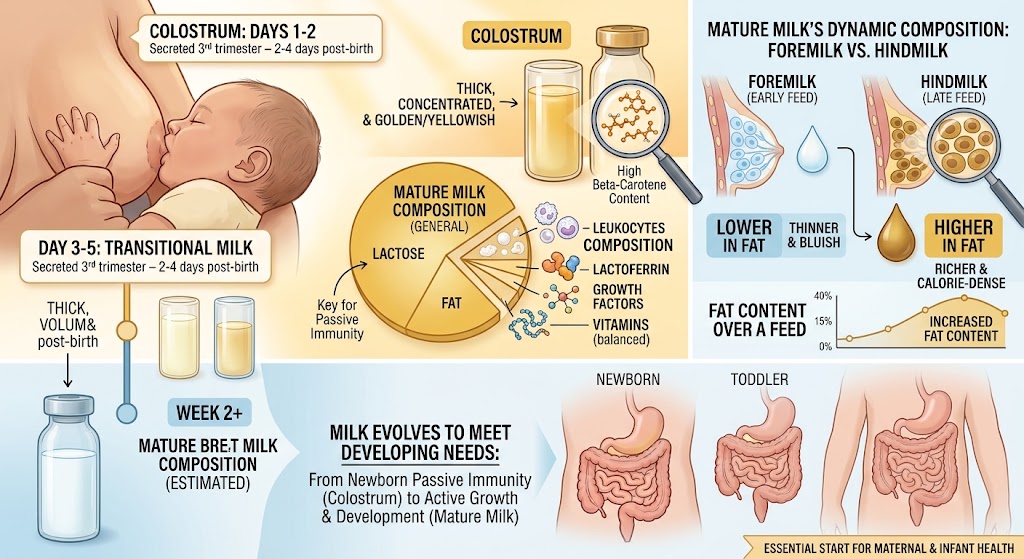
The protection colostrum and breast milk provide against infection is one of the most well-established benefits in the research literature. Breastfed infants have significantly lower rates of respiratory infections, ear infections, gastrointestinal illness, and urinary tract infections compared to formula-fed infants. The antibodies — primarily IgA — delivered through breast milk are the main mechanism, but they’re supported by antimicrobial proteins, white blood cells, and other immune-active compounds.
This protection is particularly concentrated in the first days of life, which is one reason early, frequent feeding matters so much.
Digestion
A newborn’s digestive system is immature at birth. Breast milk supports its development in ways that formula cannot fully replicate. The enzymes in breast milk assist with fat digestion. The proteins are sized and structured for easy breakdown in an infant’s stomach — which is why breastfed babies tend to have fewer digestive complaints. The fiber-like compounds called human milk oligosaccharides (HMOs) feed the beneficial bacteria that colonise the infant gut, establishing the microbiome that will support immune and digestive health for years.
Brain Development
Breast milk contains several nutrients that are directly relevant to neurological development. Omega-3 fatty acids — particularly DHA — are critical components of brain tissue and the retina. Choline supports neural development and cognitive function. Iron and zinc both play significant roles in neurological development, and the forms found in breast milk are more bioavailable than those in formula. The result is that breastfed infants typically show advantages in cognitive assessments that persist into childhood and beyond.
Bone Health
The calcium, phosphorus, and vitamin D in breast milk support skeletal development. The forms in which these minerals appear in breast milk are highly bioavailable — more so, in fact, than in formula, despite formula often containing higher absolute quantities.
The First 72 Hours — Why Frequency Matters
In the first three days after birth, frequent feeding is critical. A newborn should feed approximately every one to two hours — which works out to eight to twelve feeds in a twenty-four hour period. This frequency isn’t excessive; it’s appropriate and necessary.
Frequent feeding in the early days serves two purposes. First, it ensures the baby receives adequate colostrum during the window when it’s available. Second, it stimulates the hormonal signals that establish the milk supply for the weeks and months ahead. The principle is straightforward: supply follows demand. The more the baby feeds, the more milk the body produces. Feeding infrequently in the early days can undermine supply in ways that are difficult to correct later.
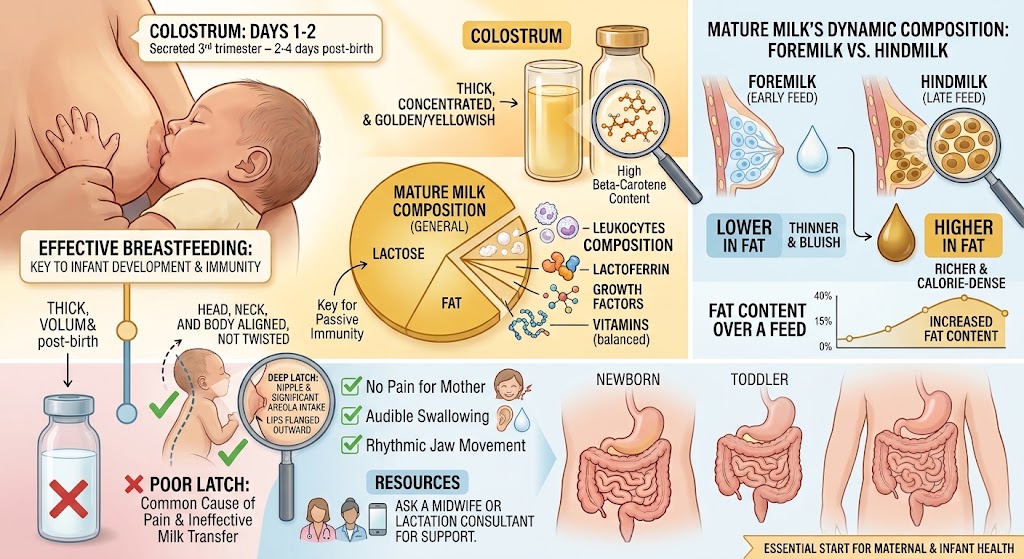
Signs that a baby is feeding effectively include audible swallowing during feeds, steady weight gain after the initial post-birth weight loss (which is normal and expected), and adequate wet and dirty nappies.
Getting the Position and Latch Right
Breastfeeding is natural, but it’s also a skill — for both mother and baby — and it often takes a few days to establish comfortably.
Body alignment. The baby’s head, neck, and body should be in a straight line, not twisted. When the body is aligned, swallowing is easier and the baby can feed more efficiently.
Facing the breast. The baby’s face should be fully toward the breast, nose level with the nipple. This positioning allows a natural, symmetrical latch.
The latch. A good latch involves the baby taking in a substantial portion of the areola — not just the nipple. The lips should flange outward, like a fish mouth, rather than turning inward. When the latch is correct, feeding shouldn’t be painful beyond the first few seconds of initial discomfort as the feed begins.
For the mother. Sit in a comfortable, supported position. A pillow under the arm holding the baby reduces strain significantly. Relax the shoulders. The feed will go better when the body isn’t tense. Before feeding, wash hands thoroughly. Stay well hydrated — milk production requires fluid.
If latching is painful throughout the feed, or if the baby seems to be working very hard without effective milk transfer, this is a signal to seek support from a midwife or lactation consultant. Problems with latch are common and almost always resolvable with proper guidance.
Storing Expressed Breast Milk Safely
When breastfeeding directly isn’t possible — for return to work, separation, or other reasons — expressed milk allows babies to continue receiving its benefits. But storage requires care to preserve both safety and nutritional value.
Containers. Use purpose-made breast milk storage bags or clean, sterile BPA-free bottles with secure lids. All equipment used for expressing and storing should be washed and sterilised before use.
Temperature and duration. At room temperature, freshly expressed milk is safe for up to four hours. In the refrigerator, it keeps for up to 48 to 72 hours depending on the temperature. In a freezer at -18°C or below, it can be stored for up to six months.
Labelling. Always write the date and time of expression on the container. Use the oldest milk first.
Thawing. Frozen milk should be moved to the refrigerator to thaw overnight, or placed in a bowl of warm water for quicker thawing. Never use a microwave — it destroys some of the beneficial compounds in the milk and creates uneven hot spots that can burn a baby’s mouth. Once thawed, use within 24 hours and do not refreeze.
Conclusion
Breast milk — and colostrum in particular — is one of the more extraordinary biological substances produced by the human body. Its composition is precisely matched to a newborn’s developmental stage. It provides immune protection that no supplement or formula can replicate. It supports gut development, brain development, and long-term health in ways that continue to be studied and confirmed by research.
This doesn’t mean breastfeeding is always easy, or that it works without difficulty for every mother and baby. It takes time, support, and sometimes professional guidance to establish well. But the biological case for it — and especially for prioritising those first colostrum-rich feeds in the days after birth — is clear and strong.
The early days of a baby’s life are brief. What they receive in those days, nutritionally and immunologically, shapes the foundation of their health in ways that extend far beyond infancy.
Disclaimer
This article is for general informational and educational purposes only and does not constitute medical advice. Breastfeeding decisions are personal and may be affected by individual medical circumstances, medications, health conditions, and other factors. Some mothers are unable to breastfeed due to medical, physical, or circumstantial reasons — this is not a failure, and formula feeding can provide adequate nutrition for infant growth and development. If you are experiencing difficulties with breastfeeding, pain, low milk supply, or concerns about your baby’s feeding or weight gain, please consult a midwife, health visitor, or certified lactation consultant. Always seek professional medical advice for any health concerns relating to yourself or your baby.
FAQ
Sources

Health & Wellness Writer | Research-Informed Health Content Creator
A.K.M. Monjurul Hoque is a health and wellness writer specializing in health, beauty, fitness, nutrition and healthy living. His content is informed by health journals, books, seminars, training programs, and discussions with experienced healthcare professionals. He writes clear, practical and research-informed articles for general education and encourages readers to seek personalized advice from qualified medical professionals.