





Why Soaked Chickpeas Deserve a Place in Your Morning Routine
Most morning wellness rituals get a lot more attention than they probably deserve. Lemon water. Celery juice. Collagen powder in your coffee. Some of these things are fine. Few of them are genuinely remarkable.
Soaked chickpeas don’t have the same marketing apparatus behind them, which is probably why they get overlooked. But from a nutritional standpoint, they’re one of the more quietly impressive things you can eat first thing in the morning — particularly if you care about sustained energy, digestive health, or keeping blood sugar stable through the day.
The preparation is simple to the point of being almost embarrassingly low-effort. A handful of dried chickpeas, covered with water, left overnight. That’s the whole ritual. What happens to the chickpea during those hours is what makes the difference.
What Soaking Actually Does
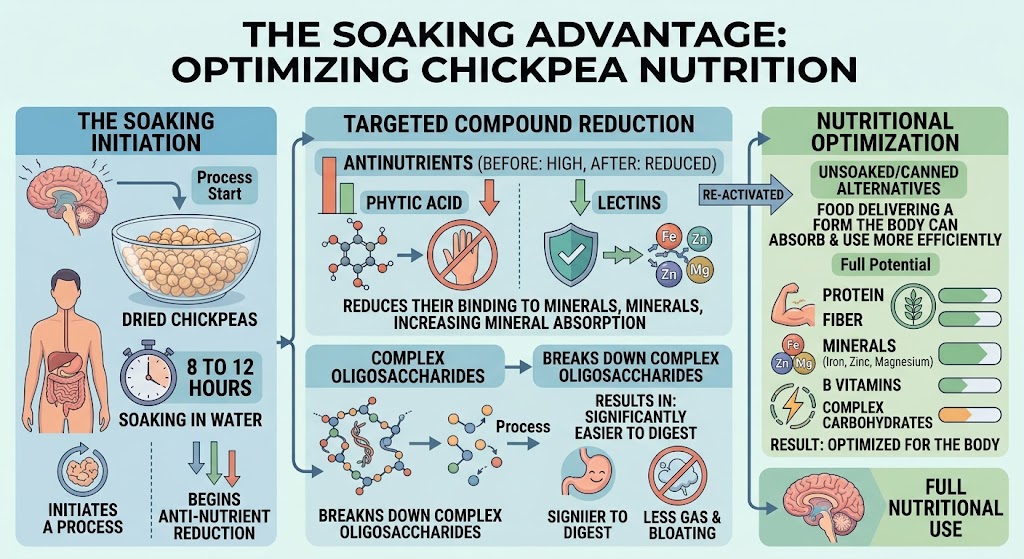
Chickpeas in their dried state contain antinutrients — compounds called phytic acid and lectins that bind to minerals and reduce how much your body can absorb. This is the fundamental reason why preparation method matters. It’s not just about texture or cooking time.
When chickpeas sit in water overnight, the soaking process begins to break down these antinutrients. The water draws them out. The result is a chickpea that’s nutritionally more available — meaning the protein, zinc, iron, and magnesium inside it are more accessible to your digestive system, not just present on a nutrition label.
The other major benefit is digestive comfort. Chickpeas, like all legumes, contain complex sugars called oligosaccharides. These are the compounds responsible for the gas and bloating that puts some people off legumes entirely. Soaking significantly reduces them. For most people, this means the difference between a comfortable morning and a distinctly uncomfortable one.
Six Things They Do for Your Body
Energy That Lasts
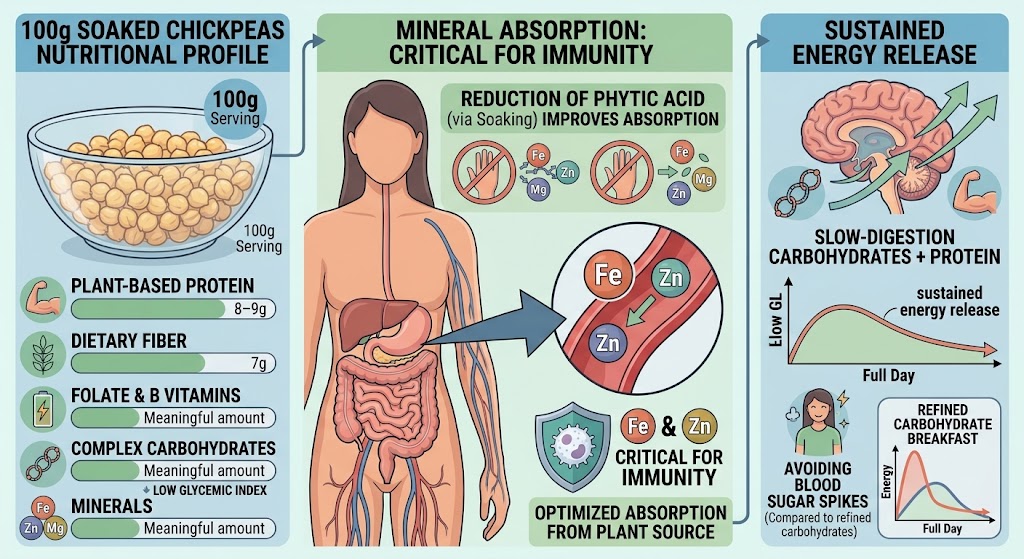
The energy benefit of soaked chickpeas comes from a combination of factors rather than any single ingredient. The protein slows digestion. The complex carbohydrates release glucose gradually rather than all at once. Magnesium supports cellular energy production. B vitamins help convert what you eat into usable fuel.
The practical result is that you don’t get the mid-morning crash that follows a high-sugar or refined carbohydrate breakfast. The energy is quieter and more durable — less of a spike, more of a steady baseline.
Immune Support Without Supplements
Zinc and iron are both essential for a well-functioning immune system, and both are present in soaked chickpeas in forms made more bioavailable by the soaking process. Iron is particularly relevant here — plant-based iron is less readily absorbed than the iron from meat, but that absorption gap narrows considerably when antinutrients are reduced through soaking and when the meal includes a source of vitamin C. A squeeze of lemon over your morning chickpeas addresses both in one step.
Blood Sugar Stability
Soaked chickpeas have a low glycaemic index. That means the carbohydrates in them are digested slowly, with glucose entering the bloodstream gradually rather than in a rush. For people managing blood sugar — whether through type 2 diabetes, pre-diabetes, or simply noticing that their energy and mood are sensitive to what they eat — this makes chickpeas a genuinely useful breakfast choice.
The fiber content amplifies this effect. Soluble fiber slows gastric emptying and blunts the post-meal glucose response. Chickpeas provide a meaningful amount of it.
Gut Health
The gut benefit of soaked chickpeas works through their prebiotic fiber — the type of fiber that feeds beneficial bacteria in the large intestine rather than simply passing through. A well-nourished gut microbiome improves digestion, supports immune function, influences mood through the gut-brain axis, and reduces systemic inflammation.
Soaking the chickpeas first makes this fiber more accessible to both your digestive enzymes and the bacteria in your gut. It’s not just about adding fiber — it’s about adding fiber in a form that the gut can actually work with.
Heart Health
The soluble fiber in chickpeas binds to cholesterol in the digestive tract and helps remove it before it’s absorbed into the bloodstream. Over time, regular consumption of foods high in soluble fiber — chickpeas, oats, lentils — is associated with lower LDL cholesterol levels. The fat content of soaked chickpeas is also naturally low, which means they contribute to cardiovascular health without adding the saturated fat that can work against it.
Weight Management
Protein and fiber together are the most effective natural appetite regulators available. Both slow digestion and extend the feeling of fullness after eating. Starting the morning with a food that’s high in both means you’re less likely to be genuinely hungry again before lunch — and less likely to reach for something that doesn’t serve your goals when a mid-morning craving hits.
This isn’t a dramatic or rapid effect. It’s the kind of quiet, cumulative impact that shows up over weeks and months of consistent habit rather than days.
How to Eat Them in the Morning
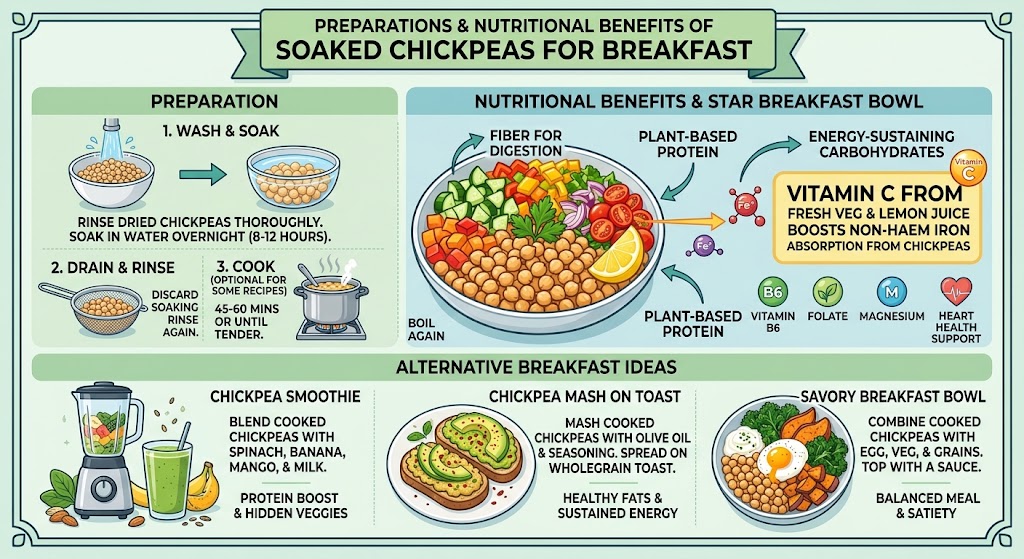
The preparation the night before is genuinely simple: a handful of dried chickpeas, rinsed, covered with cold water, and left in a bowl or jar overnight. Drain and rinse thoroughly in the morning before eating.
From there, you have options depending on what appeals to you:
The most straightforward approach is a simple bowl — soaked chickpeas with lemon juice, a little salt, and whatever vegetables you have. Cucumber, tomato, onion, and a pinch of cumin are a classic combination that works well and takes about three minutes to put together.
If you prefer something lighter in texture, soaked chickpeas blend into smoothies more easily than you’d expect and add protein without dramatically changing the flavour.
Mashed on toast with lemon and herbs, they work as a higher-protein alternative to avocado toast. Mixed into pancake batter before cooking, they add a significant protein boost to a weekend breakfast.
The one thing worth noting: some people find raw soaked chickpeas harder to digest than cooked ones, particularly if they’re not used to eating legumes regularly. A quick 20-minute simmer after soaking is a worthwhile step if you find your stomach is sensitive.
Soaked vs Roasted — A Useful Distinction
Both forms of chickpea are nutritious, but they serve different purposes. Soaked chickpeas are lower in calories, retain their water content, and are easier on digestion. They’re well suited to mornings when you want sustained energy without heaviness.
Roasted chickpeas are more calorie-dense—the water removal concentrates the protein and fiber — and have a completely different texture. They make a better snack than a breakfast food for most people, and the roasting process reintroduces some of the digestive challenge that soaking removes.
For morning use specifically, soaked is the more practical and digestive-friendly choice.
Conclusion
Soaked chickpeas won’t trend the way matcha lattes or adaptogenic mushroom powders do. They don’t photograph dramatically. They’re inexpensive, widely available, and require nothing more than the foresight to cover them with water before you go to bed.
What they offer in return is a genuinely useful combination of nutrients — protein, fiber, iron, zinc, magnesium, and slow-releasing carbohydrates—in a form that the body absorbs well and tolerates comfortably when properly prepared.
If you’re looking for something to add to your morning that costs almost nothing and has a solid nutritional case behind it, this is a reasonable place to start. Set up the bowl tonight. See how you feel in a week.
Disclaimer
This article is for general informational and educational purposes only and does not constitute medical or nutritional advice. Individual responses to dietary changes vary. People with kidney disease, irritable bowel syndrome, legume allergies, or other digestive or health conditions should consult a qualified healthcare provider or registered dietitian before adding soaked chickpeas to their diet regularly. The nutritional information provided reflects general values and may vary depending on chickpea variety, soaking duration, and preparation method. Soaked but uncooked chickpeas may not be suitable for everyone — if in doubt, lightly cook them after soaking.
FAQ
Sources

Health & Wellness Writer | Research-Informed Health Content Creator
A.K.M. Monjurul Hoque is a health and wellness writer specializing in health, beauty, fitness, nutrition and healthy living. His content is informed by health journals, books, seminars, training programs, and discussions with experienced healthcare professionals. He writes clear, practical and research-informed articles for general education and encourages readers to seek personalized advice from qualified medical professionals.