

She Wanted to Look Perfect at Her Wedding. It Nearly Cost Her the Chance to Become a Mother.
When Cynthia got engaged in 2010, the ring on her finger came with something she hadn’t expected: a quiet but persistent pressure to become a different version of herself before the wedding.
She wasn’t unusual in feeling it. The “bridal body” narrative is everywhere — in magazines, in wedding forums, in the well-meaning comments of people who conflate a woman’s wedding day with an opportunity for physical transformation. For Cynthia, what started as a reasonable goal to feel fit and confident gradually became something else entirely.
“I got really disciplined — slashing calories and training harder than ever,” she recalls. “My mind was fixated on slipping into that dream dress and finally having the body I’d always envisioned. In hindsight, I was utterly miserable. Wedding planning, which should have been fun, lost all its joy.”
What she didn’t know yet was that her body was already paying a price she wouldn’t fully understand for years.
When “Healthy” Habits Stop Being Healthy
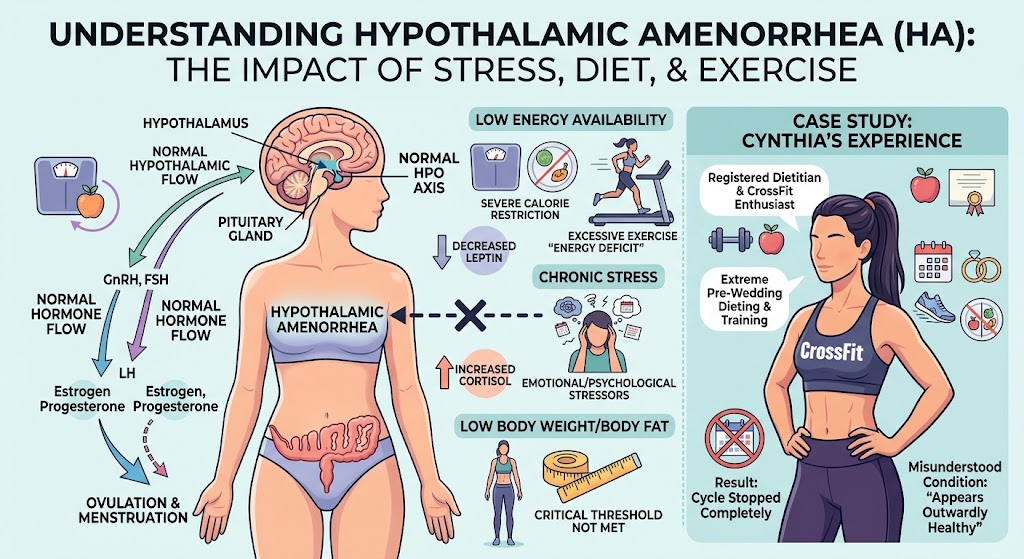
Cynthia was a dietitian. She knew about nutrition. She was passionate about fitness — CrossFit was a central part of her identity. By any visible measure, she was the picture of health.
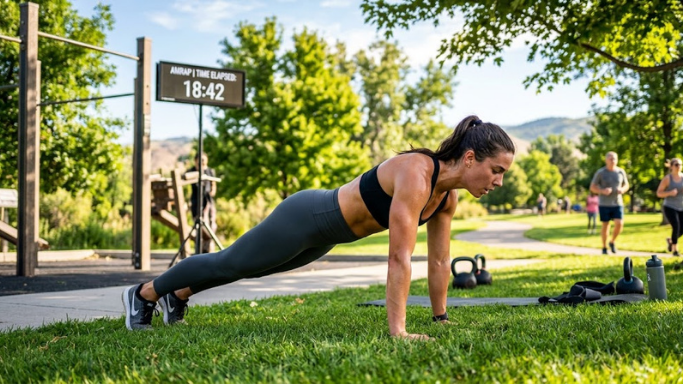
But she was in a significant caloric deficit, pushing hard in the gym every day, and operating under the specific psychological pressure of wanting to look a certain way in photographs that would exist forever. That combination — not starvation, not a clinical eating disorder by conventional definition, just sustained restriction paired with intense training and high stress — turned out to be enough.
Her periods stopped.
At first she assumed it was residual hormonal adjustment from coming off birth control. That explanation felt reasonable and let her avoid looking too closely at the pattern she’d been living. But months passed after her honeymoon. Her cycle didn’t return. The reassuring story she’d been telling herself started to unravel.
The Doctors, the Misdiagnoses, and the Growing Fear
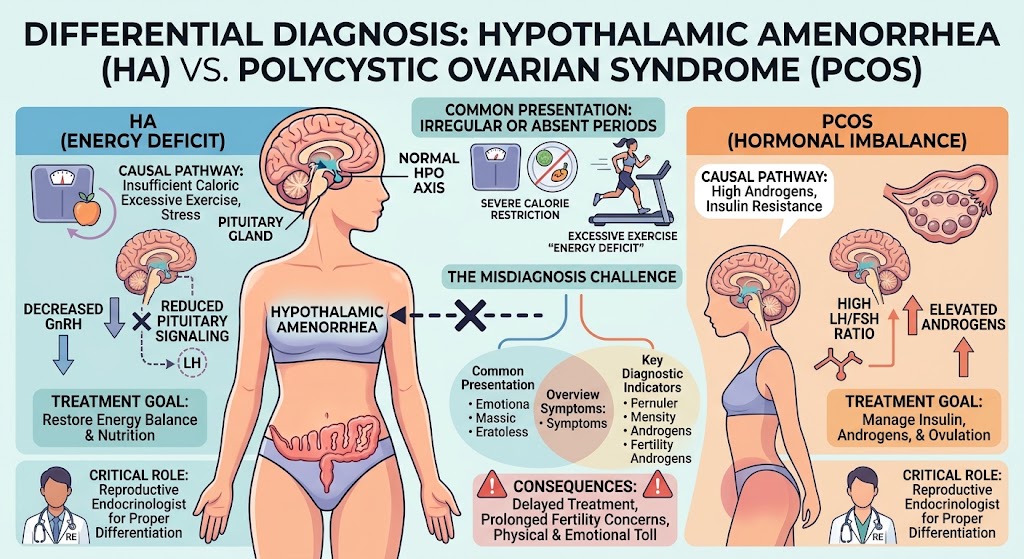
What followed was a frustrating and frightening series of medical appointments. Some doctors minimised her concerns. Others misdiagnosed her with Polycystic Ovarian Syndrome — a different hormonal condition with entirely different causes and treatments. The months stretched on, and with them, the fear.
Cynthia had always imagined becoming a mother. She’d thought of it as something that would simply happen when the time was right. Now she was confronting the possibility that her own choices — the discipline she’d been proud of, the habits she’d built her identity around — might have damaged something fundamental.
“The idea that I might never be able to have children terrified me,” she says.
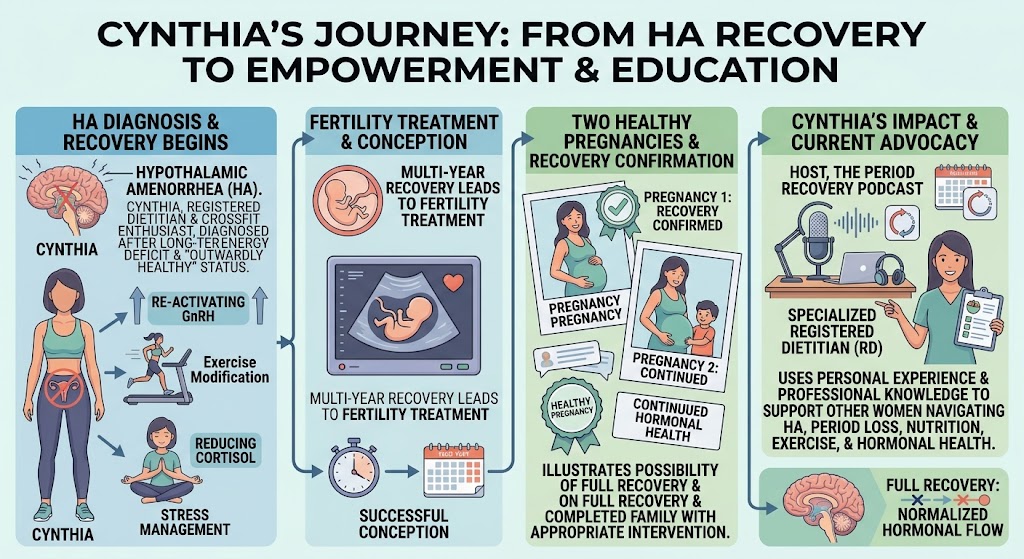
Eventually, a reproductive endocrinologist gave her the correct diagnosis: hypothalamic amenorrhea, or HA. The hypothalamus — the region of the brain responsible for regulating the hormonal cascade that controls the menstrual cycle — had essentially paused her reproductive system in response to the prolonged energy deficit and physical stress she’d subjected her body to.
The treatment advice was the opposite of everything she’d been living by.
“Eat More. Exercise Less.” — The Advice That Felt Wrong
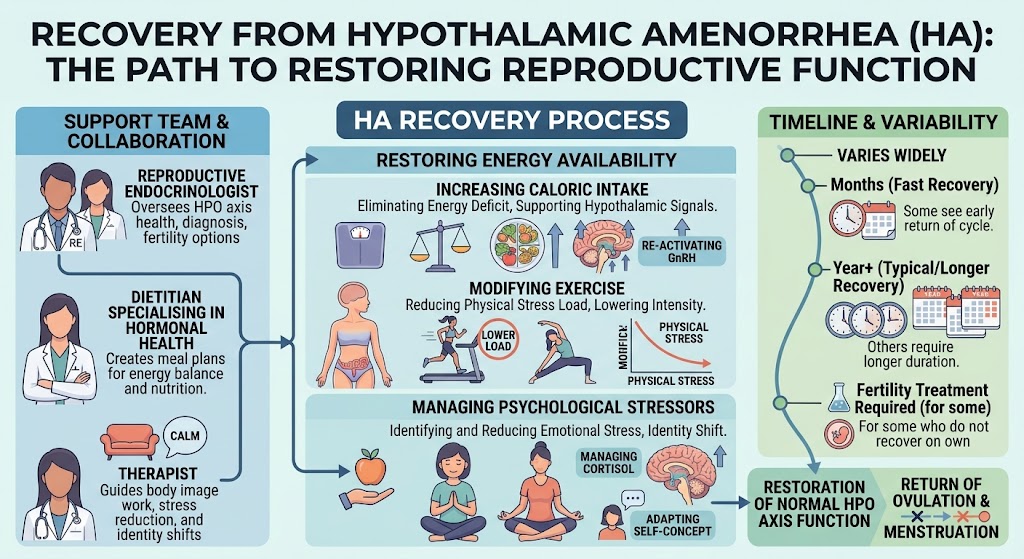
The doctor’s instructions were clear: increase food intake, reduce exercise intensity, and restore the energy balance her body needed to resume normal hormonal function.
To someone who had spent years tying her self-worth and professional identity to disciplined eating and rigorous training, this felt almost incomprehensible. “Here I was, a dietitian who thrived on healthy eating and fitness — it was part of who I was!” she recalls. “The doctor advised me to eat more and exercise less. It sounded completely backward.”
She resisted at first. The internal conflict between what the evidence was telling her and the identity she’d built around restriction and discipline was genuinely painful. But her desire for a family eventually outweighed her resistance to change. She made a choice that felt, at the time, like going against everything she stood for.
She started eating more. She pulled back on exercise. She let herself recover.
Fertility Treatment, and Then a Son
Recovery from hypothalamic amenorrhea isn’t quick, and it doesn’t always follow a straightforward path. Even with genuine effort to increase nutrition and reduce her training load, pregnancy didn’t come easily. Cynthia underwent intrauterine insemination — IUI — a fertility treatment process she describes as “draining both mentally and physically.”
But it worked.
In August 2016, Cynthia’s son Brian was born after a healthy pregnancy. “Holding him for the first time was pure magic,” she says. “It was everything I’d dreamed of.”
The story didn’t end there. A year later, while breastfeeding, her menstrual cycle returned on its own. Shortly after, she conceived her second son, Brayden, without any medical assistance. He was born in September 2018. The two brothers, she says, are now inseparable.
What She Does With Her Story Now
Cynthia didn’t put this experience away after her children were born. She turned it into work.
As a registered dietitian and host of The Period Recovery Podcast, she now supports women dealing with the same condition that nearly derailed her path to motherhood. She talks openly about what hypothalamic amenorrhea actually looks like — not emaciated, not obviously disordered, but often a dedicated, health-conscious woman who has simply pushed too hard for too long without recognising the cost.
Her core message to other women going through it: treat your menstrual cycle as a vital sign, not an inconvenience. The absence of a period isn’t something to brush off or rationalise. It’s the body communicating that something important isn’t right.
Her advice for navigating the medical system is equally direct: “Be your own advocate. If one doctor doesn’t give you answers, keep seeking until you find clarity.” Given that her own diagnosis took multiple specialists and months of confusion, this isn’t abstract encouragement — it’s hard-won practical wisdom.
Conclusion
Cynthia’s story isn’t about extreme behaviour in the way that word is usually understood. She wasn’t engaging in practices that looked dangerous from the outside. She was being disciplined. She was being dedicated. She was doing what the wellness world told her was admirable.
The problem was the cumulative effect — the sustained restriction, the relentless training, the specific psychological pressure of a deadline attached to how her body should look. Together, those forces pushed her system past a threshold it couldn’t sustain, and her reproductive hormones paid the price.
This happens more often than most people know. Hypothalamic amenorrhea is underdiagnosed precisely because it doesn’t fit the visible image of a health crisis. The women it affects often look, by external measures, like they’re doing everything right.
The real lesson isn’t that fitness and nutrition are dangerous. It’s that the body has limits that don’t care about your aesthetic goals, and that ignoring signals — especially the loss of a menstrual cycle — carries consequences that can be lasting. Your body isn’t a project to be optimised toward an ideal. It’s a living system that needs fuel, rest, and adequate margin to function the way it was designed to.
Cynthia learned that. It cost her several painful years to learn it. Hopefully, her story helps someone else learn it for free.
Disclaimer
This article is for general informational and educational purposes only and does not constitute medical advice, diagnosis, or treatment. The experience described is one individual’s personal account and may not reflect the experience of other people with similar symptoms. Hypothalamic amenorrhea and other causes of absent or irregular periods require professional medical assessment and should not be self-diagnosed or self-treated. If you are experiencing absent periods, irregular cycles, difficulty conceiving, or any other symptoms mentioned in this article, please consult a qualified healthcare provider — ideally a reproductive endocrinologist or a gynaecologist with experience in hormonal health. Fertility concerns in particular warrant prompt professional evaluation. This article does not endorse any specific treatment, protocol, or medical provider.
FAQ
Sources
Health & Wellness Writer | Research-Informed Health Content Creator
A.K.M. Monjurul Hoque is a health and wellness writer specializing in health, beauty, fitness, nutrition and healthy living. His content is informed by health journals, books, seminars, training programs, and discussions with experienced healthcare professionals. He writes clear, practical and research-informed articles for general education and encourages readers to seek personalized advice from qualified medical professionals.