


Four Exercises That Actually Help You Sleep Better — Backed by Research
Most people who struggle with sleep have tried the obvious things. Earlier bedtimes. Cutting caffeine after noon. Putting the phone away. Some of it helps a little. Most of it doesn’t fix the problem.
What gets far less attention is movement — and specifically, what type of movement, how much, and when. A 2025 analysis published by researchers at Beijing University of Chinese Medicine looked at 22 randomised controlled trials involving more than 1,300 adults with insomnia. They compared a range of interventions and found something worth paying attention to: four types of exercise — yoga, Tai Chi, walking or jogging, and strength training — produced significant, measurable improvements in sleep. Not modest improvements. Real ones.
This isn’t about exhausting yourself so you pass out faster. Each of these works through a different mechanism, and understanding which one targets which sleep problem helps you choose what’s actually useful for you.
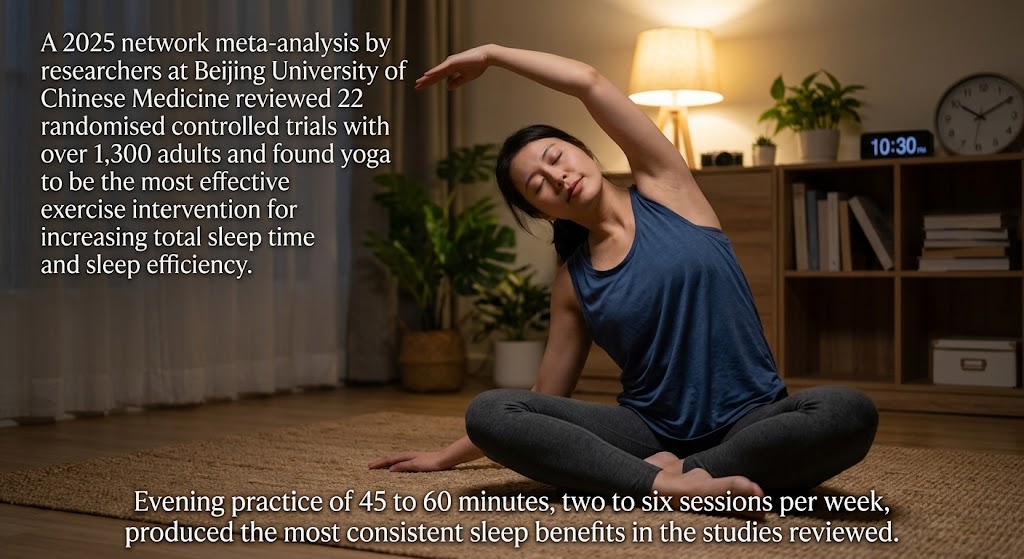
1. Yoga — For Total Sleep Time and Sleep Efficiency
If the problem is simply not getting enough hours of sleep — lying awake for extended periods, or waking too early and being unable to get back to sleep — yoga produced the most striking results in the analysis.
Participants who practised yoga regularly gained close to an extra hour of sleep per night on average. Some analyses found gains closer to two hours. That’s not a rounding error. That’s a substantial shift in sleep duration.
The reason yoga works for sleep is fairly well understood. The combination of physical postures, breathing practices, and focused attention activates the parasympathetic nervous system — the body’s rest-and-digest mode. Cortisol drops. The mind stops racing. The transition into sleep becomes easier because the body has been genuinely moved toward a calmer physiological state, not just told to relax.
This is particularly useful for people whose insomnia is driven by anxiety or an overactive mind at bedtime. It’s not about tiring the body out — it’s about downregulating a nervous system that’s been running at a higher setting than it should be.
Practical approach: Two to six sessions per week, 45 to 60 minutes each. Evening practice, within a few hours of bed, tends to produce the strongest sleep benefit. You don’t need an advanced practice — beginner and restorative classes work well and in some cases better, since the goal is calming rather than intensity.
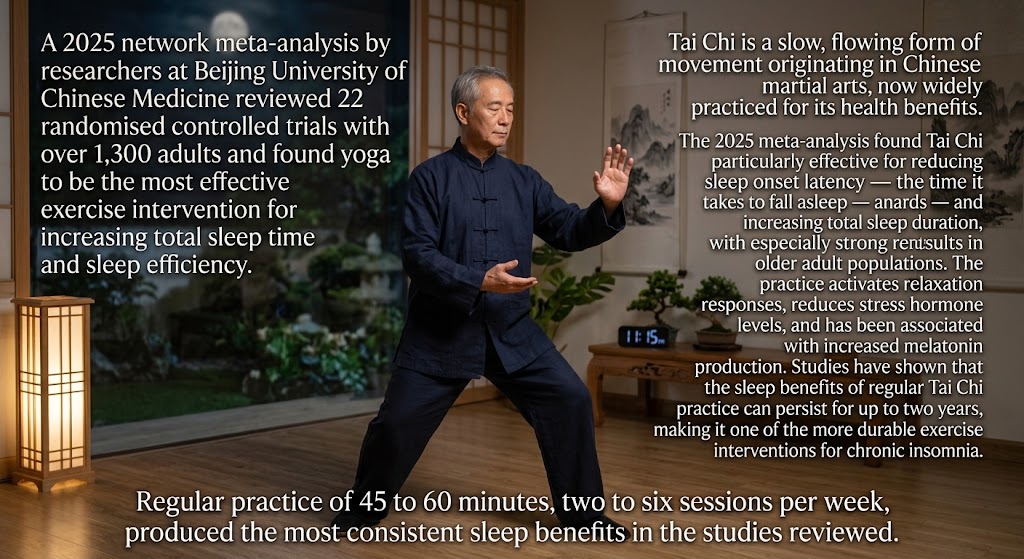
2. Tai Chi — For Falling Asleep Faster
The problem for many people with insomnia isn’t staying asleep — it’s getting there. Lying in bed awake for 30, 45, 60 minutes or more before sleep finally arrives. That extended wakefulness creates its own anxiety, which makes the problem worse.
This is where Tai Chi showed its clearest benefit. Participants fell asleep 15 to 25 minutes faster than before. They also gained 30 to 50 minutes of additional total sleep. The effects were particularly pronounced in older adults — which makes sense, since sleep architecture changes significantly with age and Tai Chi’s gentle, low-impact nature makes it accessible to people who might find more vigorous exercise difficult.
What’s notable about Tai Chi’s effects is their durability. Some studies followed participants for up to two years after the intervention and found that the sleep improvements persisted. That’s unusual for any sleep treatment, pharmaceutical or otherwise.
The mechanism involves the relaxation response, reduced stress hormones, and in some studies, increased melatonin levels. It’s slow, deliberate movement with a meditative quality — which is probably why it affects the pre-sleep period more specifically than other forms of exercise.
Practical approach: Two to three sessions per week, 45 to 60 minutes. Community classes are widely available and many are free in public parks. Online classes work well for beginners. Morning or afternoon practice is typical, though unlike vigorous exercise, Tai Chi is gentle enough that evening sessions don’t cause the stimulating effects that can delay sleep.
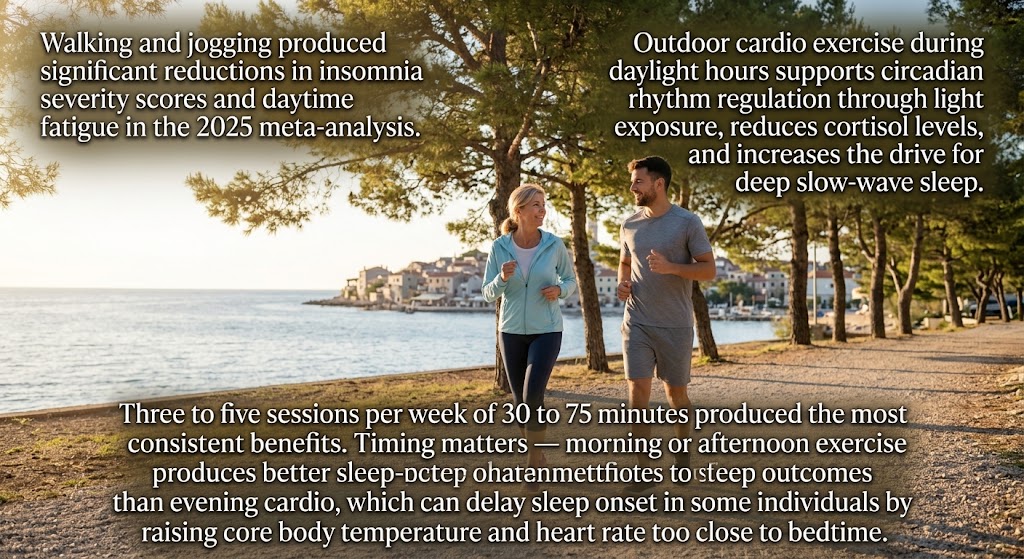
3. Walking or Jogging — For Insomnia Severity and Daytime Fatigue
This is probably the most accessible intervention on the list — no class required, no equipment, no learning curve. And the evidence for it is strong.
Regular walking or jogging produced meaningful reductions in insomnia severity. Not just subjectively — participants scored significantly lower on standardised insomnia measures after consistent cardio exercise over weeks. Daytime fatigue and cognitive fog also improved, which matters because one of the worst feedback loops in insomnia is that poor sleep causes exhaustion and low mood, which makes it harder to exercise, which makes the sleep worse.
The mechanism here is different from yoga or Tai Chi. Cardio exercise regulates the circadian rhythm — the body’s internal 24-hour clock — partly through the effect of movement on cortisol patterns and partly through outdoor light exposure when the walking happens outside. It also increases the homeostatic drive for deep sleep — the body’s biological pressure to get adequate rest, which builds throughout the day. More activity means more of that pressure, which means falling asleep more reliably when the time comes.
Timing is relevant. Morning and afternoon walking tend to produce better sleep outcomes than evening running, which can raise core body temperature and heart rate in ways that delay sleep onset for some people.
Practical approach: Three to five sessions per week, 30 to 75 minutes. Outdoors during daylight is ideal. The pace should be brisk enough to elevate breathing — not a casual stroll, but not an all-out effort either.
4. Strength Training — For Deeper, Uninterrupted Sleep
The issue for some people isn’t falling asleep or total sleep time — it’s the quality of the sleep itself. Waking repeatedly during the night. Not reaching deep sleep. Feeling unrefreshed despite spending adequate hours in bed.
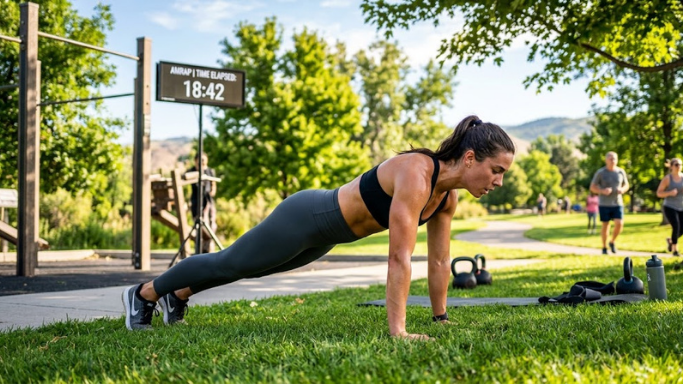
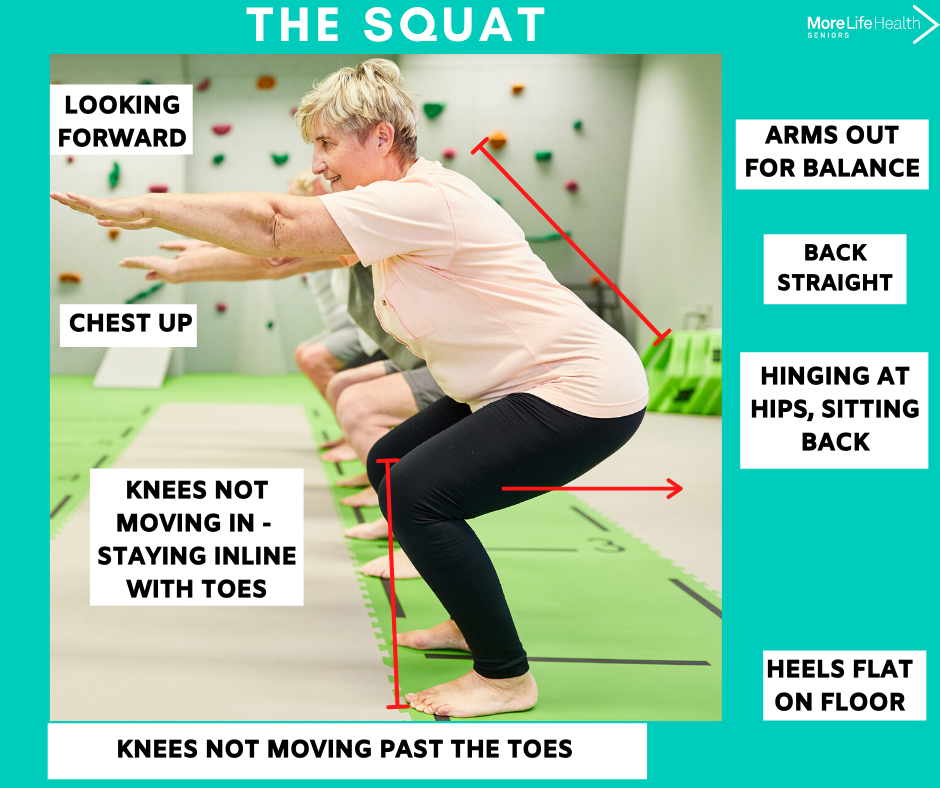
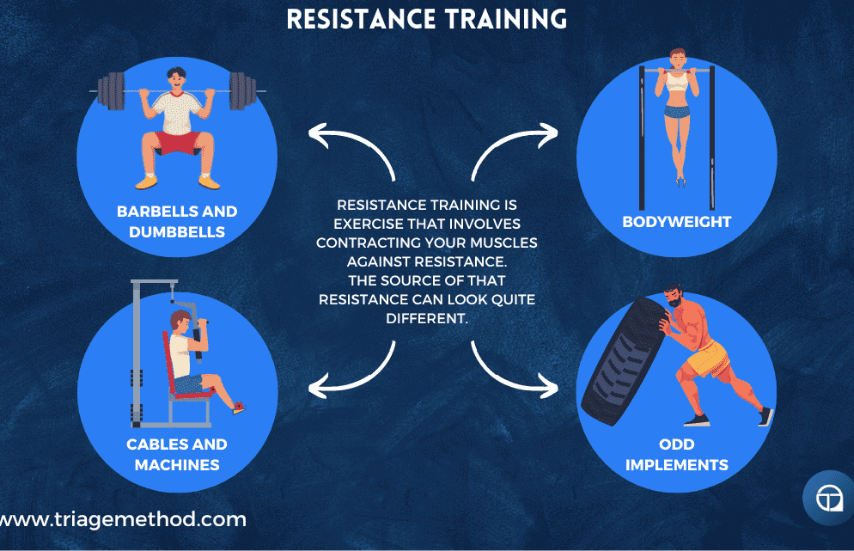
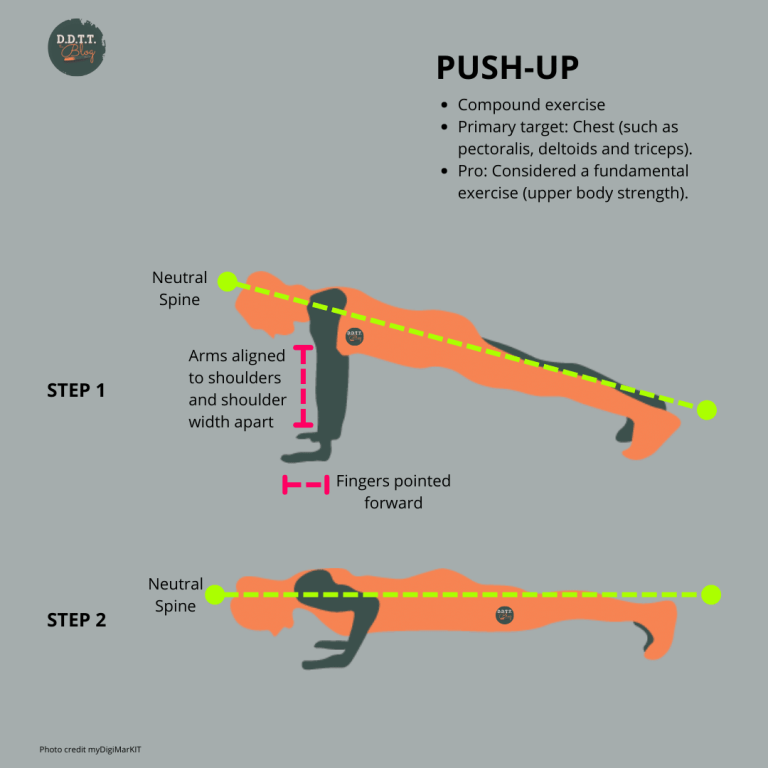
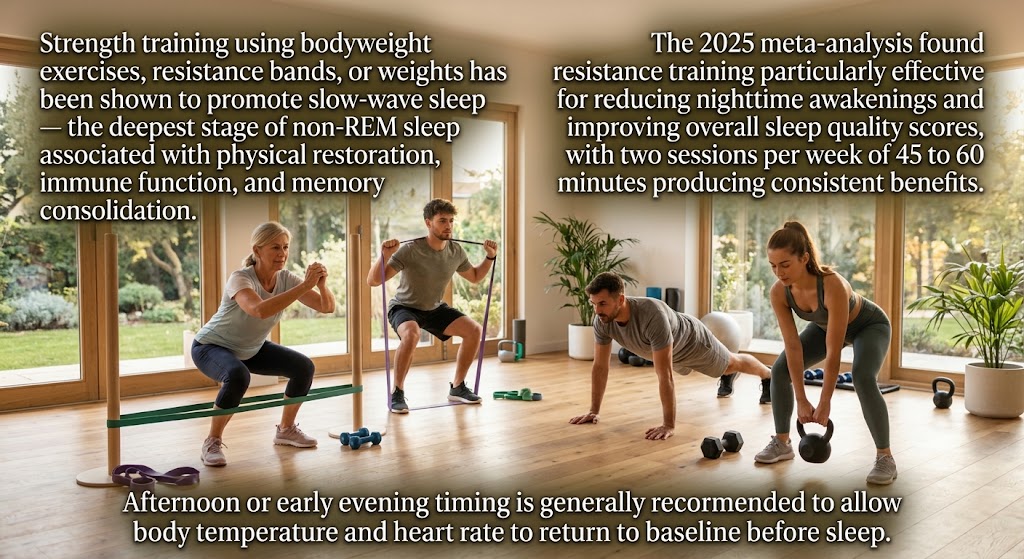
Resistance training — whether with weights, resistance bands, or bodyweight exercises — specifically targets sleep depth. The analysis found that regular strength training promoted slow-wave sleep, which is the deepest and most physically restorative stage of the sleep cycle. This is the stage where muscle repair, immune function, and memory consolidation happen. More slow-wave sleep means waking up feeling genuinely recovered.
Strength training also appears to reduce the nighttime awakenings caused by anxiety or minor disruptions. There’s a physiological resilience that develops with regular resistance exercise — the nervous system becomes more stable, and the transition back to sleep after waking becomes quicker.
Practical approach: Two sessions per week is sufficient — the study didn’t find that more was necessarily better. Sessions of 45 to 60 minutes in the afternoon or early evening work well, giving the body time to settle before sleep without the residual stimulation of a very late workout.
How to Choose the Right One for You
The four exercises target different aspects of sleep, and which one makes most sense depends on what your specific problem is:
If you’re not getting enough hours of sleep — yoga is the strongest option. If you’re spending too long awake before sleep begins — Tai Chi addresses sleep onset most directly. If insomnia is affecting your daytime energy and mood — walking or jogging produces the most consistent improvements across those measures. If you sleep enough hours but still feel unrefreshed — strength training is the one most specifically linked to deep sleep quality.
That said, combining two or more of these is entirely reasonable and may work better than any single approach. Yoga and walking, for instance, address different parts of the sleep problem and are compatible in a weekly routine.
Conclusion
Sleep medication works for some people in some situations. Cognitive behavioural therapy for insomnia is the most evidence-supported long-term treatment and worth pursuing if sleep problems are persistent and significant. But between those options and doing nothing, there’s a substantial space where consistent exercise — particularly these four types — can make a genuine, measurable difference.
The barriers to trying any of these are low. Walking costs nothing. Tai Chi classes are widely available and often free. Yoga can be done at home from a video. Bodyweight strength training requires no equipment.
The research involved real adults with real insomnia, followed over weeks and months. The improvements were meaningful. Not miraculous — sleep is complex and no single intervention solves it for everyone. But meaningful. And for something with no side effects and a long list of other health benefits attached to it, that’s a compelling case.
Disclaimer
This article is for general informational and educational purposes only and does not constitute medical advice, diagnosis, or treatment. The research cited reflects findings from a specific 2025 meta-analysis and may not apply equally to all individuals. Insomnia and sleep disorders can have a range of underlying causes — including medical conditions, medications, mental health conditions, and sleep disorders such as sleep apnea — that require professional assessment and treatment. Exercise is not a substitute for medical care. If you have persistent or severe insomnia, or if your sleep problems are significantly affecting your quality of life, please consult a qualified healthcare provider or sleep specialist. People with health conditions should seek medical advice before starting a new exercise programme.
FAQ
Sources

Health & Wellness Writer | Research-Informed Health Content Creator
A.K.M. Monjurul Hoque is a health and wellness writer specializing in health, beauty, fitness, nutrition and healthy living. His content is informed by health journals, books, seminars, training programs, and discussions with experienced healthcare professionals. He writes clear, practical and research-informed articles for general education and encourages readers to seek personalized advice from qualified medical professionals.