




The Egg: Small Package, Remarkable Nutrition
There aren’t many foods that can genuinely claim to be both affordable and nutritionally exceptional. The egg manages both without much effort. It’s been a kitchen staple across virtually every culture for thousands of years — not because of trends or marketing, but because it works. It’s filling, versatile, quick to prepare, and packed with nutrients that the body actually uses.
Every second Friday of October is World Egg Day — a global celebration that started in Vienna in 1996 to draw attention to the egg’s contribution to nutrition worldwide. It’s a good moment to look past the familiarity of this everyday food and actually consider what’s in it.
What’s Actually Inside an Egg
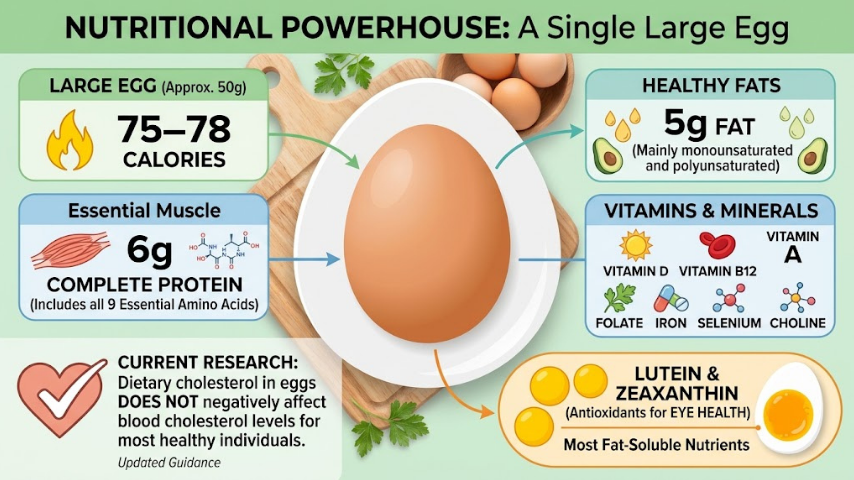
A large egg has roughly 75 to 78 calories. That number understates how much nutrition you’re getting for that caloric spend. Inside those calories you’ll find about 6 grams of complete protein — meaning it contains all nine essential amino acids in proportions the body can use efficiently. That’s relatively rare in a single whole food.
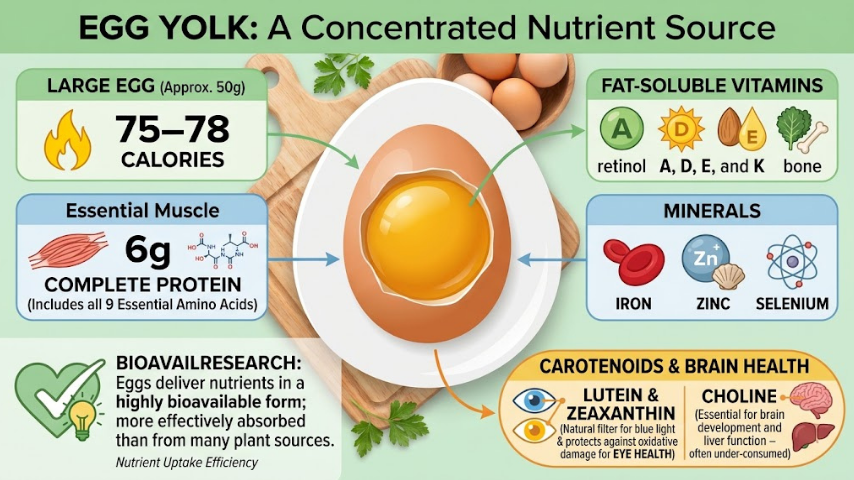
The fat — around 5 grams — sits mostly in the yolk, along with the majority of the egg’s vitamins and minerals. This is where much of the real nutritional action happens, and it’s also where the undeserved reputation of eggs as a cholesterol problem originated. More on that shortly.
Here’s what an egg delivers:
Protein. Complete, highly bioavailable, and one of the better benchmarks in nutrition research — eggs are often used as the reference point against which other protein sources are measured. The protein supports muscle maintenance and repair, immune function, and tissue health throughout the body.
Vitamin D. One of the very few dietary sources of vitamin D outside fortified foods. This matters because most people’s diets are low in it, and sunlight alone isn’t reliable year-round for many people. Vitamin D is essential for bone density, immune function, and mood regulation.
Vitamin B12. Critical for nerve function, red blood cell production, and DNA synthesis. Deficiency is more common than many people realise, particularly in older adults and people eating less meat. Eggs are a useful B12 source.
Vitamin A. Important for vision, skin health, and immune function. Found in the yolk alongside other fat-soluble nutrients.
Folate. Particularly important during pregnancy for foetal neural development. Eggs provide a meaningful amount in a form the body absorbs well.
Iron and selenium. Iron carries oxygen through the bloodstream; selenium is an antioxidant that helps protect cells from oxidative damage. Both are present in eggs in useful amounts.
Choline. This one gets less attention than it deserves. Choline is essential for brain development, memory, and the function of cell membranes throughout the body. Eggs are one of the best dietary sources of it — and most people don’t get enough from their diet.
Lutein and zeaxanthin. These antioxidants, found in the yolk, accumulate in the retina and lens of the eye. Research consistently links higher intake of these compounds with reduced risk of age-related macular degeneration and cataracts — two of the most common causes of vision loss as people age.
The Cholesterol Question—Finally Settled
For years, eggs were considered off-limits or rationed because of their cholesterol content. The logic seemed straightforward: eggs contain dietary cholesterol, dietary cholesterol raises blood cholesterol, high blood cholesterol causes heart disease—so limit the eggs.
The problem is that the science didn’t hold up. The relationship between dietary cholesterol and blood cholesterol is far more complicated than that simple chain suggests. For most healthy people, the liver adjusts its own cholesterol production in response to what comes in through food — meaning that eating more cholesterol doesn’t necessarily translate into having more cholesterol circulating in the blood.
Current research is fairly consistent on this: eggs don’t negatively affect blood cholesterol in most healthy people. In fact, they tend to increase HDL — the so-called “good” cholesterol — which is associated with lower cardiovascular risk rather than higher. The saturated fat in someone’s overall diet is a much stronger driver of blood cholesterol changes than dietary cholesterol from eggs.
There are exceptions. People with familial hypercholesterolemia or type 2 diabetes may respond differently and should take guidance from their doctor on egg intake. But for the general healthy population, the restriction that persisted for decades was based on an oversimplification that the evidence has since largely walked back.
Simple Ways to Actually Eat More of Them
Eggs’ main advantage in the kitchen is that they work in almost any meal, any time of day. A few straightforward approaches:
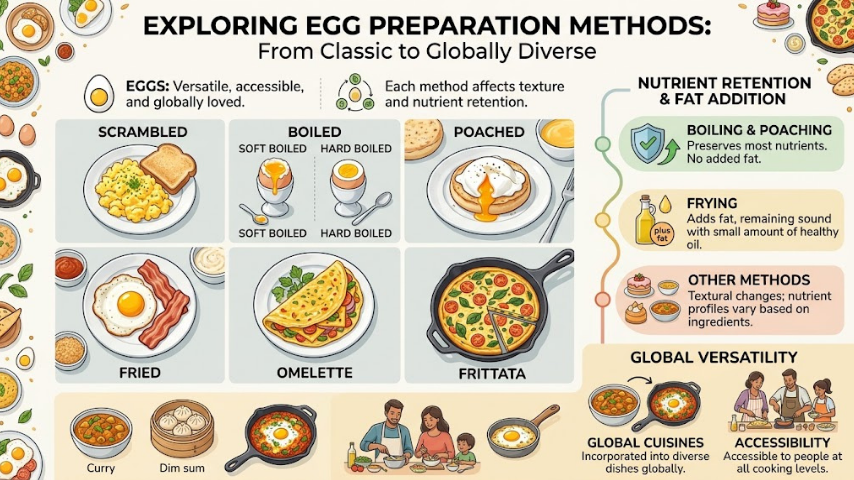
Scrambled eggs work best over medium-low heat with a little patience. Rushing them over high heat produces rubbery, dry results. Slow and gentle, with a small amount of butter or olive oil, gives you something creamy that takes about five minutes.
Boiled eggs are probably the most practical option for anyone who wants portable, high-protein food available through the day. Hard-boiled eggs keep in the fridge for up to a week. Soft-boiled, where the yolk is still runny, take about six minutes from boiling.
Omelettes and frittatas are useful for using up whatever vegetables you have. Whisk two or three eggs, pour into a heated pan, add filling, cook until just set. The frittata version involves finishing it under a grill for a couple of minutes, which makes it thicker and works well for feeding more than one person.
A fried egg on toast, on rice, or on top of a bowl of vegetables with some sauce is one of the simplest and most satisfying quick meals available. It takes three minutes and delivers meaningful nutrition.
A Note on Brown vs White Eggs
One thing worth clearing up because it comes up regularly: the colour of an eggshell tells you nothing about the nutritional content inside. Shell colour is determined by the breed of hen — that’s all. A brown egg and a white egg from hens fed the same diet and raised in the same conditions are nutritionally identical. The price difference in many markets is a result of consumer perception rather than any difference in what’s actually in the egg.
Conclusion
Eggs are one of those foods where the case for eating them regularly is genuinely strong — nutritionally, economically, and practically. They’re one of the cheapest sources of complete protein available, they deliver nutrients that many people don’t get enough of from the rest of their diet, and they take almost no time to prepare.
The cholesterol concern that kept many people limiting them for decades has been largely revised by current research. For most healthy people, an egg a day is not just fine — it’s a sensible nutritional choice.
World Egg Day is a useful prompt to think about this, but really, the case for eggs holds on any ordinary Tuesday morning when you’re trying to make something nutritious before heading out the door.
Disclaimer
This article is for general informational and educational purposes only and does not constitute medical or nutritional advice. While current research supports egg consumption as safe and beneficial for most healthy people, individual nutritional needs vary. People with familial hypercholesterolaemia, type 2 diabetes, cardiovascular disease, or egg allergies should consult a qualified healthcare provider or registered dietitian for personalised guidance on egg intake. The nutritional data cited reflects general values for a large egg and may vary based on hen breed, diet, and farming conditions.
FAQ
Sources

Health & Wellness Writer | Research-Informed Health Content Creator
A.K.M. Monjurul Hoque is a health and wellness writer specializing in health, beauty, fitness, nutrition and healthy living. His content is informed by health journals, books, seminars, training programs, and discussions with experienced healthcare professionals. He writes clear, practical and research-informed articles for general education and encourages readers to seek personalized advice from qualified medical professionals.