





3 Gentle Posterior-Chain Exercises to Support a Stronger Back
Learn how gentle glute, hamstring, hip, and core exercises may complement a balanced routine for back health, plus important safety guidance and red flags.
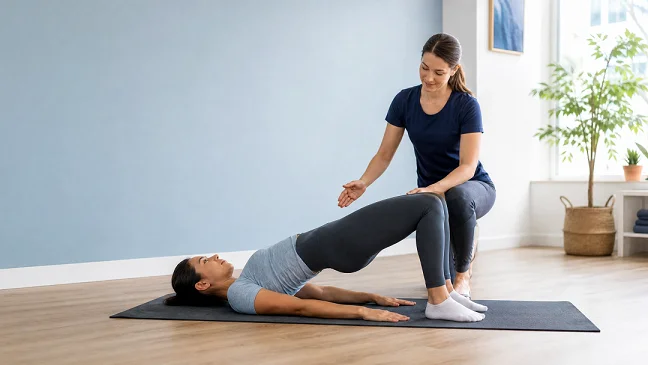
Lower-back discomfort can make ordinary activities—walking, lifting, exercising, or sitting—feel unexpectedly difficult. Although rest may seem like the safest response, prolonged inactivity is not helpful for everyone. For many people, a gradual return to comfortable movement and an appropriately designed exercise program can be part of back-pain management.
One useful way to make a routine more balanced is to include exercises that train the muscles along the back of the body. These muscles are often called the posterior chain. They include the glutes, hamstrings, calf muscles, and the muscles that support the spine. Strengthening and coordinating these areas may help you move with greater control, but no single exercise can diagnose or cure back pain.
Push and pull movements: what is the difference?
Lower-body training can be described using several movement patterns. A push pattern generally involves pressing the body or a weight away from you. Squats, lunges, and leg presses are familiar examples, and they place substantial demand on the quadriceps and other muscles around the front of the legs.
A pull pattern usually involves drawing something toward you or controlling movement through the muscles on the back of the hips and legs. Hamstring curls, hip-hinge exercises, and glute bridges are common examples.
This does not mean that push exercises are harmful or that pull exercises are automatically better. A healthy programme usually includes a variety of movements, adjusted to the person’s abilities, symptoms, goals, and training experience. The practical aim is balance, not replacing every pushing exercise with pulling exercises.
What is the posterior chain?
The posterior chain is a functional group of muscles located along the back of the body. It commonly includes the gluteal muscles, hamstrings, calf muscles, and the muscles alongside the spine. The lats and other trunk muscles may also contribute depending on the activity.
These muscles help extend the hips, control the pelvis, maintain posture, and transfer force during activities such as standing up, climbing stairs, walking uphill, and lifting. However, back pain has many possible causes, including muscle strain, sciatica, disc-related problems, inflammatory conditions, and other medical issues. Muscle weakness is only one possible factor, so posterior-chain training should be viewed as one component of a broader approach—not a universal explanation or guaranteed treatment.
3 gentle posterior-chain exercises to try
The following Pilates-inspired movements are intended as general fitness examples. Start with body weight. Add a light resistance band only when you can perform the movement comfortably and with control. Breathe normally, avoid forcing the range of motion, and stop if symptoms worsen.
1. Single-leg pull
This movement challenges the abdominal muscles while encouraging controlled movement through the hips and legs.
How to do it
1.Lie on your back with your knees bent and your feet on the floor.
2.Gently bring both legs toward a tabletop position, with your knees above your hips and your shins roughly parallel to the floor. If this position increases discomfort, keep your feet on the floor.
3.Keep your pelvis as steady as possible. Slowly draw one knee toward your chest while extending the other leg away from you.
4.Return to the starting position and switch sides.
5.Move smoothly rather than pulling forcefully. Keep your lower back in a comfortable position.
If lifting your head and shoulders causes neck or back discomfort, keep your head on the mat.
Beginner starting point: 5 repetitions per side. Rest as needed and increase gradually only if the movement remains comfortable.
2. Glute bridge with alternating foot lift
A standard glute bridge trains the muscles around the hips. An alternating foot lift adds a balance and pelvic-control challenge, so beginners may prefer to stay with the basic bridge.
How to do it
1.Lie on your back with your knees bent and feet flat on the floor.
2.Place your feet about hip-width apart and keep your arms relaxed by your sides.
3.Gently brace your abdomen and lift your hips until your body forms a comfortable diagonal line from your shoulders toward your knees.
4.Avoid pushing your ribs upward or arching your lower back.
5.Hold the bridge briefly. If you can keep your hips level, lift one foot a few centimetres from the floor.
6.Lower the foot slowly, then repeat on the other side.
7. If your hips twist or your back feels strained, return to a regular two-foot glute bridge.
Beginner starting point: 6 repetitions per side, or 8–10 regular glute bridges if the alternating version is too difficult.
3. Standing knee drive
The standing knee drive works on balance, hip control, and trunk stability. It can be modified for different fitness levels.
How to do it
1. Stand with your feet about hip-width apart. Hold a wall or sturdy chair if you need support.
2. Keep your ribs comfortably stacked over your pelvis and avoid leaning from side to side.
3. Slowly lift one knee toward your chest without rounding your back or holding your breath.
4. Pause briefly, then lower the foot with control.
5. Repeat on the other side.
Use a resistance band only after you feel steady with body weight. A band is optional and should not make you lose balance or compensate with your back.
Beginner starting point: 5–8 repetitions per side.
How to practice safely
Start with one or two exercises rather than attempting a complete workout immediately. If the movements feel comfortable, you might practise them two or three times per week, with recovery time between sessions. Increase the challenge gradually by adding a small number of repetitions or slowing the movement. Do not progress by forcing a painful range of motion.
Mild effort or temporary muscle fatigue can be normal. Stop if you experience sharp or increasing pain, numbness, tingling, unusual weakness, dizziness, or pain that travels down the leg. Speak with a healthcare professional before beginning a new program if you have an injury, a known health condition, symptoms that concern you, are pregnant or recently gave birth, or are unsure whether these exercises are appropriate for you.
When back pain needs medical attention
Back pain often improves over several weeks, but it should not be ignored when it is severe, persistent, or associated with other symptoms. Arrange medical advice if the pain is not improving, interferes with daily activities, is worse at night, follows an injury, or occurs with unexplained weight loss, fever, or feeling generally unwell.
Seek urgent medical care for back pain accompanied by numbness around the genitals or anus, new bladder or bowel problems, or weakness or numbness in both legs. These symptoms can indicate a serious problem and should not be managed with home exercises alone.
The bottom line
Posterior-chain exercises may be a useful addition to a balanced movement routine. Glute bridges, controlled leg movements, and supported standing knee drives can help you practise hip, trunk, and pelvic control without requiring heavy equipment.
The goal is not to find a magic exercise or to push through pain. Choose movements you can perform with control, progress gradually, and seek professional guidance when symptoms are severe, persistent, or difficult to explain. For chronic low-back pain, exercise is one of several non-drug approaches that clinicians may consider, and the most appropriate option depends on the individual.
Frequently asked questions
References
[3] NHS, “Exercises for sciatica problems”
[4] NICE, “Low back pain and sciatica in over 16s: assessment and management”


Health & Wellness Writer | Research-Informed Health Content Creator
A.K.M. Monjurul Hoque is a health and wellness writer specializing in health, beauty, fitness, nutrition and healthy living. His content is informed by health journals, books, seminars, training programs, and discussions with experienced healthcare professionals. He writes clear, practical and research-informed articles for general education and encourages readers to seek personalized advice from qualified medical professionals.