




White Chocolate: Ingredients, History, Uses, and Baking Tips
Discover what white chocolate is, how it is made, how it differs from milk and dark chocolate, and the best ways to use it in desserts and drinks.
Introduction
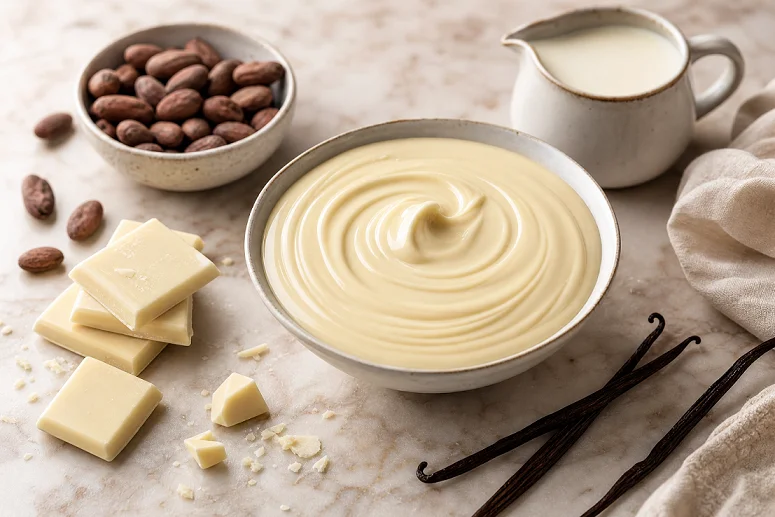
White chocolate is one of the most recognisable ingredients in modern baking. Its pale ivory colour, smooth texture, and sweet milky flavour make it a natural partner for berries, nuts, coffee, citrus, caramel, and vanilla. It appears in everything from cookies and cheesecakes to truffles, sauces, and warm drinks.
Although it is commonly grouped with milk and dark chocolate, white chocolate has a different composition. It uses cocoa butter—the natural fat obtained from cocoa beans—but does not contain cocoa solids, the part of the bean responsible for chocolate’s darker colour and more intense cocoa flavour. That difference explains why white chocolate tastes softer, sweeter, and more buttery than other chocolate varieties.
What Is White Chocolate?
White chocolate is a confection made primarily from cocoa butter, sugar, and dairy ingredients such as milk powder or milk solids. Lecithin may be added to help the ingredients blend, while vanilla or other flavourings can provide extra aroma.
In the United States, the Food and Drug Administration’s standard of identity requires a product labelled “white chocolate” to contain at least 20% cocoa butter, at least 14% total milk solids, and at least 3.5% milkfat. The standard also limits the amount of nutritive carbohydrate sweeteners to 55%. Formulas can vary between countries and brands, so the ingredient label remains the best way to understand a particular product.
The absence of cocoa solids is the key distinction. Cocoa butter still comes from the cocoa bean, but it contributes richness and a clean melt rather than the deep, roasted flavour associated with cocoa solids.
Main Ingredients in White Chocolate
| Ingredient | What it contributes |
|---|---|
| Cocoa butter | Creates the smooth texture, rich mouthfeel, and characteristic melt. |
| Sugar | Provides sweetness and balances the richness of the cocoa butter. |
| Milk solids | Add creaminess, milk flavour, and body. |
| Lecithin | Helps the fat and dry ingredients combine into a more consistent mixture. |
| Vanilla or other flavourings | Add aroma and round out the sweetness. |
The quality of white chocolate depends heavily on the proportion and quality of these ingredients. For baking, choose a product that lists cocoa butter rather than relying mainly on inexpensive vegetable fats or generic fillers. A product with a pleasant aroma and a short, recognisable ingredient list is often easier to melt and produces a more satisfying flavour.
A Brief History of White Chocolate
The commercial history of white chocolate is closely associated with Switzerland and Nestlé. Nestlé’s official account says that its Milkybar brand was launched in 1936 after a kitchen experiment combined cocoa butter with Nestrovit, a vitamin-enriched condensed milk product. The experiment was intended to create a solid milk tablet but instead led to a new confection.
It is more accurate to say that Nestlé helped commercialise and popularise white chocolate than to claim that one company unquestionably invented every earlier form of it. Over time, other manufacturers introduced their own bars, baking chips, fillings, and couverture products. White chocolate eventually became a familiar ingredient in home kitchens and professional pastry shops around the world.
Today, it is available in many forms, including bars, buttons, chips, wafers, baking couverture, flavoured varieties, and powdered drink mixes. Artisan makers may also pair it with ingredients such as freeze-dried fruit, sea salt, coffee, pistachio, or matcha.

How Is White Chocolate Made?
The manufacturing process is designed to produce a smooth, stable confection with an even texture. First, cocoa butter is gently melted. Sugar and milk ingredients are then blended into the liquid fat, often with lecithin and flavourings.
The mixture is refined so that sugar and milk particles become extremely small. This step helps prevent a gritty texture. It may then be conched, a process that mixes and aerates the chocolate while allowing excess moisture and harsh notes to diminish.
Finally, the chocolate is tempered by carefully heating and cooling it. Proper tempering encourages the cocoa butter to form stable crystals, giving the finished chocolate a glossy appearance, a clean snap, and better resistance to melting at room temperature. It is then poured into moulds, cooled, and packaged.
White Chocolate vs Milk Chocolate vs Dark Chocolate
The three varieties differ mainly in cocoa composition, flavour, colour, and sweetness.
| Type | Main cocoa components | Typical flavour | Appearance |
|---|---|---|---|
| White chocolate | Cocoa butter, but no cocoa solids | Sweet, creamy, milky, and often vanilla-scented | Ivory to pale cream |
| Milk chocolate | Cocoa butter, cocoa solids, sugar, and milk ingredients | Sweet, mild, and distinctly chocolatey | Light to medium brown |
| Dark chocolate | A higher proportion of cocoa solids with cocoa butter and sugar | Rich, intense, and sometimes pleasantly bitter | Medium to very dark brown |
Because white chocolate contains no cocoa solids, it does not provide the same cocoa flavour or profile as dark chocolate. It is also usually sweeter and richer than many dark chocolate products. None of these varieties is automatically the best choice for every recipe; the right option depends on the flavour, texture, and sweetness you want.
Popular Uses for White Chocolate
White chocolate is especially useful when a recipe needs sweetness, creaminess, and a light colour. It melts into ganache, mousse, frosting, and cheesecake fillings, where its cocoa butter helps create a rich and smooth texture.
In baking, white chocolate chips or chopped pieces can be folded into cookies, blondies, muffins, scones, and banana bread. It pairs particularly well with raspberries, strawberries, cranberries, macadamia nuts, almonds, coconut, lemon, orange, espresso, and warm spices.
It is also a practical finishing ingredient. Melted white chocolate can be drizzled over biscuits, used to dip fruit or pretzels, piped into decorative lines, or spread over cakes. In drinks, it can be melted into milk for white hot chocolate or combined with espresso for a sweet white mocha.
Tips for Melting and Storing White Chocolate
White chocolate is more delicate than many people expect because its high fat and sugar content can make it seize or scorch. Melt it slowly over a double boiler or in short microwave intervals, stirring between each interval. Keep water and steam away from the bowl, because even a small amount of moisture can cause the mixture to become thick and grainy.
When using it in a recipe, chop large pieces into similarly sized portions so they melt evenly. If the chocolate becomes too thick, a small amount of warm cream may help in a ganache, but adding water is likely to make the texture worse.
Store unopened white chocolate in a cool, dry place away from sunlight and strong odours. Avoid unnecessary temperature changes. A pale dusty coating called bloom may appear after poor storage or temperature fluctuation; it can affect appearance but does not always mean the chocolate is unsafe. For the best result, follow the package’s storage instructions and check for unusual odour or flavour before use.
Common Myths About White Chocolate
“White chocolate is not chocolate.”
This is partly a matter of terminology. White chocolate does not contain cocoa solids, so it lacks the flavour and colour many people associate with chocolate. However, it contains cocoa butter derived from cocoa beans, and food standards recognise it as a distinct type of chocolate confection.
“All white chocolate tastes the same.”
Not at all. The balance of cocoa butter, dairy ingredients, sugar, vanilla, and added flavourings can create noticeable differences. Premium couverture may taste more buttery and balanced, while some inexpensive products may be much sweeter or rely on substitute fats.
“White chocolate is a health food.”
White chocolate is best understood as a sweet treat, not a health food. It can provide energy and may contain dairy-derived nutrients, but it is also commonly high in sugar and fat. Portion size, recipe context, and the product’s nutrition label matter. Enjoying it occasionally and in moderation is a more responsible approach than making broad health claims.
Frequently Asked Questions
Does white chocolate contain cocoa?
Yes. It contains cocoa butter, which is extracted from cocoa beans. It generally does not contain cocoa solids, which are responsible for the darker colour and stronger cocoa taste of milk and dark chocolate.
Is white chocolate suitable for baking?
Yes. It works well in cookies, blondies, cakes, mousse, ganache, cheesecake, truffles, and dessert sauces. Because it is sweet, you may need to reduce the added sugar in a recipe designed for unsweetened chocolate.
Why does white chocolate sometimes turn grainy when melted?
Excessive heat, direct heat, or contact with water can cause white chocolate to seize or separate. Melt it gently and stir frequently. Using a good-quality baking chocolate can also improve the result.
Can white chocolate be used instead of dark chocolate?
Usually, but not in equal amounts without adjustment. White chocolate has a different sweetness, fat balance, and cocoa composition. A recipe may need less sugar and a different amount of liquid to achieve the intended texture.
Is white chocolate dairy-free?
Traditional white chocolate usually contains milk solids, so it is not dairy-free. People following a dairy-free diet should look for a product clearly labelled vegan or dairy-free and check the allergen statement for possible cross-contact.
What flavours pair well with white chocolate?
Berries, citrus, coffee, caramel, coconut, pistachio, macadamia nuts, almonds, vanilla, and spices such as cinnamon are all excellent partners. The mild base allows both fresh and toasted flavours to stand out.
Conclusion
White chocolate is a distinctive cocoa-based confection built around cocoa butter, sugar, and milk ingredients rather than cocoa solids. Its pale colour, gentle flavour, and smooth texture make it exceptionally versatile in baking and dessert-making. From a simple batch of cookies to an elegant mousse or white mocha, it can add richness without the bitterness of dark chocolate.
The best way to appreciate white chocolate is to choose a well-made product, melt it carefully, and use its sweetness thoughtfully. When paired with tart fruit, nuts, coffee, or citrus, this creamy ingredient becomes far more complex than its reputation as a simple sweet treat suggests.
Disclaimer
This article is provided for general food and cooking information only. Ingredient standards, product formulas, allergen declarations, and labelling rules may differ by country and brand. Always read the package label, especially if you have a milk, soy, nut, or other food allergy. Nutritional information should be checked against the specific product and serving size. The historical note about Milkybar reflects Nestlé’s published brand account and should not be treated as an exhaustive history of every early white chocolate product.
References
[1] FDA: Standard of Identity for White Chocolate
[2] Nestlé Global: Milkybar Brand History
[3] Encyclopaedia Britannica: White Chocolate

Health & Wellness Writer | Research-Informed Health Content Creator
A.K.M. Monjurul Hoque is a health and wellness writer specializing in health, beauty, fitness, nutrition and healthy living. His content is informed by health journals, books, seminars, training programs, and discussions with experienced healthcare professionals. He writes clear, practical and research-informed articles for general education and encourages readers to seek personalized advice from qualified medical professionals.